Leeks are a member of the onion family, known for their mild taste and tender texture. They are typically used in soups, stews, and side dishes.
Origin & history
ancient uses: Leeks were used as food and medicine by ancient civilizations.
region of origin: Mediterranean
country of origin: Near East
historical timeline: year: 4000
event: Leeks cultivated in the Near East.
year: 2000
event: Cultivated in ancient Egypt.
cultural significance: Leeks are a national symbol of Wales, worn by soldiers on St. David's Day.
domestication history: Leeks have been cultivated since at least 4000 B.C.
traditional importance: In Roman times, leeks were prized for their flavor and health benefits.
historical trade routes: Leeks spread through Europe with trade routes.
Growing & production
climate: Temperate
rainfall: Moderate rainfall (600-800 mm annually)
harvesting: Harvested in late summer to autumn
irrigation: Regular irrigation needed during dry periods
hydroponics: Can be grown hydroponically.
temperature: Optimal between 15-25°C
growing season: Spring to late summer
harvest period: Late summer to early fall
yield per acre: 30,000 - 50,000 lbs
growing regions: Europe
North America
Asia
pest management: Preventative measures against aphids and leek moths
planting methods: Transplanting seedlings
soil requirements: Loamy, well-drained soil
organic cultivation: Practices include crop rotation and natural pest control.
greenhouse production: Possible but not common.
fertilizer requirements: Nitrogen-rich fertilizers recommended
Nutrition draft
per 100g: fat g: 0.3
carbs g: 14.15
fiber g: 1.8
iron mg: 1.2
sugar g: 3.88
water g: 83.42
zinc mg: 0.29
calories: 61
protein g: 1.5
sodium mg: 20
calcium mg: 59
folate mcg: 64
magnesium mg: 18
potassium mg: 180
vitamin a iu: 83
vitamin c mg: 18
vitamin k mcg: 1.9
saturated fat g: 0.1
per serving: fat g: 0.3
carbs g: 14.15
calories: 61
protein g: 1.5
serving size: 100g
antioxidants: Quercetin
glycemic load: 9
glycemic index: 15
phytochemicals: Flavonoids
Nutrition notes
Leeks are rich in antioxidants and provide various vitamins and minerals. They may help with heart health and the immune system.
Health notes
major: Rich in fibre, vitamins A and C, folate, potassium and plant polyphenols.
Low in calories and high in water content — supports weight management and hydration.
Regular vegetable intake is linked to lower rates of cardiovascular disease and type 2 diabetes.
evidence: Consensus among USDA, NIH and WHO reviews is that leek contributes positively to a balanced eating pattern when consumed in appropriate portions.
Storage
freezing: Can be blanched and frozen.
shelf life: 1-2 weeks
refrigeration: Store in vegetable crisper.
best practices: Store unwashed and dry.
common mistakes: Washing before storage leads to spoilage.
storage methods: Refrigeration
Controlled atmosphere
spoilage indicators: Mushy texture
Off smell
Preparation
cutting: Cut the white part separately from the green tops.
washing: Rinse thoroughly to remove dirt.
cleaning: Remove outer leaves and trim roots.
buying tips: Choose firm leeks with no signs of wilting.
cooking methods: Sautéing
Grilling
Soups
freshness indicators: Firm texture
Bright green tops
seasonal buying guide: Best from late fall to early spring.
Practical tips
**Cleaning**
Remove outer leaves and trim roots.
**Washing**
Rinse thoroughly to remove dirt.
**Cutting**
Cut the white part separately from the green tops.
Recipes
name: Leek and Potato Soup
tags: soup
vegetarian
comfort food
tips: Use fresh leeks for better flavor.
method: Chop the leeks and onions.
Sauté in a pot until soft.
Add diced potatoes and stock.
Simmer until potatoes are tender.
Blend and stir in cream. Season to taste.
region: Brittany
country: France
cuisine: French
servings: 4
cook time: 30 mins
image url: https://example.com/leek-potato-soup.jpg
prep time: 15 mins
chef notes: Perfect as a starter or light meal.
difficulty: Easy
description: A creamy, comforting soup made with leeks and potatoes.
ingredients: 3 leeks
2 potatoes
1 onion
500ml vegetable stock
200ml cream
Salt
Pepper
recipe source: Chef's Kitchen
suitable diets: Vegetarian
Transportation
humidity: 85-90% recommended
packaging: Bunched and bagged for retail.
shelf life: 1-2 weeks in refrigerator.
shipping methods: Road transport preferred.
storage temperature: 0-4°C
cold chain requirements: Minimal, stored in cool conditions.
Sustainability
climate resilience: Well-suited to temperate climates.
sustainable farming: Encouraged through crop rotation and minimal pesticide use.
environmental impact: Generally low as a vegetable crop.
organic certification: Available for some producers.
pollinator importance: Supports local biodiversity.
regenerative agriculture: Practices including permaculture.
More about this food
Leeks have been cultivated since ancient times and were favored by the Romans.
Source references
url: https://example.com/leeks-guide
type: report
year: 2020
title: Leeks: A Comprehensive Guide
authors: Dr. Green Thumb
publisher: University of Agriculture
Kerala & United States locality guides
Regional guides; these links do not establish local product availability.

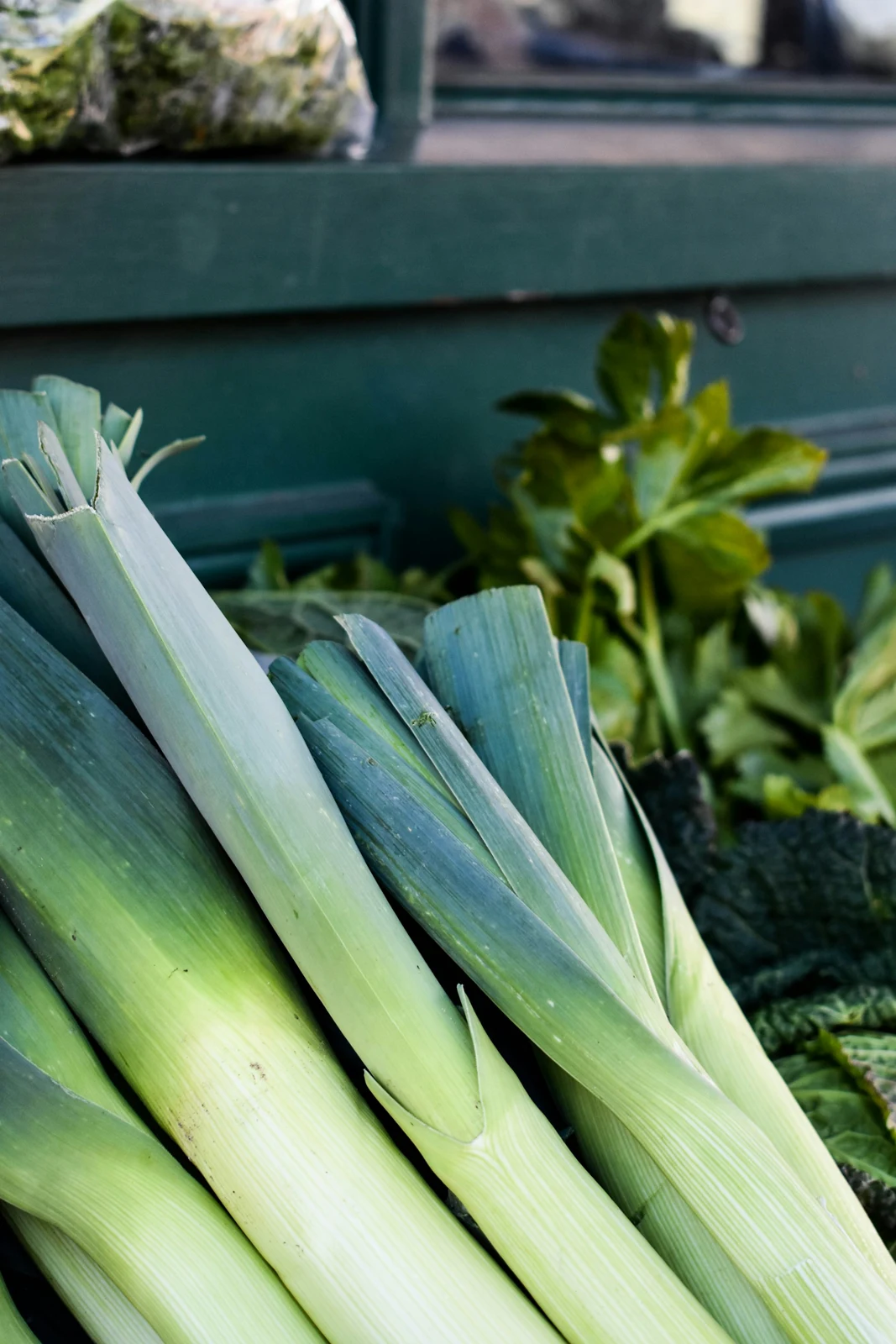 Leeks