
Basil
Research status: AI draft — awaiting expert review


Overview
Basil is a tender, leafy herb in the mint family, used fresh or cooked. Sweet basil is common in pesto and tomato dishes; Thai, holy, and lemon basils have distinct flavors and culinary uses.
Origin & cultivation
Basil is native to tropical parts of Asia and Africa, with sweet basil commonly traced to tropical Asia. It is now grown worldwide, with commercial production in India, Egypt, Mediterranean countries such as Italy, and the United States.
Season
Basil thrives in warm weather and is usually at its best from late spring through early autumn in temperate climates. Greenhouse-grown basil is available year-round; choose fragrant leaves without slime, mold, or extensive blackening.
Texture & flavor
Fresh leaves are soft and delicate, with sweet, peppery, clove-like notes and hints of anise. Thai basil is more distinctly licorice-like, while lemon basil has a citrus aroma; dried basil is less bright and aromatic.
Nutrition
Typical values estimated with AI, not yet checked against lab data. For guidance only.
| Energy | 23 kcal | raw, per 100 g edible portion | FoodPulse AI estimate |
| Protein | 3.15 g | raw, per 100 g edible portion | FoodPulse AI estimate |
| Total fat | 0.64 g | raw, per 100 g edible portion | FoodPulse AI estimate |
| Saturated fat | 0.041 g | raw, per 100 g edible portion | FoodPulse AI estimate |
| Carbohydrate | 2.65 g | raw, per 100 g edible portion | FoodPulse AI estimate |
| Dietary fiber | 1.6 g | raw, per 100 g edible portion | FoodPulse AI estimate |
| Total sugars | 0.3 g | raw, per 100 g edible portion | FoodPulse AI estimate |
| Water | 92.06 g | raw, per 100 g edible portion | FoodPulse AI estimate |
| Calcium | 177 mg | raw, per 100 g edible portion | FoodPulse AI estimate |
| Iron | 3.17 mg | raw, per 100 g edible portion | FoodPulse AI estimate |
| Magnesium | 64 mg | raw, per 100 g edible portion | FoodPulse AI estimate |
| Potassium | 295 mg | raw, per 100 g edible portion | FoodPulse AI estimate |
| Sodium | 4 mg | raw, per 100 g edible portion | FoodPulse AI estimate |
| Zinc | 0.81 mg | raw, per 100 g edible portion | FoodPulse AI estimate |
| Vitamin C | 18 mg | raw, per 100 g edible portion | FoodPulse AI estimate |
| Vitamin A (RAE) | 264 µg | raw, per 100 g edible portion | FoodPulse AI estimate |
| Folate | 68 µg | raw, per 100 g edible portion | FoodPulse AI estimate |
| Vitamin B12 | 0 µg | raw, per 100 g edible portion | FoodPulse AI estimate |
| Cholesterol | 0 mg | raw, per 100 g edible portion | FoodPulse AI estimate |
Glycemic index: Not established.
Basil provides vitamin K and plant compounds, but typical garnish portions contribute modest amounts of nutrients, and evidence does not establish culinary basil as a treatment for disease. Basil allergy is possible, and prepared pesto may contain major allergens such as tree nuts and milk. If you take warfarin, keep vitamin K intake consistent and discuss substantial dietary changes with your clinician. Educational, not medical advice.
Educational information, not medical advice.
Storage
- Room temperature: fresh sprigs in water · About 60–75°F (16–24°C) · About 3–5 days. Stand trimmed stems in a clean glass with leaves above the water, away from sunlight and heat; change water daily. This method is for plain, intact sprigs, not chopped basil, pesto, or basil in oil. Discard moldy, slimy, or foul-smelling sprigs. FoodPulse AI estimate
- Refrigerator: fresh leaves · 34–40°F (1–4°C) · About 2–4 days. Keep leaves dry in a loosely closed container lined with a paper towel, away from raw animal foods. Basil is chilling-sensitive and may darken; discoloration alone can be quality loss, but discard leaves with mold, slime, or an off odor. FoodPulse AI estimate
- Freezer: leaves or pesto portions · 0°F (−18°C) or below · About 3–6 months for best quality. Freeze washed, thoroughly dried leaves or freshly made pesto in small portions, then seal in freezer containers. Continuously frozen food remains safe longer, though quality declines; discard portions contaminated before freezing or showing mold after thawing. Thaw pesto in the refrigerator, not on the counter. FoodPulse AI estimate
- Refrigerator: homemade basil in oil or pesto · 40°F (4°C) or below · No more than 4 days; freeze for longer storage. Refrigerate immediately and never store homemade fresh-herb oil mixtures at room temperature or attempt untested home canning. Discard after 4 days or if left out more than 2 hours, or 1 hour above 90°F (32°C). Mold or off odors require disposal, but botulism toxin cannot be detected by sight, smell, or taste. FoodPulse AI estimate
Preparation
Rinse basil under cool running water just before use; do not use soap or bleach, and pat or spin gently dry. Remove damaged leaves and tough stems, then tear or slice with a sharp knife shortly before serving to limit bruising. Keep basil and its utensils separate from raw meat, poultry, fish, and seafood, and wash hands and clean surfaces after handling those foods.
Cooking
Add torn leaves during the final 1–2 minutes of cooking, or off the heat, to preserve their aroma. For a milder infused flavor, simmer whole sprigs or tender stems in soups and sauces for about 5–10 minutes, then remove any tough stems. Blend raw leaves into pesto or dressings; these timings concern flavor, not safe cooking of animal ingredients.
Recipes
No verified recipes yet.
Waste less
Use tender stems with the leaves in pesto, or steep tougher stems in sauces and remove before serving; edible flowers make a fragrant garnish. Freeze surplus leaves or spoonfuls of pesto promptly in small portions for later meals. Compost tough stems and spoiled leaves where accepted, but do not blend spoiled basil into sauces.
Food waste tips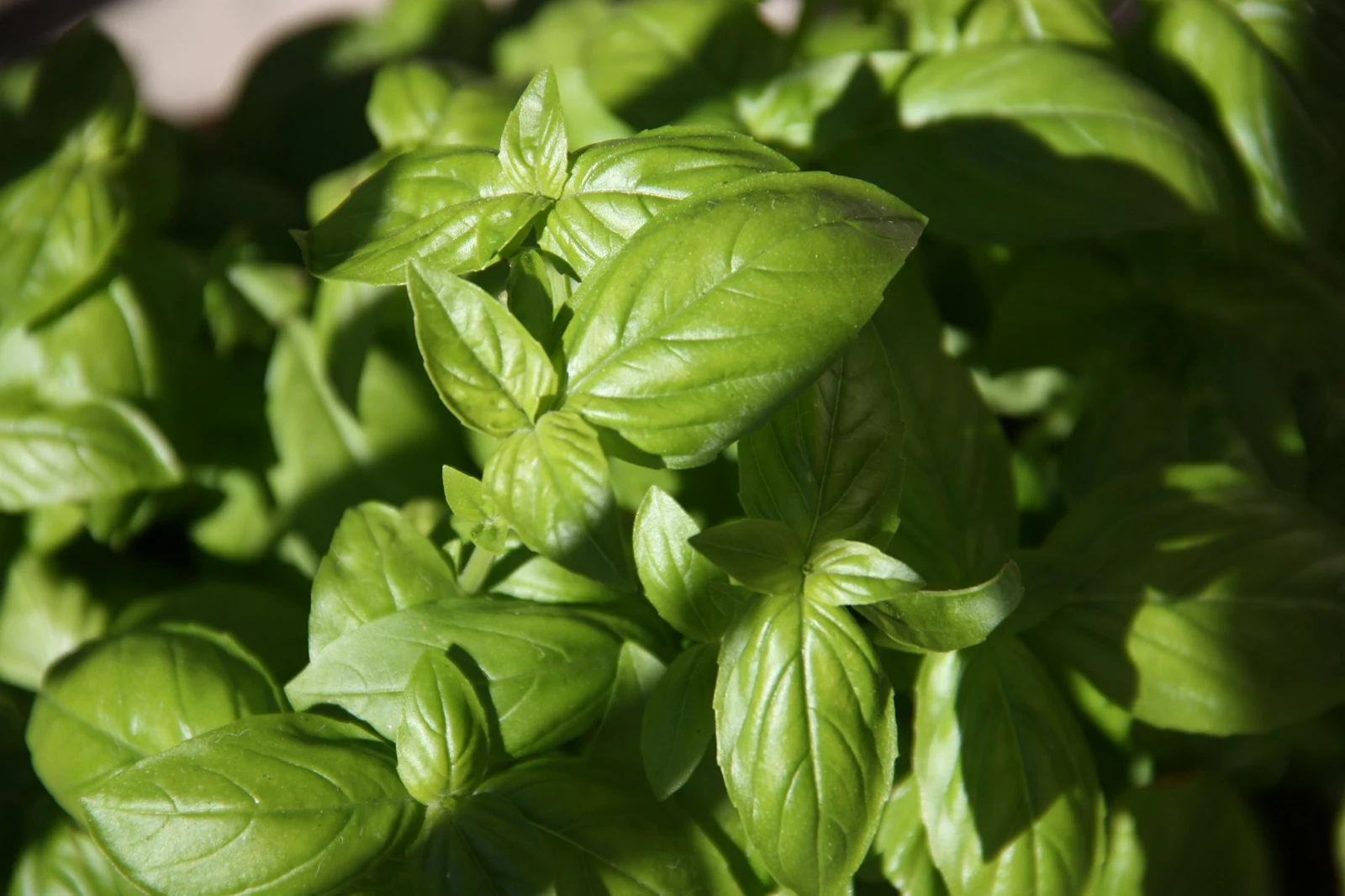 Basil (Herb)