
Honeydew melon
Research status: AI draft — awaiting expert review


Overview
Honeydew is a smooth-skinned muskmelon, usually with pale green flesh and a central cavity of seeds. Choose one that feels heavy for its size, has a creamy rather than greenish rind, and is free of cracks, mold, or soft, sunken spots.
Origin & cultivation
Honeydew belongs to the muskmelon species, whose ancient origins and domestication span parts of Africa and Asia; modern honeydew types are associated with Mediterranean cultivation. Major growing regions include China, the Mediterranean, the southwestern United States, Mexico, and Central America.
Season
In the United States, locally grown honeydew is generally best from summer through early fall. Imports from warmer regions make it available year-round, though sweetness and quality vary.
Texture & flavor
Ripe honeydew has juicy, smooth flesh with a firm-to-tender bite and a mild, honeylike sweetness. Underripe fruit is crisper and less aromatic; keeping it at room temperature may soften it but does not substantially increase its sugar content.
Nutrition
Typical values estimated with AI, not yet checked against lab data. For guidance only.
| Energy | 36 kcal | raw, per 100 g edible portion | FoodPulse AI estimate |
| Protein | 0.54 g | raw, per 100 g edible portion | FoodPulse AI estimate |
| Total fat | 0.14 g | raw, per 100 g edible portion | FoodPulse AI estimate |
| Saturated fat | 0.038 g | raw, per 100 g edible portion | FoodPulse AI estimate |
| Carbohydrate | 9.09 g | raw, per 100 g edible portion | FoodPulse AI estimate |
| Dietary fiber | 0.8 g | raw, per 100 g edible portion | FoodPulse AI estimate |
| Total sugars | 8.12 g | raw, per 100 g edible portion | FoodPulse AI estimate |
| Water | 89.82 g | raw, per 100 g edible portion | FoodPulse AI estimate |
| Calcium | 6 mg | raw, per 100 g edible portion | FoodPulse AI estimate |
| Iron | 0.17 mg | raw, per 100 g edible portion | FoodPulse AI estimate |
| Magnesium | 10 mg | raw, per 100 g edible portion | FoodPulse AI estimate |
| Potassium | 228 mg | raw, per 100 g edible portion | FoodPulse AI estimate |
| Sodium | 18 mg | raw, per 100 g edible portion | FoodPulse AI estimate |
| Zinc | 0.09 mg | raw, per 100 g edible portion | FoodPulse AI estimate |
| Vitamin C | 18 mg | raw, per 100 g edible portion | FoodPulse AI estimate |
| Vitamin A (RAE) | 3 µg | raw, per 100 g edible portion | FoodPulse AI estimate |
| Folate | 19 µg | raw, per 100 g edible portion | FoodPulse AI estimate |
| Vitamin B12 | 0 µg | raw, per 100 g edible portion | FoodPulse AI estimate |
| Cholesterol | 0 mg | raw, per 100 g edible portion | FoodPulse AI estimate |
Glycemic index: Not established.
Honeydew provides water, vitamin C, and some potassium, making it a useful part of a varied diet rather than a treatment for disease. Melon allergy is possible, and people with pollen-food allergy syndrome, especially those sensitive to ragweed, may experience mouth or throat itching. Educational, not medical advice.
Educational information, not medical advice.
Storage
- Room temperature, whole · About 60–75°F (16–24°C), away from sun and heat · About 2–4 days; refrigerate once ripe. Keep intact fruit clean and dry, and inspect daily. Discard if moldy, leaking, split with exposed flesh, or developing soft, sunken areas or a fermented odor. FoodPulse AI estimate
- Refrigerator, whole or cut · 32–40°F (0–4°C) · Whole ripe melon: about 5–7 days; cut melon: 3–4 days. Cover cut melon and refrigerate within 2 hours of cutting, or within 1 hour above 90°F (32°C). Discard cut melon left out longer, even if it looks normal; also discard for mold, slime, or sour or fermented odor. FoodPulse AI estimate
- Freezer, cut flesh · 0°F (-18°C) or below · About 8–12 months for best quality. Freeze peeled, seeded pieces in freezer-safe packaging; tray-freezing first keeps them separate. Continuously frozen melon remains safe beyond this quality window but softens after thawing; thaw in the refrigerator or use frozen, and discard if thawed above 40°F (4°C) for more than 2 hours. FoodPulse AI estimate
Preparation
Wash hands, then rinse the whole melon under running water and scrub its rind with a clean produce brush; do not use soap or bleach. Dry, halve with a clean knife, scoop out the seeds, and remove the rind before slicing or cubing. Keep melon and its utensils separate from raw meat, poultry, fish, and seafood, and wash and sanitize shared surfaces before preparing this ready-to-eat fruit.
Cooking
Honeydew is usually served raw in salads, smoothies, chilled soups, or sorbet. For grilling, cut firm flesh into thick slabs and cook over medium-high heat for about 2–4 minutes per side, depending on thickness, until lightly marked. Alternatively, roast roughly 1-inch cubes at 425°F (220°C) for about 15–25 minutes, checking early because ripeness and piece size affect softening.
Recipes
No verified recipes yet.
Waste less
Blend sound, overripe flesh into smoothies or puree it for frozen pops rather than discarding it for softness alone. Use refrigerated leftovers promptly in fruit salad or a chilled soup, or freeze them before they spoil. Compost rind and seeds where accepted, but discard fruit with mold, slime, or a fermented odor rather than trying to salvage it.
Food waste tips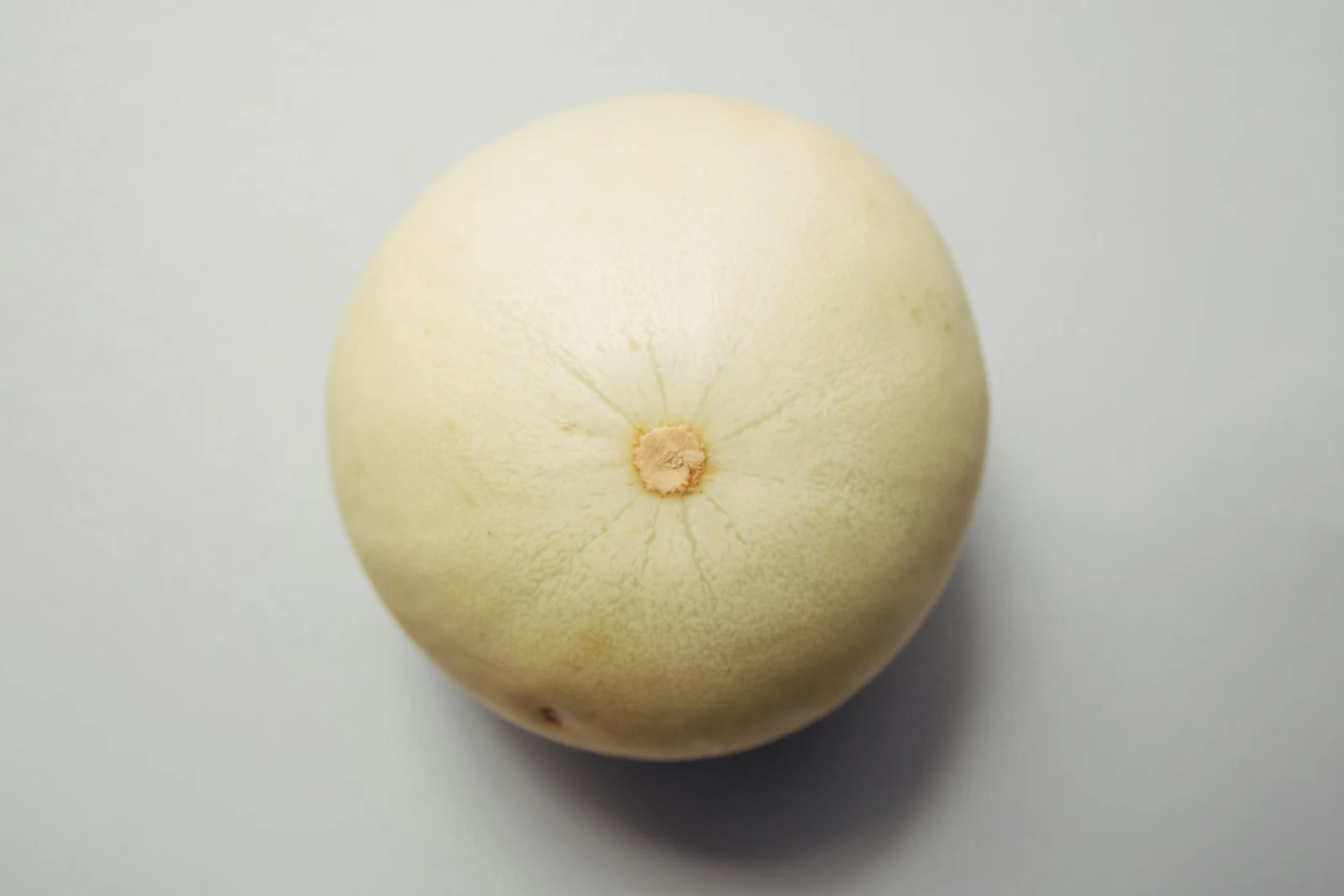 Honeydew Melons