
Kale
Research status: AI draft — awaiting expert review

Overview
Kale is a leafy member of the cabbage family that grows loose leaves rather than a tight head. Common types include curly kale, dark lacinato (dinosaur) kale, and tender red or Russian varieties.
Origin & cultivation
Kale developed from wild cabbages native to coastal Europe and the Mediterranean, with cultivation dating back thousands of years. It is now grown across temperate regions, including Europe, North America, and parts of Asia.
Season
Kale is often available year-round, but its main outdoor season is autumn through spring in mild climates. Cool weather and light frost can make the leaves taste sweeter; local availability varies.
Texture & flavor
Raw kale is firm and chewy, with earthy, cabbage-like flavors and varying bitterness. Baby leaves are milder and more tender, while mature leaves soften with cooking or a brief massage with dressing.
Nutrition
Typical values estimated with AI, not yet checked against lab data. For guidance only.
| Energy | 35 kcal | raw, per 100 g edible portion | FoodPulse AI estimate |
| Protein | 2.92 g | raw, per 100 g edible portion | FoodPulse AI estimate |
| Total fat | 1.49 g | raw, per 100 g edible portion | FoodPulse AI estimate |
| Saturated fat | 0.178 g | raw, per 100 g edible portion | FoodPulse AI estimate |
| Carbohydrate | 4.42 g | raw, per 100 g edible portion | FoodPulse AI estimate |
| Dietary fiber | 4.1 g | raw, per 100 g edible portion | FoodPulse AI estimate |
| Total sugars | 0.99 g | raw, per 100 g edible portion | FoodPulse AI estimate |
| Water | 89.63 g | raw, per 100 g edible portion | FoodPulse AI estimate |
| Calcium | 254 mg | raw, per 100 g edible portion | FoodPulse AI estimate |
| Iron | 1.6 mg | raw, per 100 g edible portion | FoodPulse AI estimate |
| Magnesium | 33 mg | raw, per 100 g edible portion | FoodPulse AI estimate |
| Potassium | 348 mg | raw, per 100 g edible portion | FoodPulse AI estimate |
| Sodium | 53 mg | raw, per 100 g edible portion | FoodPulse AI estimate |
| Zinc | 0.39 mg | raw, per 100 g edible portion | FoodPulse AI estimate |
| Vitamin C | 93.4 mg | raw, per 100 g edible portion | FoodPulse AI estimate |
| Vitamin A (RAE) | 241 µg | raw, per 100 g edible portion | FoodPulse AI estimate |
| Folate | 62 µg | raw, per 100 g edible portion | FoodPulse AI estimate |
| Vitamin B12 | 0 µg | raw, per 100 g edible portion | FoodPulse AI estimate |
| Cholesterol | 0 mg | raw, per 100 g edible portion | FoodPulse AI estimate |
Glycemic index: Not established.
Kale provides vitamins K and C, carotenoids, and fiber; it can contribute to a varied, balanced diet but is not a treatment for disease. Kale allergy is uncommon but possible; anyone taking warfarin should keep vitamin K intake consistent and discuss major dietary changes with their clinician. Educational, not medical advice.
Educational information, not medical advice.
Storage
- Refrigerator · 32–40°F (0–4°C) · Raw: about 3–7 days; cooked: 3–4 days. Store raw kale unwashed and dry in a loosely closed bag with a paper towel, away from raw animal-food drips. Refrigerate cooked kale in shallow containers within 2 hours, or 1 hour above 90°F (32°C). Discard moldy, slimy, or foul-smelling kale; yellowing alone usually indicates declining quality. FoodPulse AI estimate
- Freezer · 0°F (-18°C) or below · 8–12 months for best quality. Wash and trim, water-blanch for 2 minutes, cool promptly in ice water, and drain thoroughly before packing in airtight freezer containers. Continuously frozen kale remains safe beyond this quality window; freezer burn affects quality rather than safety. Discard if thawed kale has been above 40°F (4°C) for more than 2 hours, or develops mold, slime, or an off odor. FoodPulse AI estimate
Preparation
Remove damaged leaves, then rinse under cool running water, opening folds to remove grit; do not use soap or household bleach. Strip tough stems and slice leaves into ribbons or bite-size pieces, then dry well for salads or roasting. Keep kale separate from raw meat, poultry, fish, and seafood, and wash hands, knives, boards, and counters after handling those foods.
Cooking
Sauté thin ribbons for about 3–5 minutes or larger, mature pieces for 8–12 minutes, adding a splash of water as needed. Steam for 5–10 minutes or simmer in soups for 10–20 minutes, depending on leaf thickness and desired tenderness. For chips, dry thoroughly, lightly coat with oil, and bake in a single layer at 300°F (150°C) for about 15–25 minutes, checking early because small pieces brown quickly.
Recipes
No verified recipes yet.
Waste less
Finely chop sound stems and cook them before adding the leaves, or add them to soups and stock. Use safely refrigerated cooked kale in eggs, beans, pasta, or grain bowls within 3–4 days. Compost spoiled leaves and unusable trimmings where local composting rules allow.
Food waste tips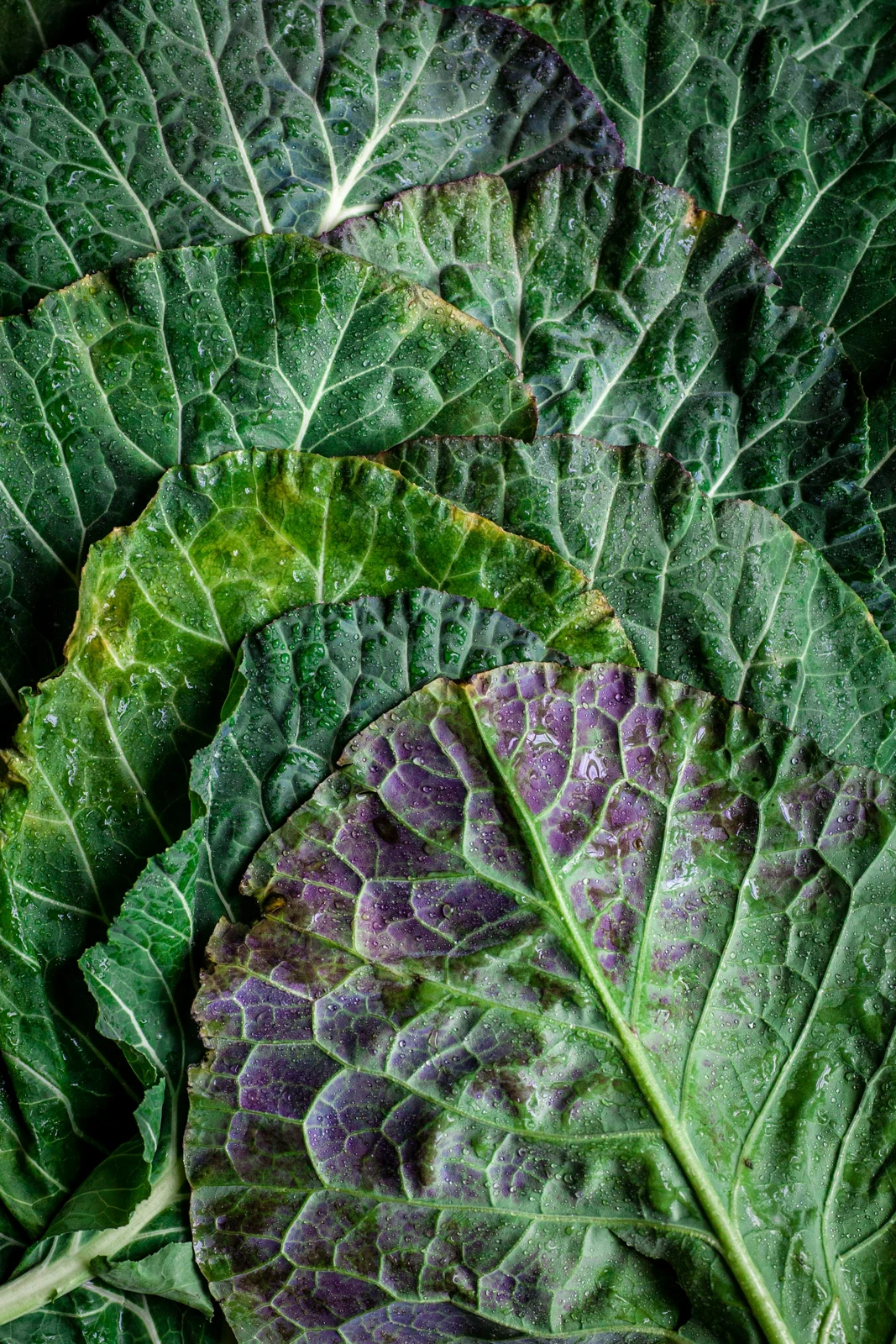 Kale