Cherry Blossom
Iconic pink-flowering ornamental of East Asia
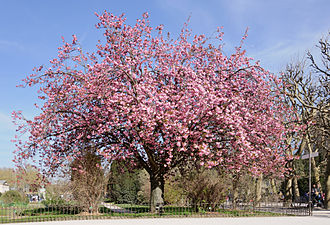
Prunus serrulata, commonly known as the Japanese cherry or ornamental cherry, is a deciduous flowering tree renowned for its spectacular spring blossoms. Native to East Asia, it is widely cultivated worldwide as an ornamental species and holds profound cultural significance, particularly in Japanese tradition.
Overview
The Japanese flowering cherry (Prunus serrulata) is a small to medium-sized deciduous tree belonging to the rose family (Rosaceae). It is celebrated for its abundant clusters of pink or white flowers that appear in early spring before or as the leaves emerge. The tree typically reaches heights of 8-12 meters with a rounded or spreading crown. Prunus serrulata encompasses numerous cultivated varieties, many developed in Japan over centuries for ornamental purposes. The species is characterized by its smooth, chestnut-brown bark marked with horizontal lenticels, and its graceful branching habit. The flowers, which may be single or double depending on the cultivar, appear in dense clusters and last approximately two weeks under favorable conditions. While native to mountain regions of Japan, Korea, and China, P. serrulata has been introduced to temperate regions worldwide as an ornamental tree. It thrives in well-drained soils and full sun, requiring a period of winter chill to produce optimal flowering. The tree is relatively short-lived compared to other ornamental species, with most cultivars living 15-25 years in urban conditions. Beyond its aesthetic value, the cherry blossom holds deep symbolic meaning in East Asian cultures, representing the ephemeral nature of life. The annual blooming season triggers major cultural celebrations, particularly Japan's hanami tradition of flower viewing.
How to identify
Prunus serrulata is identified by its distinctive bark, which is smooth and reddish-brown to gray with prominent horizontal lenticels. The leaves are ovate to lanceolate, 5-13 cm long, with sharply serrated margins and an acuminate tip; they emerge bronze or reddish, turning dark green in summer and yellow to orange-red in autumn. Flowers appear in clusters (umbels) of 2-5 blooms, each 2-5 cm in diameter with five petals (or many more in double-flowered cultivars), ranging from white to deep pink. The tree reaches 8-12 meters in height with a spreading, rounded crown. Small, spherical fruits (drupes) approximately 8-10 mm in diameter ripen to dark purple or black in early summer, though many ornamental cultivars produce minimal fruit.
Habitat
Prunus serrulata naturally occurs in mixed deciduous forests and mountain slopes at elevations of 400-2,500 meters. It prefers well-drained, slightly acidic to neutral soils in areas with distinct seasonal changes. In cultivation, it is planted in parks, gardens, streetscapes, and temple grounds, thriving best in temperate climates with cold winters and mild springs.
Distribution
Native to Japan, Korea, and China, Prunus serrulata has been extensively cultivated and naturalized in temperate regions across North America, Europe, Australia, and New Zealand. Major plantings exist in Washington D.C. (USA), Vancouver (Canada), Stockholm (Sweden), and numerous cities throughout East Asia. The species requires temperate climates with adequate winter chilling hours.
Diet
Requires well-drained, moderately fertile soil with slightly acidic to neutral pH (6.0-7.0). Prefers full sun exposure for optimal flowering, requiring at least 6 hours of direct sunlight daily. Benefits from organic matter incorporation and regular watering during establishment, though mature trees are moderately drought-tolerant. Requires 800-1,200 chilling hours below 7°C for proper flower bud development.
Behavior
Exhibits a rapid spring flush growth pattern, with flowers appearing before or simultaneously with leaf emergence. The tree displays a pronounced seasonal rhythm, with dramatic spring flowering followed by summer vegetative growth, autumn leaf coloration, and winter dormancy. Branch architecture tends toward horizontal spreading in many cultivars. Susceptible to branch breakage under heavy snow or ice loads. Self-incompatible in most varieties, requiring cross-pollination for fruit set, though ornamental cultivars are often selected for minimal fruiting.
Reproduction & life cycle
Flowers in early to mid-spring (March-May in the Northern Hemisphere) for approximately 7-14 days, with timing highly dependent on temperature. Pollination is primarily by bees and other insects. Fruits mature in early summer, containing a single seed dispersed by birds. In cultivation, propagation is predominantly vegetative through grafting onto rootstocks (typically Prunus avium) to maintain cultivar characteristics. Seeds require cold stratification for germination. Trees typically begin flowering at 3-5 years of age when grafted.
When to look
Best observed in early to mid-spring (March-May in Northern Hemisphere, September-November in Southern Hemisphere) during peak flowering. Autumn foliage display occurs in October-November (Northern Hemisphere). Winter reveals distinctive bark and branching structure.
Cultural significance
Prunus serrulata holds immense cultural importance in Japan, where cherry blossom viewing (hanami) is a centuries-old tradition celebrating the transient beauty of life. The flower is an unofficial national symbol of Japan and appears on currency and in art. In Chinese culture, the cherry blossom represents feminine beauty and love. Major cherry blossom festivals occur worldwide, including Washington D.C.'s National Cherry Blossom Festival commemorating the 1912 gift of trees from Japan. The blossoms feature prominently in poetry, literature, art, and modern media throughout East Asia.
Similar species
- Prunus × yedoensis (Yoshino cherry)
- Prunus sargentii (Sargent's cherry)
- Prunus subhirtella (Higan cherry)
Watch on YouTube
Search YouTube for "Prunus serrulata Japanese cherry blossom tree flowering"Share notes, corrections, or add local knowledge. Text · Images · Videos · Links.