Medication Conundrum in India — Smart Ways to Combine Blister Packs with Weekly Pill Organisers
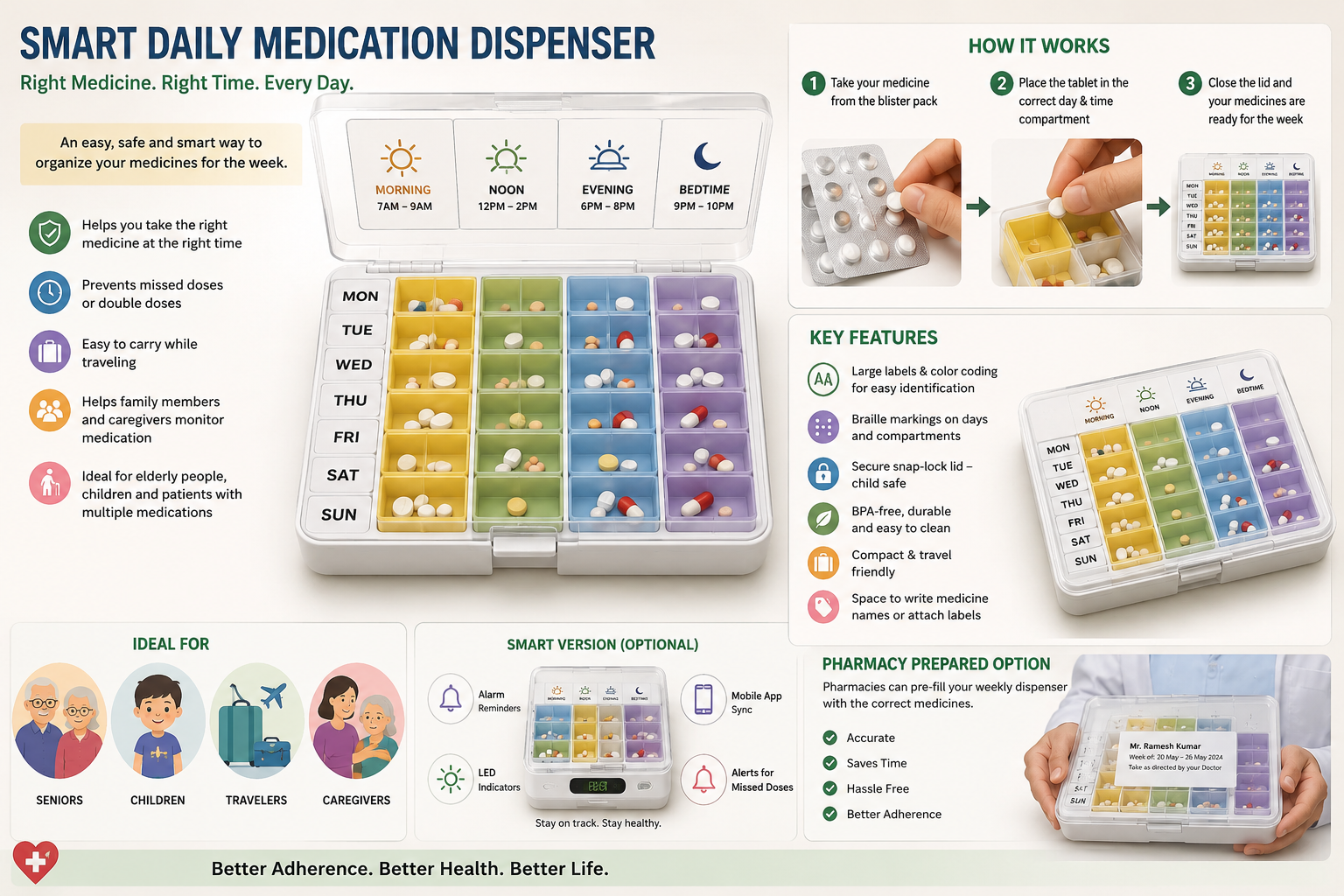
Same medicine. Different packaging. Two countries. Two systems. One goal — safe medicines for everyone.
Why blister packs alone don't solve daily medication management
Blister packs are excellent for protecting medicines from heat, humidity and contamination — but they are not optimised for daily medication management. Patients still have to:
- Read tiny printed text on foil strips.
- Identify the correct strip among several similar-looking ones.
- Remember whether they have already taken today's dose.
- Carry multiple blister packs while traveling.
- Help elderly parents or children manage medications safely.
A system that combines the protection of blister packs with the convenience of a weekly pill organiser could significantly improve medication adherence — and could save lives in a country of 1.4 billion people managing chronic disease at scale.
Ideas that could make such a system even more useful
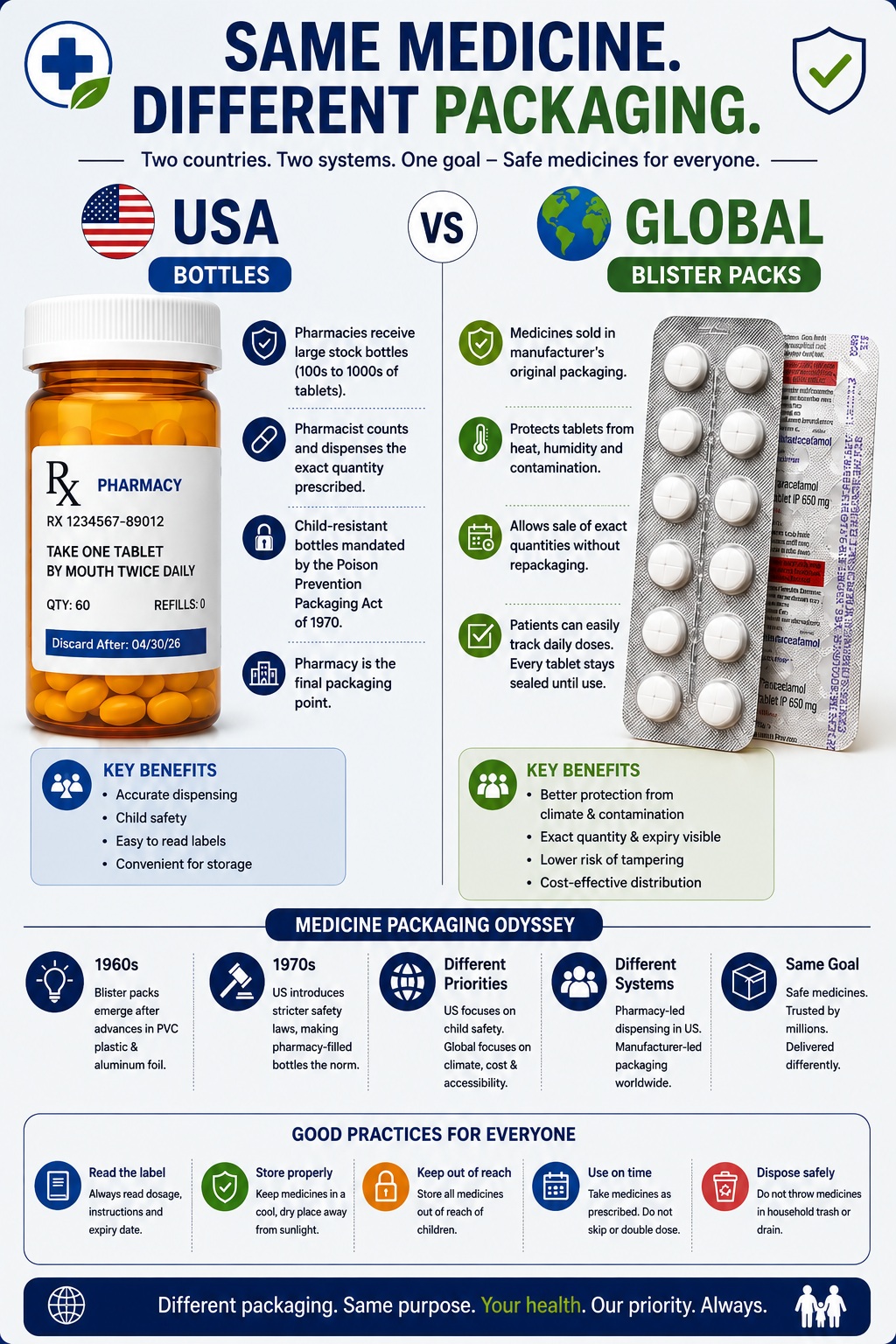
Smart Daily Medication Organiser
Core features:
- Seven-day organiser (Monday–Sunday).
- Two, three, or four compartments per day (Morning, Noon, Evening, Bedtime).
- Patients cut individual tablets from blister packs and place them into the appropriate compartments.
- Large-print labels and color coding.
- Braille markings for visually impaired users.
- Space to write medication names or attach printed labels.
- Locking mechanism to prevent accidental opening by children.
- Compact travel-friendly design.
Smart Version
A premium version could include:
- Audible alarms.
- LED reminder lights.
- Mobile app synchronisation.
- Family notifications if a dose is missed.
- QR code on each medication linking to dosage instructions.
- AI-powered camera that confirms the correct tablets have been loaded.
Pharmacy-Based Service
An even bigger opportunity would be for pharmacies to prepare medications for patients. Instead of dispensing multiple blister strips, pharmacies could provide a weekly medication tray with:
- Each compartment filled with the correct medications.
- Printed patient name.
- Date and time labels.
- Doctor's instructions.
- Refill date.
This is similar to medication compliance packaging already offered in some countries and could greatly benefit patients in India.
Benefits
- Improves medication adherence.
- Reduces accidental overdoses.
- Prevents missed doses.
- Helps caregivers monitor compliance.
- Simplifies travel.
- Reduces confusion among elderly patients.
- Makes it easier for hospitals and nursing homes to manage medications.
- Could reduce hospital admissions caused by medication errors.
Future Innovation
An Indian startup could develop smart reusable medication cassettes where pharmacies insert pre-filled daily cartridges. Patients would simply remove one cartridge each day, eliminating the need to handle individual blister packs.
As India's population ages and chronic diseases become more common, solutions like this could have a significant public-health impact. It could be especially valuable for patients living with diabetes, hypertension, heart disease, Parkinson's disease, and other conditions requiring multiple daily medications.
This is a Social Pulse editorial idea piece. It does not diagnose, prescribe or interpret personal test results. For medical concerns specific to you, always consult a qualified healthcare professional.