Discover. Explore. Identify. Protect.
Nature Pulse is Social Pulse's community-powered Global Nature Atlas — a living record of every plant, animal, ecosystem and natural place on Earth, built together with citizen scientists, educators and explorers like you.
Trees, flowers, herbs, food crops and fungi
Olive: Olea europaea, the olive tree, is an evergreen tree or shrub native to the Mediterranean Basin, cultivated for millennia for its fruit and oil. It is a drought-tolerant, long-lived species iconic to Mediterranean landscapes and economies.

Zzz Nature Idem 5bbeda17: Zzz Nature Idem 5bbeda17 is an unrecognized taxonomic entry with no established scientific name or verifiable biological data. This entry does not correspond to any documented flower species in current botanical databases.
Lilac: Syringa vulgaris, commonly known as common lilac, is a deciduous flowering shrub native to the Balkan Peninsula in southeastern Europe. It is widely cultivated worldwide for its fragrant, showy purple or white flower clusters that bloom in late spring.
Fenugreek: Fenugreek (Trigonella foenum-graecum) is an annual herb in the legume family, cultivated worldwide for its aromatic seeds and leaves used in culinary and medicinal applications. Native to the Mediterranean region and western Asia, it has been used for thousands of years as both a spice and traditional remedy.
St John's Wort: St John's Wort (Hypericum perforatum) is a perennial herbaceous plant native to Europe, western Asia, and North Africa, now naturalized worldwide. Best known for its traditional use in treating mild to moderate depression and its distinctive yellow flowers with black-dotted petals.
Cocoa: Theobroma cacao is a small tropical evergreen tree native to the Amazon basin, cultivated worldwide for its seeds (cocoa beans) used in chocolate production. It requires humid, shaded understory conditions and bears pods directly on its trunk and branches.
Avocado: Persea americana, commonly known as avocado, is an evergreen tree native to Central and South America that produces a nutrient-rich, pear-shaped fruit with a large central seed. Widely cultivated in tropical and Mediterranean climates worldwide, it has become one of the most economically important fruit crops globally.
Okra: Okra (Abelmoschus esculentus) is a flowering plant cultivated for its edible green seed pods, widely grown in tropical, subtropical, and warm temperate regions worldwide. It is valued for its mucilaginous texture and nutritional content, playing important roles in cuisines from Africa, South Asia, the Middle East, and the Americas.
Reishi: Ganoderma lingzhi, commonly known as reishi or lingzhi, is a polypore mushroom with a distinctive reddish-brown, kidney-shaped cap and shiny varnished appearance. It has been used in traditional East Asian medicine for over two millennia and grows on hardwood trees in temperate and subtropical forests.
Mammals, birds, fish, marine life, reptiles, amphibians, insects
Platypus: The platypus is a semi-aquatic, egg-laying mammal endemic to eastern Australia and Tasmania. It is one of only five extant monotreme species and is distinguished by its duck-like bill, beaver-like tail, and venomous spurs in males.
Black Kite: The Black Kite (Milvus migrans) is a medium-sized raptor found across Europe, Asia, Africa, and Australia, known for its adaptability to human-modified landscapes. It is one of the world's most abundant birds of prey, often seen scavenging in urban areas and around water bodies.
Koi: Koi are ornamental varieties of the Amur carp (Cyprinus rubrofuscus), originally domesticated in East Asia and now bred worldwide for their vibrant colors and patterns. These freshwater fish are prized in aquaculture and ornamental ponds, with some individuals living for decades and reaching substantial sizes.
Nautilus: The chambered nautilus is a living fossil, a cephalopod mollusk with a distinctive spiraled external shell divided into gas-filled chambers. Found in the deep tropical waters of the Indo-Pacific, it has survived relatively unchanged for hundreds of millions of years.
Chameleon (Panther): The Panther Chameleon (Furcifer pardalis) is a large, spectacularly colorful chameleon species endemic to Madagascar and surrounding islands. Males display vivid patterns of red, blue, green, orange, and yellow, with coloration varying by geographic locale.
Wood Frog: The Wood Frog (Lithobates sylvaticus) is a cold-adapted amphibian found across North America, famous for its ability to survive freezing solid in winter. It is identified by a distinctive dark facial mask extending from the snout through the eye and tympanum.
Cicada: Cicadas (Cicadidae) are large, robust insects best known for the loud mating calls produced by males during warm months. With a unique life cycle that includes extended underground nymph stages, cicadas emerge en masse to mate, creating one of nature's most distinctive soundscapes.
Cabbage White: The Cabbage White (Pieris rapae) is a small, widespread butterfly with white wings marked by black spots, originally native to Europe, Asia, and North Africa. Now one of the world's most successful invasive species, it has colonized North America, Australia, and New Zealand, where its caterpillars are significant agricultural pests on cabbage and related crops.
Hoverfly: Hoverflies (Syrphidae) are a diverse family of true flies that mimic bees and wasps for protection, hovering skillfully in mid-air while visiting flowers. They are important pollinators as adults and often biocontrol agents as larvae, with many species feeding on aphids.
Golden Orb-Weaver: The Golden Orb-Weaver is a large, conspicuous spider found in the Americas, known for its striking yellow-gold silk and impressive orb webs. Females can reach substantial sizes while males remain much smaller, exhibiting extreme sexual size dimorphism.
Wildebeest: The blue wildebeest (Connochaetes taurinus) is a large African antelope known for its distinctive appearance and spectacular annual migrations across East African savannas. These gregarious herbivores form vast herds numbering in the hundreds of thousands, making their migration one of the greatest wildlife spectacles on Earth.
Forests, mountains, rivers, lakes, parks, trails
Daintree Rainforest: Rainforest in Australia
Table Mountain: Mountain overlooking Cape Town, South Africa

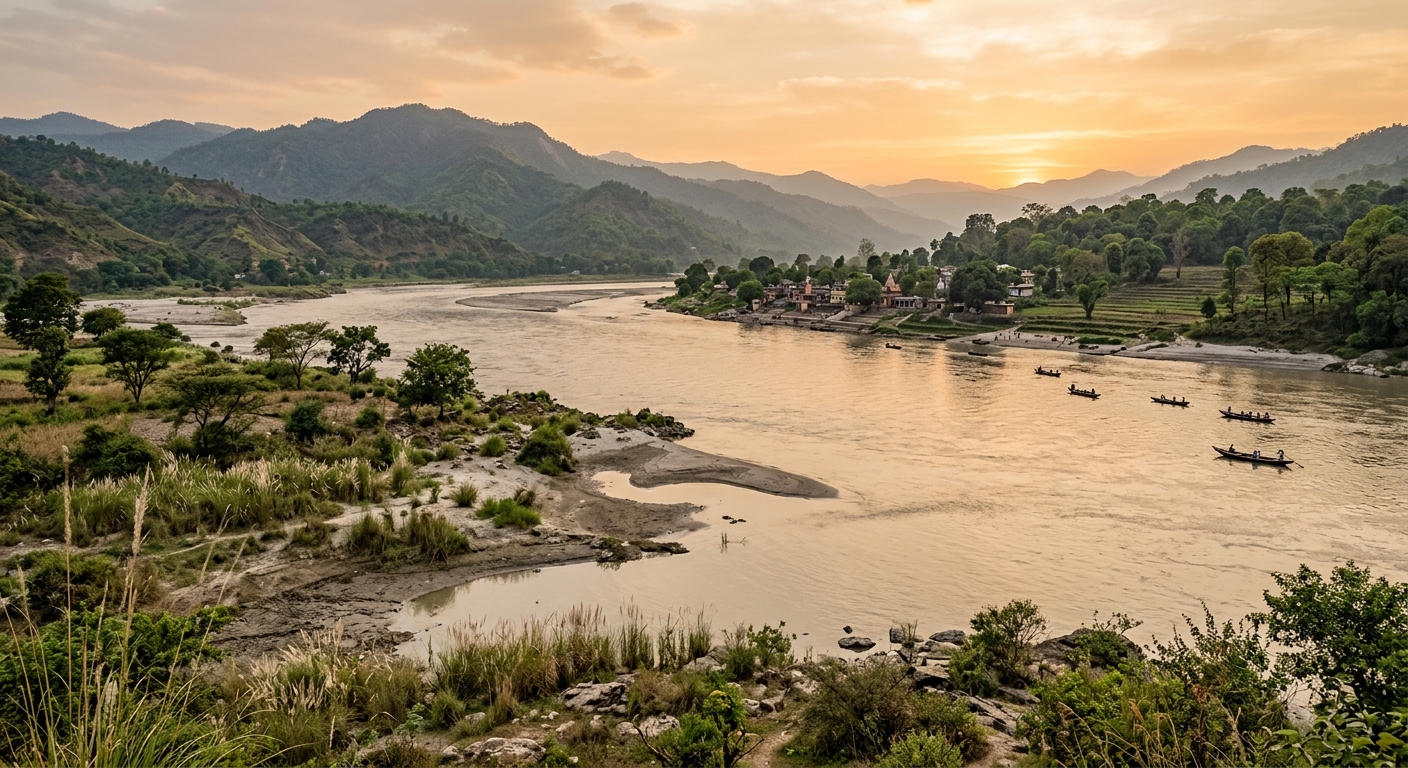
Ganges River: The Ganges River is a 2,525-kilometer trans-boundary river flowing through India and Bangladesh, considered sacred in Hinduism. It supports one of the world's most densely populated river basins and hosts diverse aquatic ecosystems despite severe pollution challenges.
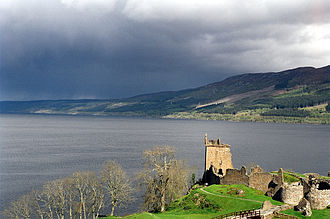
Loch Ness: Lake in Scotland
Serpentine (Hyde Park): Lake in Hyde Park, London
Okavango Delta: River delta in Botswana
Yosemite Falls: Waterfall in California, United States
Whitehaven Beach: Beach on Whitsunday Island, Australia
Bora Bora: Island in French Polynesia
Mojave Desert: Desert in the southwestern United States
Cueva de los Cristales: Mexican cave renowned for its giant crystals
Stanley Park: Public park in Vancouver, Canada
Jardin des Plantes: Botanical garden in Paris, France

Yellowstone National Park: Yellowstone National Park is the world's first national park, established in 1872, spanning nearly 3,500 square miles across Wyoming, Montana, and Idaho. It is renowned for its geothermal features including Old Faithful geyser, diverse wildlife such as bison and grizzly bears, and dramatic landscapes ranging from canyons to alpine rivers.
Kaziranga: National park in the state of Assam, India
Doñana: National park in Andalucía, southern Spain
Everest Base Camp Trek: Staging areas at Mount Everest
Coast to Coast Walk: 190-mile footpath across northern England
EuroVelo 6: Cycling route in Europe
Marine Drive, Mumbai: Promenade in Maharashtra, India
Great Ocean Road: Road in Victoria, Australia
Wave Rock: Rock formation in Western Australia
Climate, ecosystems, conservation, photography, citizen science
Monsoon: Seasonal changes in atmospheric circulation and precipitation
Tropical Rainforest: Tropical broadleaf forest with high rainfall
IUCN Red List: Inventory of the global conservation status of biological species
Macro photography: Photography genre and techniques of extreme close-up pictures
iNaturalist: Website and app for sharing biodiversity observations
Featured species & places
National bird of the United States
Succulent famed for skin-healing gel
Gentle-giant filter-feeder of tropical seas
Bulbous perennial famous for the Dutch fields
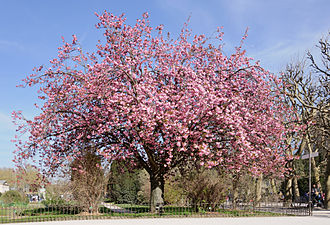
Temperate deciduous orchard tree
Golden-yellow gourmet forest mushroom
Fragrant Mediterranean shrub used in aromatherapy
Sacred aquatic flower of Asia