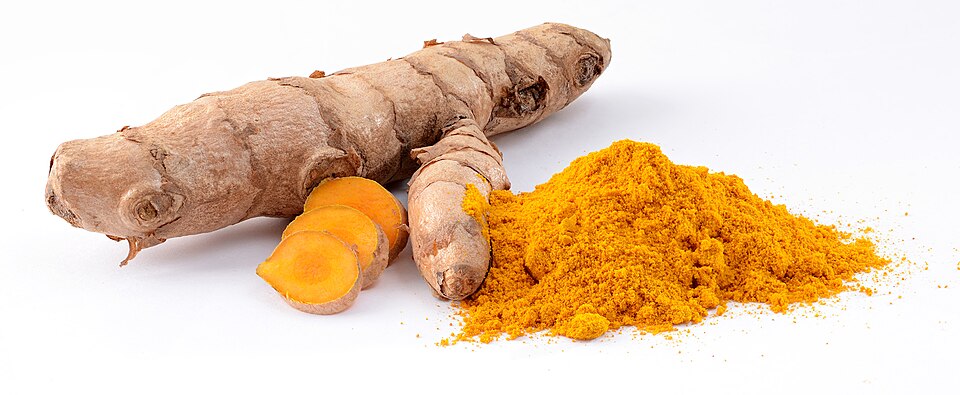
Top photograph: fresh turmeric rhizomes, slices and powder by Simon A. Eugster · Wikimedia Commons · CC BY-SA 3.0. Resized; not cropped.

A pinch of turmeric turns a pot of dal golden. A turmeric marinade colours chicken before it reaches the oven. A capsule labelled “high absorption” delivers a very different product from either. The same plant is behind all three, but the form, dose, purpose and safety questions change along the way. Turmeric earns its place in the kitchen for flavour and colour alone. Understanding what happens between the farm, the spice mill and the supplement bottle helps explain both its value and the claims that surround it.
What gives turmeric its colour and flavour?
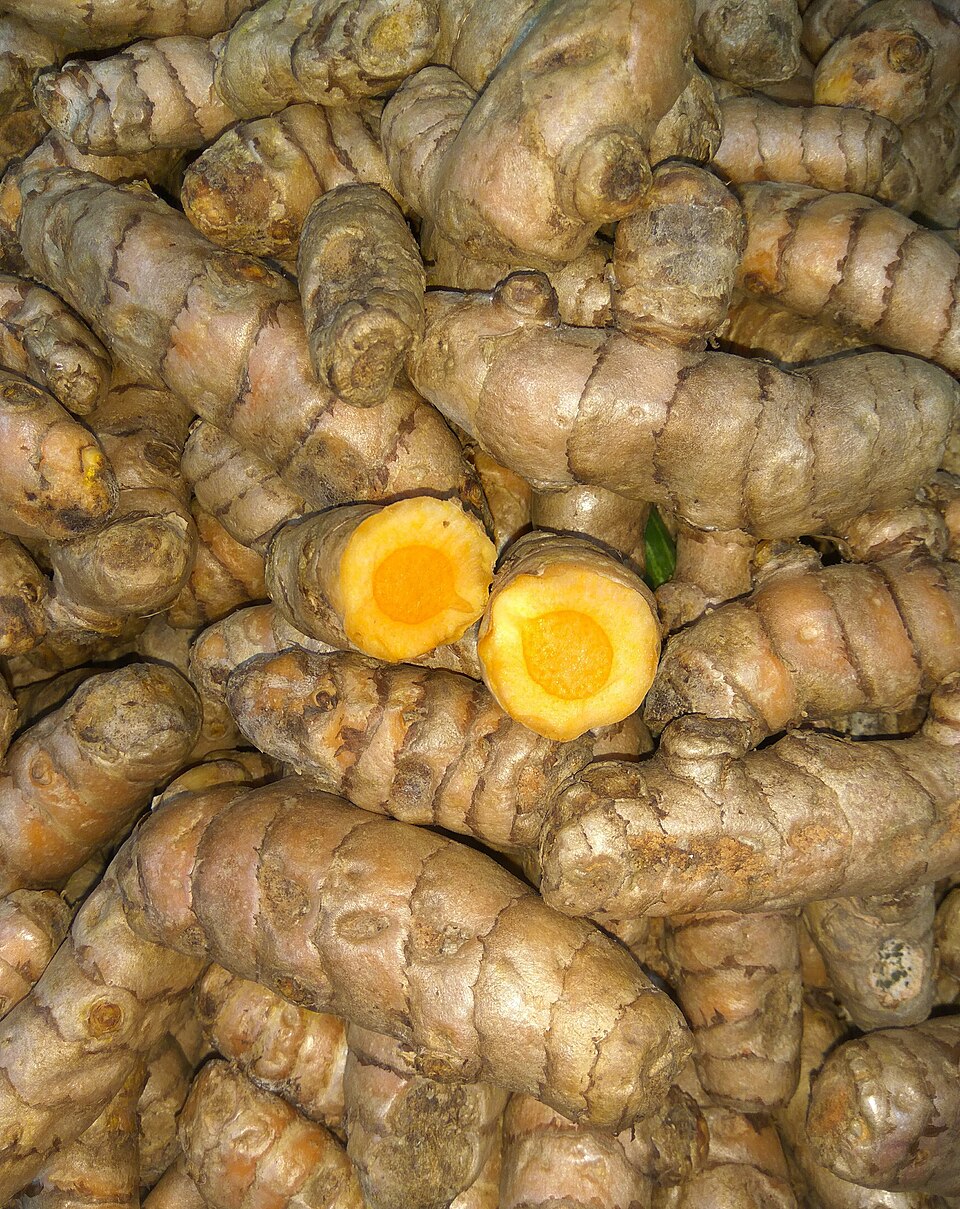
Turmeric is the underground stem, or rhizome, of Curcuma longa, a member of the ginger family. In India it is called haldi in Hindi and manjal in Malayalam and Tamil. Slice a fresh rhizome and the orange-yellow flesh stains fingers and cutting boards. Curcumin and related pigments called curcuminoids provide most of the characteristic colour. Aromatic oils, including turmerones, contribute to the smell and flavour. The spice tastes earthy, warm and slightly bitter, with a peppery, resinous edge. Fresh turmeric is juicy and bright. Dried powder is more concentrated by weight and easier to disperse in a spice blend.
Pure turmeric varies in colour with variety, maturity, processing and storage. Its pigments can shift toward orange-red in alkaline conditions and fade with exposure to light. A brilliant yellow powder tells you little about purity or curcumin content. In a home kitchen, buy modest quantities and store the powder tightly closed, dry and away from light. In manufacturing, buyers can specify colour strength, flavour, moisture and contaminant testing separately. ICAR crop profile
How the world cooks with turmeric
In Kerala, turmeric goes into fish curry, thoran, dal and marinades for chicken or seafood. Across India it colours khichdi, pickles, spice blends and vegetable dishes. In Indonesia, fresh turmeric gives nasi kuning its yellow colour and appears in spice pastes and jamu drinks. It is found in Thai yellow curry, Vietnamese bánh xèo batter, Persian stews, and some North African and Caribbean spice blends. Modern menus use it in golden milk, drinks, soups, dressings and baked goods. Small quantities are often enough. Too much can make a dish taste bitter or dusty.
Ground turmeric supplies colour, flavour and the other constituents of the rhizome. Oleoresin is a concentrated extract containing pigment and aromatic compounds. Curcumin or a curcuminoid preparation is used when formulators want more control over colour. Turmeric essential oil is chiefly an aroma ingredient. These forms suit different applications. Mustard, seasonings, sauces, snack coatings, pickles, convenience meals and some beverages can use turmeric-derived colours where permitted. The US FDA lists turmeric as a food colour exempt from batch certification. In markets using the E-number system, E100 identifies curcumin. Product-category permissions, additive specifications and labelling still matter. FDA colour listing
Black pepper can increase absorption. Turmeric can be absorbed without it
The black-pepper claim usually refers to curcumin entering the bloodstream. Ordinary oral curcumin has low and variable systemic bioavailability. It dissolves poorly in water, and the gut and liver rapidly convert much of the absorbed compound into other forms. Whether a study measures free curcumin or also measures its metabolites changes how the results should be interpreted.
A small human pharmacokinetic study published in 1998 compared 2 grams of purified curcumin alone with the same dose plus 20 milligrams of purified piperine, a compound in black pepper. It reported a roughly 2,000% relative increase in bioavailability from a very low starting point. The experiment measured blood exposure over a short period. It offers no reliable multiplier for a pinch of pepper in curry and established no improvement in symptoms or disease outcomes. Shoba piperine study
Curcumin disperses readily in fat, which helps spread its colour through a dish. Oil, coconut milk or yogurt can be useful culinary partners. The uptake achieved by any specific recipe remains uncertain, and adding lemon, ginger or honey comes with no established absorption multiplier. Commercial formulations use strategies such as phospholipid complexes, emulsions or micelles to alter exposure. Their performance depends on the formulation and measurement method. Higher exposure can also increase the importance of side effects and medicine interactions. NIH evidence review
Traditional medicine, clinical research and sweeping health claims
Ayurveda and other traditions have used turmeric in preparations for digestion, skin and general wellbeing. Its traditional uses help explain why researchers study it. Laboratory experiments show effects on inflammatory and oxidative pathways under certain conditions. An effect in cells, or a change in a blood marker, cannot tell us by itself whether people feel better, recover faster or avoid disease.
Knee osteoarthritis is among the more promising areas. Some trials of specific turmeric or curcumin products report short-term improvements in pain or function. Preparations and doses vary, and stronger trials are needed to establish the size and durability of benefit. Research on fatty liver, blood sugar and other metabolic markers has also produced preliminary signals. Those results provide no sound basis for replacing prescribed care or assuming that culinary turmeric produces the effects of a trial extract. NIH evidence review
Claims that turmeric cures cancer, reverses diabetes, removes toxins, prevents dementia, melts body fat or replaces antibiotics run beyond clinical evidence. Cancer research on curcumin includes laboratory and early clinical studies, but a supplement should never substitute for oncology treatment. The word “detox” also has no bearing on lead in adulterated turmeric. Preventing exposure is the effective starting point.
Safety depends on what you take and how much
Seasoning a meal and taking a concentrated extract daily produce different exposures. Supplements can cause reflux, nausea, diarrhoea or constipation. Clinically apparent liver injury has been reported with turmeric products, including formulations designed to increase absorption. Anyone who develops yellowing of the eyes or skin, dark urine, unusual fatigue or poor appetite while taking one should stop the supplement and seek medical advice promptly. NIH evidence review LiverTox
People who take medicines should review the exact supplement with a clinician or pharmacist, particularly before combining a piperine-enhanced product with medicines where small changes in exposure matter. High-dose use deserves review during pregnancy and breastfeeding and in people with liver or biliary disease. Turmeric supplements may be unsafe during pregnancy. A label that says “natural,” “organic” or “extra strength” provides little information about the suitability of the dose for a particular person.
Lead in turmeric powder — what the farm study shows
A July 2026 Toxics Link investigation examined raw turmeric from farms. Its table covers 13 raw farm samples from Maharashtra, Telangana, Tamil Nadu, Odisha, Karnataka and Madhya Pradesh. Results ranged from below the laboratory’s limit of quantification of 0.05 mg/kg to 1.87 mg/kg. Two samples were below that quantification limit. The report’s table specifies quantification, which concerns how low a concentration can be reliably measured and reported as a number. A below-quantification result does not mean zero. Toxics Link laboratory results
All 13 results were below the 10 mg/kg Indian maximum cited by Toxics Link and listed in FSSAI’s contaminant schedule for whole and powdered turmeric. FSSAI’s spice standard separately excludes added colours such as lead chromate. A legal limit for a food is a compliance measure. It does not specify a safe blood lead level or establish the safety of a particular person’s combined exposure from all sources. Children are especially vulnerable because lead can harm brain development. Lead also affects other organs, and exposure during pregnancy can affect the developing fetus. WHO lead fact sheet
The farm results make post-harvest handling and adulteration important places to investigate, especially where other studies report much higher levels in commercial samples. This small farm survey did not follow the same lots through drying, polishing, milling and retail. It cannot establish what is on shop shelves today, where lead entered a particular lot, or whether lead in any of these 13 samples was present as lead chromate. Drying also changes the weight basis, so farm-to-retail comparisons should account for moisture as well as sampling and laboratory methods.
Lead chromate is a toxic industrial yellow pigment that has been deliberately used to brighten some turmeric. Its presence has been documented in Bangladesh. A published evaluation of a Bangladesh intervention reported that detectable lead in sampled market turmeric fell from 47% to zero in the study samples after measures that included monitoring, enforcement and public communication. This shows the potential of coordinated action. The result applies to the sampled programme and period.
For households, choose a traceable seller, keep the package and lot number, and check official recalls if there is a concern. Whole rhizomes make the material easier to identify, but they can still be contaminated. Colour, water tests and home remedies cannot establish that a lot is lead-free. If a product is recalled or credible contamination is suspected, stop using it, retain the package and ask a healthcare professional about possible exposure, especially for children or during pregnancy. For food businesses, verified suppliers, lot-level records, representative sampling and accredited laboratory testing are stronger safeguards than visual inspection.

Why dressed chicken can look yellow
Dressed chicken is poultry that has been slaughtered and prepared for sale. Turmeric can colour dressed chicken directly when it is applied in a labelled rub, marinade, glaze or coating. It can also colour breading and cooked poultry products. A yellow skin or surface can come from several sources, including pigments deposited from the bird’s diet, a seasoning applied after slaughter, or the visual effect of cooking. Yellow is therefore a poor guide to freshness, microbial safety, production method or whether turmeric was used. Manufacturers should check the rules for the exact product and destination market, particularly when ingredients change the appearance of poultry sold to consumers.
Poultry and other animal feeds
Turmeric powder and extracts have been evaluated in broilers and laying hens for effects on growth, feed efficiency, oxidative markers and product traits such as yolk colour. Effects vary with the diet, species, formulation and study design. Commercial yellow pigmentation commonly relies on dietary carotenoids such as xanthophylls, so a yellow carcass or yolk gives no reliable clue about a turmeric feed programme. Evidence from an experimental flock cannot be treated as proof of routine use worldwide.
The European Food Safety Authority assessed specified turmeric extracts, oils, oleoresins and tinctures as sensory feed additives. Its assessment covered different products and species, including poultry, cattle, pigs, sheep, goats and fish. Species and preparations had different evaluated conditions. A sensory-additive opinion does not establish that turmeric prevents animal disease or replaces veterinary drugs, vaccines or biosecurity. Feed-grade sourcing and contaminant control matter because raw-material quality and exposure differ across supply chains.
Cosmetics, personal care and textile colour
Turmeric appears in face masks, cleansers, soaps and other personal-care products. In South Asia, haldi pastes are also part of wedding and bathing traditions. Curcumin has been studied in topical preparations, but firm evidence for treating conditions such as acne or eczema is limited and depends on the product and condition. It can stain skin and fabrics, and topical products can cause itching or hives. Food-grade powder does not automatically meet the formulation, stability and microbiological requirements of a commercial cosmetic. Outside personal care, turmeric has long been used as a yellow textile and craft dye. Its tendency to fade in light limits applications that require durable colour. ICAR crop profile NIH evidence review
From seed rhizome to finished spice
Growers normally propagate turmeric from healthy pieces of rhizome with viable buds. The crop favours warm growing conditions, moisture and well-drained soil. Raised beds help manage drainage where rainfall is heavy, including in Kerala. Planting and harvest dates vary with rainfall, irrigation, cultivar and region. ICAR’s cultivation guide places many well-managed crops in a seven-to-nine-month cycle. Yellowing and drying leaves signal maturity. After lifting, growers or processors clean and sort the rhizomes. For dried spice, they commonly cure them by boiling or steaming, then dry, grade and sometimes polish them before selling whole fingers or milling powder. Fresh-market turmeric follows a different handling route. ICAR growing and curing guide
Cultivar choice depends on the buyer. A fresh market may reward appearance, tenderness and aroma. A mill may favour dry recovery and consistent flavour. An extraction plant may pay for verified curcuminoid content. Producers must also manage rhizome rot, drainage, clean planting stock and drying conditions. Separating lots during curing and milling helps trace a failed test back to a supplier or processing stage.
Major producers, exporters and buyers
India leads turmeric cultivation and exports. Important growing states include Maharashtra, Telangana, Tamil Nadu, Karnataka, Odisha, Andhra Pradesh, West Bengal and Assam. Crop quality, drying and traceability matter across growing regions. ICAR crop profile
World Bank WITS/UN Comtrade records for calendar year 2024 under HS 091030 show India as the leading reporting exporter by value at about US$328 million and 177,738 tonnes. The Netherlands reported US$14.7 million and 3,905 tonnes, Myanmar US$14.2 million and 28,768 tonnes, Fiji US$11.1 million and 3,651 tonnes, and Germany US$9.6 million and 1,831 tonnes. These are gross exports. Trade and distribution hubs may ship turmeric grown elsewhere. By weight, Myanmar shipped far more than the Netherlands even though its declared export value was slightly lower. WITS exporter data
India is also an importer. WITS records for 2024 show imports of turmeric alongside exports. Calendar-year customs data and Indian fiscal-year series should not be mixed. Spice customs totals do not measure the global market for finished turmeric capsules, extracted pigments, cosmetics or compound animal feed. WITS India imports
Worldwide outlook
The established market is in food. Packaged seasonings, convenience foods and natural-colour applications give processors distinct reasons to buy turmeric in forms ranging from whole dried fingers to standardised extracts. Supplements can command higher prices per unit, but they also face greater scrutiny of claims, formulations, liver safety and interactions. Feed opportunities depend on species-specific evidence, cost and local authorisation. Available spice customs figures offer no reliable estimate of how much turmeric goes into poultry feed or how common direct colouring is in dressed chicken.
Supply will continue to respond to planting decisions, monsoon performance, crop disease, inventories and buyer specifications. Higher export demand or a crop shortfall can change prices without translating into lasting market growth. For India and other origins, reliable drying, tested lots and traceability through polishing, blending and milling can help buyers distinguish consistent supplies from products sold on colour alone. For the cook, turmeric’s value is simpler. It gives a dish an unmistakable colour, aroma and flavour, with or without black pepper.