Brussels sprouts are a type of edible bud of a species in the Brassica family, known for their distinctive flavor and numerous health benefits.
Origin & history
ancient uses: Historically enjoyed in various forms of cuisine across Europe.
region of origin: Brussels
country of origin: Belgium
historical timeline: year: 1587
event: First documented cultivation of Brussels sprouts in Belgium.
cultural significance: A staple in European winter diets and often associated with holiday meals.
domestication history: Dating back to the 16th century in Belgium.
traditional importance: Commonly served during Christmas and festive occasions.
historical trade routes: Introduced to England and other European countries post its domestication.
Growing & production
climate: Cool temperate climates
diseases: Downy mildew
Black rot
rainfall: Moderate rainfall throughout growing season.
harvesting: Harvested when buds are firm and green.
irrigation: Regular watering essential during dry spells.
hydroponics: Feasible but less common.
temperature: Optimal growth at 60-70°F (15-21°C).
growing season: Late spring to early fall.
harvest period: Late summer to early winter.
yield per acre: Approximately 5,000-8,000 lbs.
growing regions: North America
Europe
Asia
pest management: Common pests include aphids and cabbage worms.
planting methods: Transplanting seedlings is common.
vertical farming: Viable due to compact growth.
soil requirements: Loamy, well-drained soil rich in organic matter.
organic cultivation: Compatible with organic farming methods.
greenhouse production: Possible in controlled environments.
fertilizer requirements: Requires nitrogen-rich fertilizers.
Brussels sprouts are rich in vitamins C and K, offer antioxidant properties, and improve digestive health. They may help lower cholesterol levels and have anti-inflammatory benefits. Research suggests eating them regularly can improve heart health and possibly even aid in cancer prevention due to their high levels of glucosinolates.
Health notes
major: Rich in fibre, vitamins A and C, folate, potassium and plant polyphenols.
Low in calories and high in water content — supports weight management and hydration.
Regular vegetable intake is linked to lower rates of cardiovascular disease and type 2 diabetes.
evidence: Consensus among USDA, NIH and WHO reviews is that brussels sprouts contributes positively to a balanced eating pattern when consumed in appropriate portions.
Storage
freezing: Can be blanched and frozen for long-term storage.
shelf life: Up to 10 days under ideal refrigeration.
refrigeration: Best stored in the vegetable drawer.
best practices: Store unwashed and in a sealed container.
common mistakes: Washing before storage, which accelerates spoilage.
storage methods: Refrigeration
Controlled atmosphere
spoilage indicators: Softness
Yellowing leaves
controlled atmosphere storage: Extends shelf life significantly.
Preparation
cutting: Trim the stem end and outer leaves.
washing: Use cold water to wash.
cleaning: Rinse thoroughly to remove dirt.
buying tips: Choose firm, bright green sprouts.
cooking methods: Boiling
Steaming
Roasting
freshness indicators: Firmness
Vibrant green color
seasonal buying guide: Best from September to February.
Practical tips
**Cleaning**
Rinse thoroughly to remove dirt.
**Washing**
Use cold water to wash.
**Cutting**
Trim the stem end and outer leaves.
Recipes
name: Brussels Sprouts with Bacon
tags: roasting
side dish
tips: Use turkey bacon for a healthier option.
method: Preheat oven to 400°F (200°C).
Toss Brussels sprouts with olive oil, salt, and pepper.
Spread on a baking sheet.
Add chopped bacon on top.
Roast for 20 minutes or until crispy.
region: North America
country: United States
cuisine: American
servings: 4
cook time: 20 minutes
image url: https://example.com/brussels_sprouts_bacon.jpg
nutrition: fat g: 8
carbs g: 15
calories: 150
protein g: 6
prep time: 10 minutes
video url: https://example.com/video
chef notes: Make sure not to overcrowd the baking sheet for even cooking.
difficulty: Easy
description: Delicious roasted Brussels sprouts with crispy bacon.
ingredients: Brussels sprouts
Bacon
Olive oil
Salt
Pepper
youtube url: https://youtube.com/video
recipe source: Chef John’s Kitchen
Transportation
humidity: High humidity preferred (90-95%).
packaging: Distributed in ventilated crates or boxes.
shelf life: 3-4 days in optimal conditions.
shipping methods: Refrigerated trucks and containers.
storage temperature: 32°F to 40°F (0°C to 4°C).
cold chain requirements: Maintained below 41°F (5°C).
transportation constraints: Sensitivity to heat and dehydration.
Sustainability
climate resilience: Resilient to cooler climate changes.
sustainable farming: Encourages crop rotation and minimizes soil depletion.
environmental impact: Low when sourced locally.
organic certification: Available from various certifying bodies.
pollinator importance: Supports local pollinator populations.
More about this food
Brussels sprouts are believed to have originated in Belgium in the late 16th century.
They are highest in nutrients and flavor after the first frost.

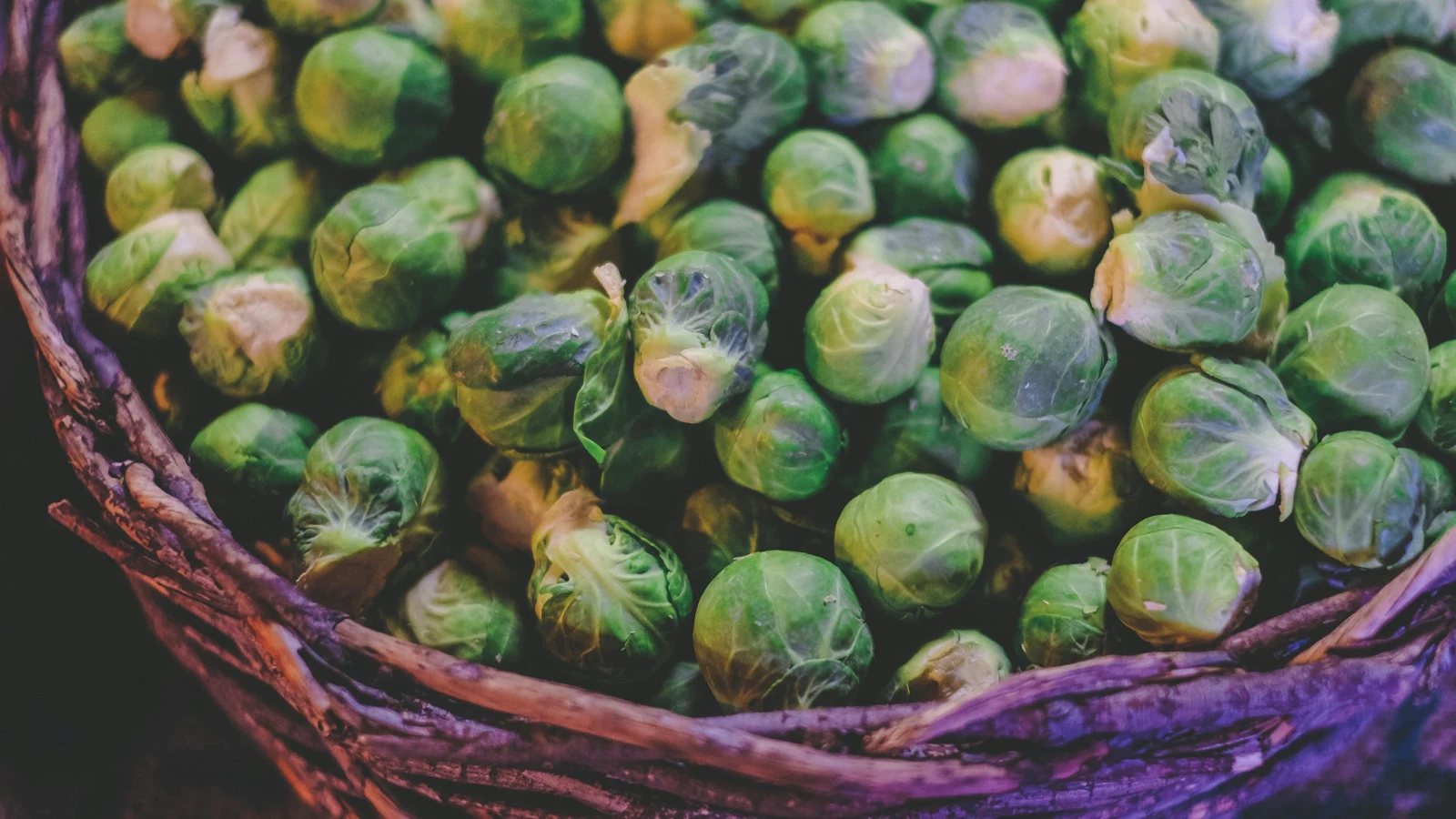 Brussels Sprouts - Mini Cabbage