Imported source research draft. Nutrition, health claims and linked references have not been independently verified.
Original source illustration; may show a general food category.
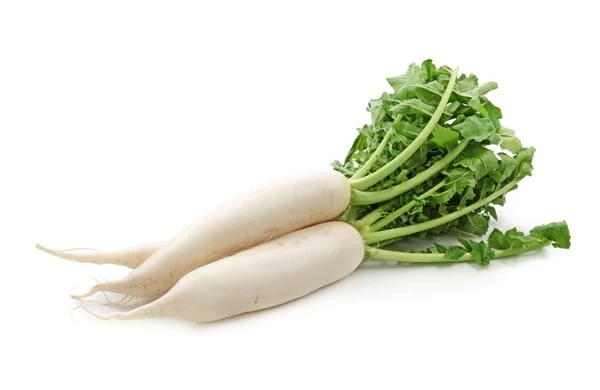
Daikon is a type of radish native to East Asia, characterized by its long, white root that can weigh over a kilogram. It has a mild, sweet flavor and is often used in Japanese, Chinese, and Korean cuisines. The vegetable is typically eaten raw or cooked in various dishes.
Country stock records are private to assigned managers.
Food-waste calculator
Estimate food you can keep out of the bin by using or sharing it.
Potential food saved1 kg
If you use or share 1 kg of Daikon instead of discarding it, that is 1 kg kept out of the bin.
This uses only your entered amount. It does not claim measured waste reduction or convert pieces and packs into invented weights.
Daikon is a type of radish native to East Asia, characterized by its long, white root that can weigh over a kilogram. It has a mild, sweet flavor and is often used in Japanese, Chinese, and Korean cuisines. The vegetable is typically eaten raw or cooked in various dishes.
Origin & history
ancient uses: Used in traditional medicine and as a food source.
region of origin: East Asia
country of origin: Japan
historical timeline: year: 500
event: Daikon first cultivated in Japan.
year: 1800
event: Introduced to Europe.
cultural significance: Symbol of harvest in Japanese culture.
domestication history: Daikon has been cultivated for over 1,000 years in Asia.
traditional importance: Integral in various traditional Asian dishes.
historical trade routes: Initially traded along the Silk Road.
Growing & production
climate: Cool to mild climate, ideally temperate.
diseases: Downy mildew
Black rot
rainfall: Moderate rainfall, around 400-600 mm annually.
harvesting: Harvested when roots reach the desired size.
irrigation: Regular irrigation needed during dry spells.
temperature: Optimal growth at 15-20°C.
growing season: Late spring to early summer or fall.
harvest period: 2-3 months after planting.
yield per acre: 10-15 tons
growing regions: Japan
China
Korea
United States
pest management: Common pests include aphids and root maggots.
planting methods: Direct seeding in rows.
soil requirements: Well-drained, loamy soil with good fertility.
organic cultivation: Commonly grown organically with no synthetic pesticides.
fertilizer requirements: Balanced fertilizer for optimal growth.
Nutrition draft
per 100g: fat g: 0.1
carbs g: 4.1
fiber g: 1.8
iron mg: 0.4
sugar g: 1
water g: 95
zinc mg: 0.2
calories: 18
protein g: 0.6
sodium mg: 39
calcium mg: 24
folate mcg: 66
magnesium mg: 15
potassium mg: 330
vitamin a iu: 0
vitamin c mg: 27
vitamin k mcg: 1.2
saturated fat g: 0
per serving: fat g: 0.1
carbs g: 4.1
calories: 18
protein g: 0.6
serving size: 100g
antioxidants: Isothiocyanates
glycemic load: 1
glycemic index: 15
phytochemicals: Glucosinolates
Nutrition notes
Daikon is low in calories and high in fiber, making it beneficial for weight management. It also contains vitamin C, which supports immune function and skin health. The presence of antioxidants can help reduce inflammation and may have cancer-preventive properties.
Health notes
major: Rich in fibre, vitamins A and C, folate, potassium and plant polyphenols.
Low in calories and high in water content — supports weight management and hydration.
Regular vegetable intake is linked to lower rates of cardiovascular disease and type 2 diabetes.
evidence: Consensus among USDA, NIH and WHO reviews is that daikon contributes positively to a balanced eating pattern when consumed in appropriate portions.
Storage
shelf life: 2-3 weeks refrigerated.
refrigeration: Prolongs freshness.
best practices: Wrap in plastic to retain moisture.
common mistakes: Storing in non-ventilated containers.
storage methods: Refrigeration
Controlled atmosphere
spoilage indicators: Softening
Discoloration
controlled atmosphere storage: Extends shelf life significantly.
Preparation
cutting: Cut into slices or julienne before cooking or eating raw.
peeling: Peel skin if it’s tough or dirty.
washing: Wash thoroughly before use.
cleaning: Rinse under cold water to remove dirt.
buying tips: Choose firm, heavy roots with no blemishes.
cooking methods: Raw
Pickled
Boiled
Steamed
freshness indicators: Firmness and smooth skin.
seasonal buying guide: Best bought in fall and winter.
Practical tips
**Cleaning**
Rinse under cold water to remove dirt.
**Washing**
Wash thoroughly before use.
**Peeling**
Peel skin if it’s tough or dirty.
**Cutting**
Cut into slices or julienne before cooking or eating raw.
Recipes
name: Daikon Salad
tags: salad
side dish
raw
tips: Serve chilled.
Add chili flakes for heat.
method: Grate the daikon.
Mix soy sauce and sesame oil.
Toss daikon with dressing and green onions.
Sprinkle with sesame seeds.
region: Tokyo
country: Japan
cuisine: Japanese
servings: 4
cook time: 0 mins
image url: https://example.com/daikon_salad.jpg
nutrition: fat: 1
carbs: 4.5
protein: 1
calories: 26
prep time: 10 mins
chef notes: Use fresh daikon for the best taste.
difficulty: Easy
description: A light and refreshing salad featuring grated daikon.
ingredients: 1 Medium daikon
2 tbsp soy sauce
1 tbsp sesame oil
2 green onions
Sesame seeds
recipe source: Japanese Cuisine Book
suitable diets: Vegan
Low-calorie
Transportation
humidity: High humidity recommended for freshness.
packaging: Typically packaged in crates or mesh bags.
shelf life: 2-3 weeks in optimal conditions.
export handling: Handled carefully to avoid bruising.
shipping methods: Truck
Air cargo
storage temperature: Ideal storage at 0-4°C.
cold chain requirements: Not essential but recommended for extended shelf life.
Sustainability
climate resilience: Adaptable to various climate conditions.
land use m2 per kg: 1.5
sustainable farming: Practiced widely with low environmental impact.
environmental impact: Minimal if grown sustainably.
organic certification: Available in organic varieties.
pollinator importance: Provides habitat for pollinators.
water footprint l per kg: 200
carbon footprint kgco2e per kg: 0.2
More about this food
Daikon can grow up to 18 inches long.
It is commonly used in pickling.
In Japan, daikon is often served with sashimi.
Source references
url: https://journal-of-nutrition.com/daikon
type: journal
year: 2021
title: Nutritional Benefits of Daikon
authors: Smith, J.
publisher: Journal of Nutrition
Kerala & United States locality guides
Regional guides; these links do not establish local product availability.

 Daikon - White Radish