
Broccoli
Research status: AI draft — awaiting expert review


Overview
Broccoli is a cabbage-family vegetable grown for its clusters of unopened flower buds and thick, edible stems. Choose firm stalks and compact green heads without slime, mold, or extensive yellowing.
Origin & cultivation
Broccoli developed from cultivated cabbage in the Mediterranean region, especially Italy. It is now grown worldwide; China and India are major producers in statistics that commonly group broccoli with cauliflower, while California leads U.S. production.
Season
Broccoli is a cool-season crop, generally best in spring and fall in temperate regions and winter in milder climates. Supermarkets carry it year-round thanks to production across different regions.
Texture & flavor
Raw broccoli is crisp, grassy, and mildly peppery, with sweeter, juicy flesh inside the stalk. Brief cooking makes it tender and mellows its flavor; roasting adds browned, nutty notes, while prolonged cooking produces soft textures and stronger sulfurous aromas.
Nutrition
Typical values estimated with AI, not yet checked against lab data. For guidance only.
| Energy | 34 kcal | raw, per 100 g edible portion | FoodPulse AI estimate |
| Protein | 2.82 g | raw, per 100 g edible portion | FoodPulse AI estimate |
| Total fat | 0.37 g | raw, per 100 g edible portion | FoodPulse AI estimate |
| Saturated fat | 0.039 g | raw, per 100 g edible portion | FoodPulse AI estimate |
| Carbohydrate | 6.64 g | raw, per 100 g edible portion | FoodPulse AI estimate |
| Dietary fiber | 2.6 g | raw, per 100 g edible portion | FoodPulse AI estimate |
| Total sugars | 1.7 g | raw, per 100 g edible portion | FoodPulse AI estimate |
| Water | 89.3 g | raw, per 100 g edible portion | FoodPulse AI estimate |
| Calcium | 47 mg | raw, per 100 g edible portion | FoodPulse AI estimate |
| Iron | 0.73 mg | raw, per 100 g edible portion | FoodPulse AI estimate |
| Magnesium | 21 mg | raw, per 100 g edible portion | FoodPulse AI estimate |
| Potassium | 316 mg | raw, per 100 g edible portion | FoodPulse AI estimate |
| Sodium | 33 mg | raw, per 100 g edible portion | FoodPulse AI estimate |
| Zinc | 0.41 mg | raw, per 100 g edible portion | FoodPulse AI estimate |
| Vitamin C | 89.2 mg | raw, per 100 g edible portion | FoodPulse AI estimate |
| Vitamin A (RAE) | 31 µg | raw, per 100 g edible portion | FoodPulse AI estimate |
| Folate | 63 µg | raw, per 100 g edible portion | FoodPulse AI estimate |
| Vitamin B12 | 0 µg | raw, per 100 g edible portion | FoodPulse AI estimate |
| Cholesterol | 0 mg | raw, per 100 g edible portion | FoodPulse AI estimate |
Glycemic index: Not established.
Broccoli provides fiber, vitamin C, vitamin K, and folate; it can support a balanced diet, but evidence does not establish it as a treatment or cure for disease. Broccoli allergy is uncommon but possible, and people taking warfarin should discuss consistent vitamin K intake with their clinician. Educational, not medical advice.
Educational information, not medical advice.
Storage
- Room temperature · About 60–75°F (16–24°C) · Whole, uncut broccoli: only briefly, preferably a few hours before refrigeration.. Room-temperature holding quickly reduces quality. Refrigerate cut or cooked broccoli within 2 hours, or within 1 hour above 90°F (32°C); discard it if held beyond these limits. Discard moldy, slimy, or rotten-smelling broccoli. FoodPulse AI estimate
- Refrigerator · 32–40°F (0–4°C) · Fresh broccoli: about 3–5 days; cooked broccoli: 3–4 days.. Store fresh broccoli unwashed in a loosely closed or perforated bag; keep cooked broccoli in covered, shallow containers and refrigerate promptly. Keep away from raw animal-food juices. Discard for mold, slime, or off odors; yellowing alone mainly indicates declining quality. FoodPulse AI estimate
- Freezer · 0°F (−18°C) or below · About 8–12 months for best quality; continuously frozen food remains safe longer.. For fresh broccoli, cut into pieces no more than about 1½ inches across, water-blanch for 3 minutes or steam-blanch for 5 minutes, then chill promptly in ice water, drain, and package airtight. Freezer burn affects quality, not safety. If thawed broccoli has been above 40°F (4°C) for more than 2 hours, discard it. FoodPulse AI estimate
Preparation
Rinse under cool running water, separating florets so water reaches the crevices; do not use soap or bleach. Trim the dry stalk end, peel tough outer stalk skin, and cut stems and florets into similarly sized pieces. Keep broccoli separate from raw meat, poultry, seafood, and their juices, and wash hands, knives, and boards after handling those foods.
Cooking
Steam small to medium florets for about 4–7 minutes or boil for 3–5 minutes, until just tender; large pieces take longer. Roast dried, lightly oiled florets at 425°F (220°C) for roughly 15–25 minutes, turning once, or stir-fry small pieces for 4–7 minutes. Slice stalks thinly for even cooking, and use tenderness rather than time alone to judge doneness.
Recipes
No verified recipes yet.
Waste less
Peel and slice the stalk for slaw, soups, or stir-fries, and cook tender leaves along with the florets. Add promptly refrigerated cooked leftovers to omelets, grain bowls, or soup within 3–4 days. Compost tough trimmings and spoiled pieces where local composting rules allow.
Food waste tips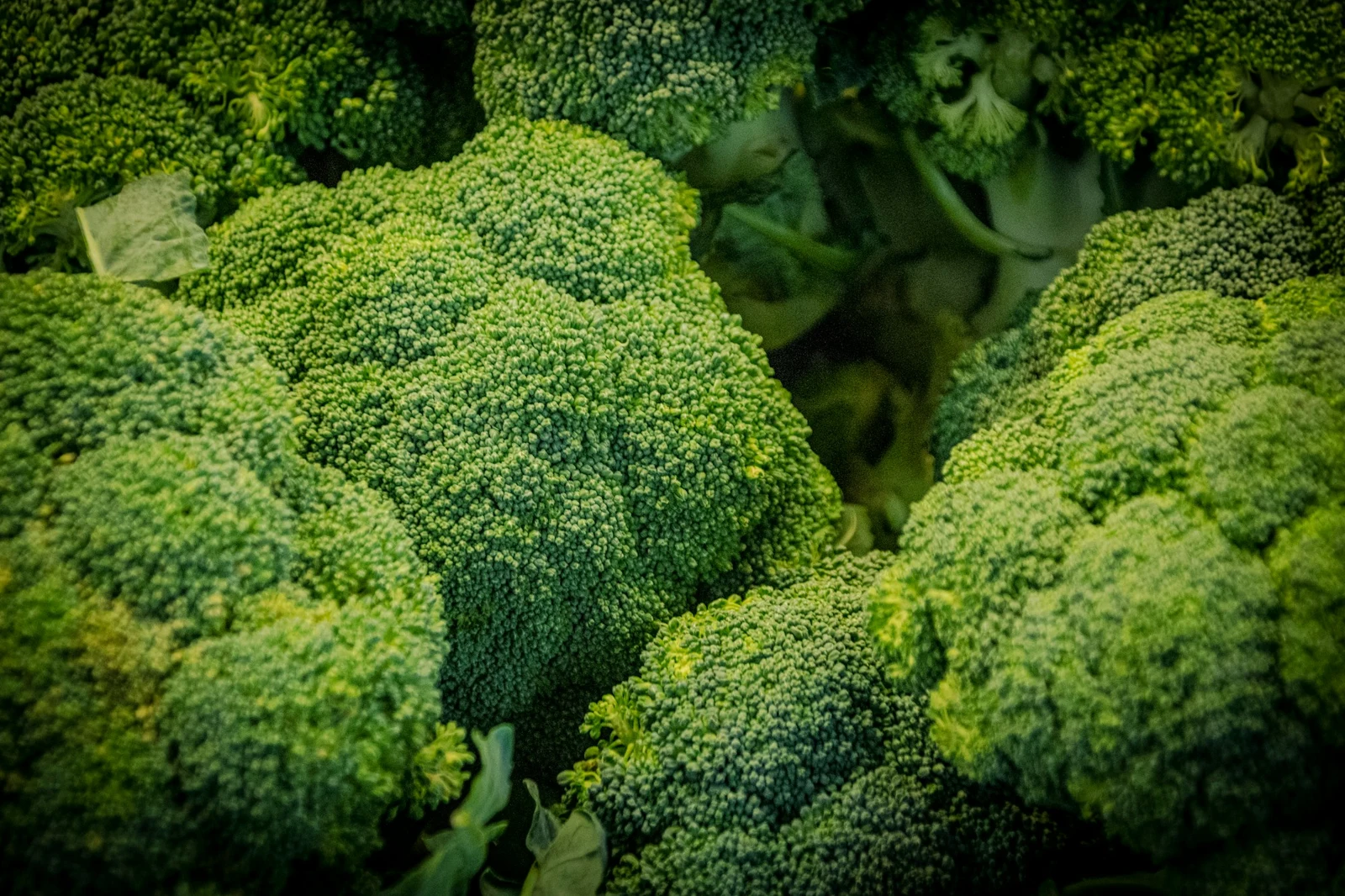 Broccoli