
Brussels sprouts
Research status: AI draft — awaiting expert review


Overview
Brussels sprouts are small, leafy buds that grow along the thick stalk of a cabbage-family plant. Choose firm, compact sprouts with bright green leaves and little yellowing; similar-sized sprouts cook more evenly.
Origin & cultivation
Brussels sprouts developed as a cultivated vegetable in Europe and are closely associated with Belgium, especially Brussels. Major growing regions include northwestern Europe and coastal California, with production in other cool-climate areas.
Season
Their main season is autumn through winter in temperate regions, although supermarkets often carry them year-round. Cool weather and light frost can encourage a sweeter flavor.
Texture & flavor
Raw sprouts are crunchy, cabbage-like, and mildly bitter; cooked sprouts become tender and slightly sweet. Roasting develops nutty, browned flavors, while prolonged boiling can produce a strong sulfurous smell and mushy texture.
Nutrition
Typical values estimated with AI, not yet checked against lab data. For guidance only.
| Energy | 43 kcal | raw, per 100 g edible portion | FoodPulse AI estimate |
| Protein | 3.38 g | raw, per 100 g edible portion | FoodPulse AI estimate |
| Total fat | 0.3 g | raw, per 100 g edible portion | FoodPulse AI estimate |
| Saturated fat | 0.062 g | raw, per 100 g edible portion | FoodPulse AI estimate |
| Carbohydrate | 8.95 g | raw, per 100 g edible portion | FoodPulse AI estimate |
| Dietary fiber | 3.8 g | raw, per 100 g edible portion | FoodPulse AI estimate |
| Total sugars | 2.2 g | raw, per 100 g edible portion | FoodPulse AI estimate |
| Water | 86 g | raw, per 100 g edible portion | FoodPulse AI estimate |
| Calcium | 42 mg | raw, per 100 g edible portion | FoodPulse AI estimate |
| Iron | 1.4 mg | raw, per 100 g edible portion | FoodPulse AI estimate |
| Magnesium | 23 mg | raw, per 100 g edible portion | FoodPulse AI estimate |
| Potassium | 389 mg | raw, per 100 g edible portion | FoodPulse AI estimate |
| Sodium | 25 mg | raw, per 100 g edible portion | FoodPulse AI estimate |
| Zinc | 0.42 mg | raw, per 100 g edible portion | FoodPulse AI estimate |
| Vitamin C | 85 mg | raw, per 100 g edible portion | FoodPulse AI estimate |
| Vitamin A (RAE) | 38 µg | raw, per 100 g edible portion | FoodPulse AI estimate |
| Folate | 61 µg | raw, per 100 g edible portion | FoodPulse AI estimate |
| Vitamin B12 | 0 µg | raw, per 100 g edible portion | FoodPulse AI estimate |
| Cholesterol | 0 mg | raw, per 100 g edible portion | FoodPulse AI estimate |
Glycemic index: Not established.
Brussels sprouts provide fiber, vitamin C, vitamin K, and folate, contributing to a varied, nutrient-rich diet rather than treating disease. They may cause gas, and anyone taking warfarin should keep vitamin K intake consistent and discuss dietary changes with their clinician. Brussels sprout allergy is uncommon but possible, particularly in people allergic to related cabbage-family foods. Educational, not medical advice.
Educational information, not medical advice.
Storage
- Room temperature · About 60–75°F (16–24°C) · Only briefly during preparation; refrigerate whole sprouts promptly for best quality.. Do not use the counter for extended storage. Refrigerate cut or cooked sprouts within 2 hours, or within 1 hour above 90°F (32°C); discard if left out longer. FoodPulse AI estimate
- Refrigerator · 32–40°F (0–4°C) · Whole, unwashed sprouts: about 3–5 days for best quality; cooked sprouts: 3–4 days.. Keep raw sprouts in a perforated bag in the crisper; refrigerate cooked sprouts promptly in shallow, covered containers. Discard sprouts with mold, slime, soft rot, or an unpleasant odor; isolated dry or yellow outer leaves can be removed from otherwise firm sprouts. FoodPulse AI estimate
- Freezer · 0°F (−18°C) or colder · About 8–12 months for best quality; continuously frozen food remains safe longer.. Wash and trim, then water-blanch small whole sprouts for 3 minutes, medium ones for 4, and large ones for 5, following NCHFP guidance. Cool promptly in ice water, drain, and pack airtight before freezing; freezer burn affects quality, not safety. Discard thawed sprouts held above 40°F (4°C) for more than 2 hours. FoodPulse AI estimate
Preparation
Rinse under cool running water, remove damaged outer leaves, and trim only the dry stem end so the leaves stay attached. Leave small sprouts whole, halve medium ones, and quarter large ones; slice thinly for salads or quick sautéing. Keep sprouts and clean utensils separate from raw meat, poultry, seafood, and their juices, and wash hands and equipment after handling animal foods.
Cooking
Roast oiled halves at 400–425°F (204–218°C) for about 20–35 minutes, depending on size, until browned and fork-tender. Steam halves for roughly 5–8 minutes or small whole sprouts for 8–12 minutes; sauté thin slices for about 5–8 minutes. Check early and stop at your preferred tenderness to avoid mushiness and strong odors.
Recipes
No verified recipes yet.
Waste less
Use clean, sound loose leaves in sautés or add them near the end of roasting so they do not burn. Slice edible stalk cores thinly for soups after peeling away tough fibers, and turn promptly refrigerated cooked sprouts into frittatas, grain bowls, or soups. Compost tough trimmings and spoiled sprouts where local composting rules allow.
Food waste tips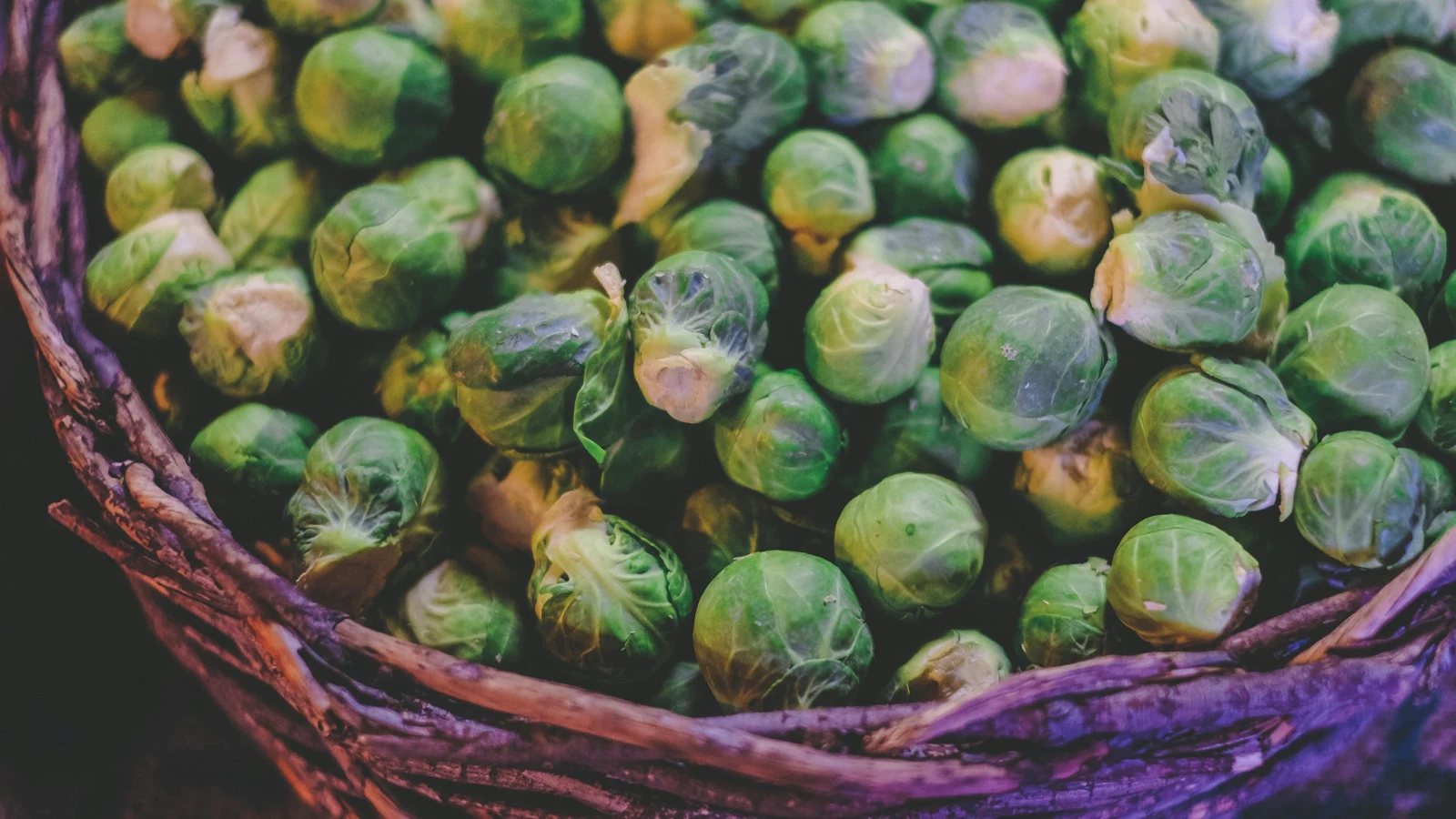 Brussels Sprouts - Mini Cabbage