
Green beans
Research status: AI draft — awaiting expert review

Overview
Green beans are the tender, immature pods of common bean plants, eaten with their small seeds inside. Also called snap beans or string beans, they come in green, yellow, and purple varieties.
Origin & cultivation
Common beans originated in Central and South America and are now cultivated worldwide. Major fresh-pod producing regions include China, Indonesia, Turkey, India, and parts of Europe and North Africa; the United States also grows substantial fresh and processing crops.
Season
Locally grown green beans generally peak from late spring through early fall in temperate climates. Imports, greenhouse crops, and frozen beans make them available year-round.
Texture & flavor
Fresh beans are crisp and juicy, with a mild grassy, slightly sweet flavor. Brief cooking makes them tender-crisp; longer cooking softens them and dulls their color, and purple varieties usually turn green.
Nutrition
Typical values estimated with AI, not yet checked against lab data. For guidance only.
| Energy | 31 kcal | raw, per 100 g edible portion | FoodPulse AI estimate |
| Protein | 1.83 g | raw, per 100 g edible portion | FoodPulse AI estimate |
| Total fat | 0.22 g | raw, per 100 g edible portion | FoodPulse AI estimate |
| Saturated fat | 0.05 g | raw, per 100 g edible portion | FoodPulse AI estimate |
| Carbohydrate | 6.97 g | raw, per 100 g edible portion | FoodPulse AI estimate |
| Dietary fiber | 2.7 g | raw, per 100 g edible portion | FoodPulse AI estimate |
| Total sugars | 3.26 g | raw, per 100 g edible portion | FoodPulse AI estimate |
| Water | 90.32 g | raw, per 100 g edible portion | FoodPulse AI estimate |
| Calcium | 37 mg | raw, per 100 g edible portion | FoodPulse AI estimate |
| Iron | 1.03 mg | raw, per 100 g edible portion | FoodPulse AI estimate |
| Magnesium | 25 mg | raw, per 100 g edible portion | FoodPulse AI estimate |
| Potassium | 211 mg | raw, per 100 g edible portion | FoodPulse AI estimate |
| Sodium | 6 mg | raw, per 100 g edible portion | FoodPulse AI estimate |
| Zinc | 0.24 mg | raw, per 100 g edible portion | FoodPulse AI estimate |
| Vitamin C | 12.2 mg | raw, per 100 g edible portion | FoodPulse AI estimate |
| Vitamin A (RAE) | 35 µg | raw, per 100 g edible portion | FoodPulse AI estimate |
| Folate | 33 µg | raw, per 100 g edible portion | FoodPulse AI estimate |
| Vitamin B12 | 0 µg | raw, per 100 g edible portion | FoodPulse AI estimate |
| Cholesterol | 0 mg | raw, per 100 g edible portion | FoodPulse AI estimate |
Glycemic index: Not established.
Green beans provide fiber, vitamin C, vitamin K, and folate, although amounts vary with cooking and portion size. They are legumes and can cause allergic reactions, but an allergy to another legume does not automatically mean an allergy to green beans. Educational, not medical advice.
Educational information, not medical advice.
Storage
- Room temperature · Approximately 60–75°F (16–24°C) · A few hours during shopping or preparation; refrigerate promptly for quality. Whole raw beans wilt quickly in warmth, so room temperature is not suitable for extended storage. Discard beans with mold, slime, or a sour smell; refrigerate cut or cooked beans within 2 hours, or 1 hour above 90°F (32°C). FoodPulse AI estimate
- Refrigerator · 32–40°F (0–4°C), without freezing · About 3–7 days raw; 3–4 days cooked. Keep raw beans unwashed in a perforated bag in the crisper, away from raw animal-food juices. Refrigerate cooked beans promptly in shallow, covered containers. Discard moldy, slimy, or sour-smelling beans, and discard cooked leftovers beyond the storage limit even if they look normal. FoodPulse AI estimate
- Freezer · 0°F (−18°C) or below · 8–12 months for best quality. For raw beans, wash, trim, water-blanch for 3 minutes, cool promptly in ice water, drain, and pack in freezer-safe containers. Continuously frozen beans remain safe beyond this quality window; freezer burn affects quality rather than safety. Discard thawed beans with mold, slime, or an off odor, and cooked beans held above 40°F (4°C) for more than 2 hours. FoodPulse AI estimate
Preparation
Rinse under cool running water just before use; do not use soap or produce wash. Trim the stem ends, remove any tough strings, and leave whole or cut into even lengths; tender pointed tips can stay. Keep beans and their utensils separate from raw meat, poultry, seafood, and their juices, especially if serving the beans raw or lightly cooked.
Cooking
Boil or steam slender beans for about 3–5 minutes and thicker beans for 5–8 minutes, checking for your preferred tenderness. Sauté for roughly 6–10 minutes, adding a splash of water if needed, or roast at 425°F (218°C) for 12–20 minutes depending on thickness. Frozen beans can usually be cooked directly from frozen; follow package directions.
Recipes
No verified recipes yet.
Waste less
Keep tender tips and use the whole edible pod rather than trimming both ends automatically. Add cooked leftovers to soups, grain bowls, or frittatas within 3–4 refrigerated days. Compost tough stems and spoiled beans where accepted; do not use moldy or slimy beans in stock.
Food waste tips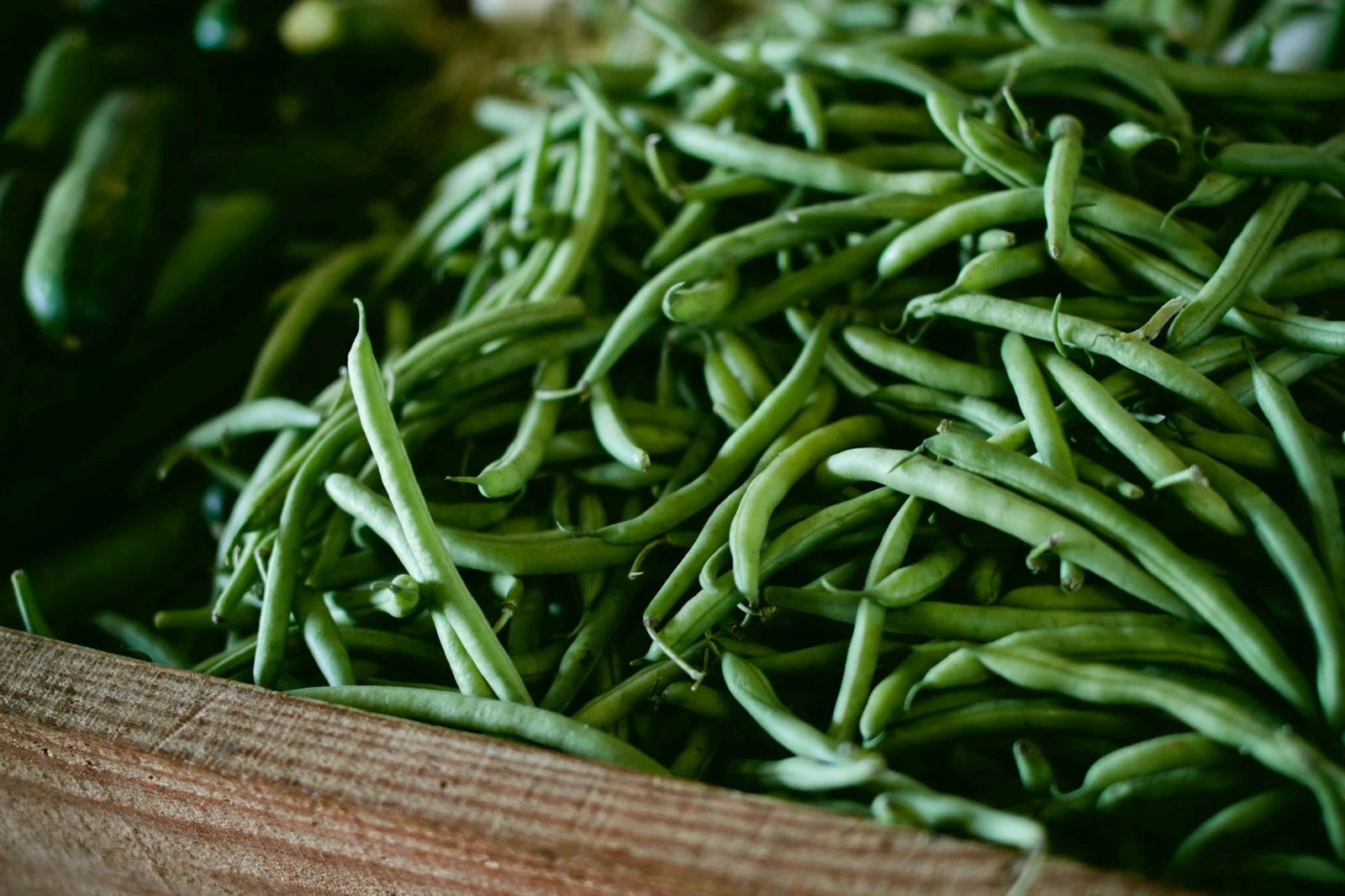 Green Beans - String Beans