
Green peas
Research status: AI draft — awaiting expert review

Overview
Green peas are the immature seeds of the garden pea, harvested while tender and sweet. They are sold in pods, shelled fresh, frozen, or canned; unlike snap peas, ordinary garden peas have tough pods that are usually discarded.
Origin & cultivation
Peas were domesticated in the Near East and neighboring parts of southwestern Asia. Today, green peas are grown widely in temperate climates, with China and India major producers and substantial production in Europe and North America.
Season
Fresh peas are a cool-season crop, typically available in spring and early summer, with autumn harvests in some regions. Frozen and canned peas are available year-round.
Texture & flavor
Young peas are juicy, tender, and sweet, with a mild grassy flavor. Larger or more mature peas become starchier and less sweet; overcooking makes them mushy and dulls their color.
Nutrition
Typical values estimated with AI, not yet checked against lab data. For guidance only.
| Energy | 81 kcal | raw, per 100 g edible portion | FoodPulse AI estimate |
| Protein | 5.42 g | raw, per 100 g edible portion | FoodPulse AI estimate |
| Total fat | 0.4 g | raw, per 100 g edible portion | FoodPulse AI estimate |
| Saturated fat | 0.071 g | raw, per 100 g edible portion | FoodPulse AI estimate |
| Carbohydrate | 14.45 g | raw, per 100 g edible portion | FoodPulse AI estimate |
| Dietary fiber | 5.7 g | raw, per 100 g edible portion | FoodPulse AI estimate |
| Total sugars | 5.67 g | raw, per 100 g edible portion | FoodPulse AI estimate |
| Water | 78.86 g | raw, per 100 g edible portion | FoodPulse AI estimate |
| Calcium | 25 mg | raw, per 100 g edible portion | FoodPulse AI estimate |
| Iron | 1.47 mg | raw, per 100 g edible portion | FoodPulse AI estimate |
| Magnesium | 33 mg | raw, per 100 g edible portion | FoodPulse AI estimate |
| Potassium | 244 mg | raw, per 100 g edible portion | FoodPulse AI estimate |
| Sodium | 5 mg | raw, per 100 g edible portion | FoodPulse AI estimate |
| Zinc | 1.24 mg | raw, per 100 g edible portion | FoodPulse AI estimate |
| Vitamin C | 40 mg | raw, per 100 g edible portion | FoodPulse AI estimate |
| Vitamin A (RAE) | 38 µg | raw, per 100 g edible portion | FoodPulse AI estimate |
| Folate | 65 µg | raw, per 100 g edible portion | FoodPulse AI estimate |
| Vitamin B12 | 0 µg | raw, per 100 g edible portion | FoodPulse AI estimate |
| Cholesterol | 0 mg | raw, per 100 g edible portion | FoodPulse AI estimate |
Glycemic index: Not established.
Green peas provide fiber, plant protein, folate, and vitamin C, although amounts vary with processing and cooking. Their fiber can support normal bowel function but may cause gas in some people. Pea allergy is possible, and people allergic to other legumes should seek individualized advice rather than assume peas are safe or unsafe. Educational, not medical advice.
Educational information, not medical advice.
Storage
- Room temperature · 40–90°F (4–32°C) · Brief handling only; refrigerate promptly. Fresh peas lose sweetness quickly, so do not use the counter for routine storage. Refrigerate cooked peas within 2 hours, or within 1 hour above 90°F (32°C); discard cooked peas left out longer, even if they look and smell normal. FoodPulse AI estimate
- Refrigerator · 32–40°F (0–4°C) · Fresh peas: 3–5 days, preferably sooner; cooked peas: 3–4 days. Keep fresh peas unwashed in a breathable bag and shell shortly before use. Store cooked peas in covered, shallow containers. Discard peas with mold, slime, or sour odors; absence of these signs does not guarantee safety after improper storage. FoodPulse AI estimate
- Freezer · 0°F (-18°C) or below · 8–12 months for best quality. For home freezing, shell and wash peas, blanch in boiling water for 1½ minutes, cool promptly in ice water, drain, and pack airtight. Continuously frozen peas remain safe beyond the quality window, though texture may decline. Freezer burn is a quality issue; discard peas with mold or off odors after thawing, or if held above 40°F (4°C) for more than 2 hours. FoodPulse AI estimate
Preparation
Rinse fresh pods under cool running water, split along the seam, and remove the peas; discard damaged or moldy specimens. Shelled peas need no trimming or cutting, and frozen peas generally need no washing or thawing before cooking. Keep peas and utensils separate from raw meat, poultry, seafood, and their juices.
Cooking
Simmer or steam small, young fresh peas for about 2–4 minutes and larger, more mature peas for 4–8 minutes, until tender. Frozen peas commonly take 2–5 minutes from frozen, but follow package cooking instructions; canned peas are already cooked and only need reheating. Add peas near the end of soups, rice dishes, or stews to preserve their color and texture.
Recipes
No verified recipes yet.
Waste less
Use tender peas whole, or purée older, starchier peas into soup, dips, or sauces. Clean, sound garden-pea pods can flavor stock, but strain them out because they are fibrous; compost pods and trimmings where suitable. Refrigerate cooked leftovers promptly and use within 3–4 days, or freeze in meal-sized portions.
Food waste tips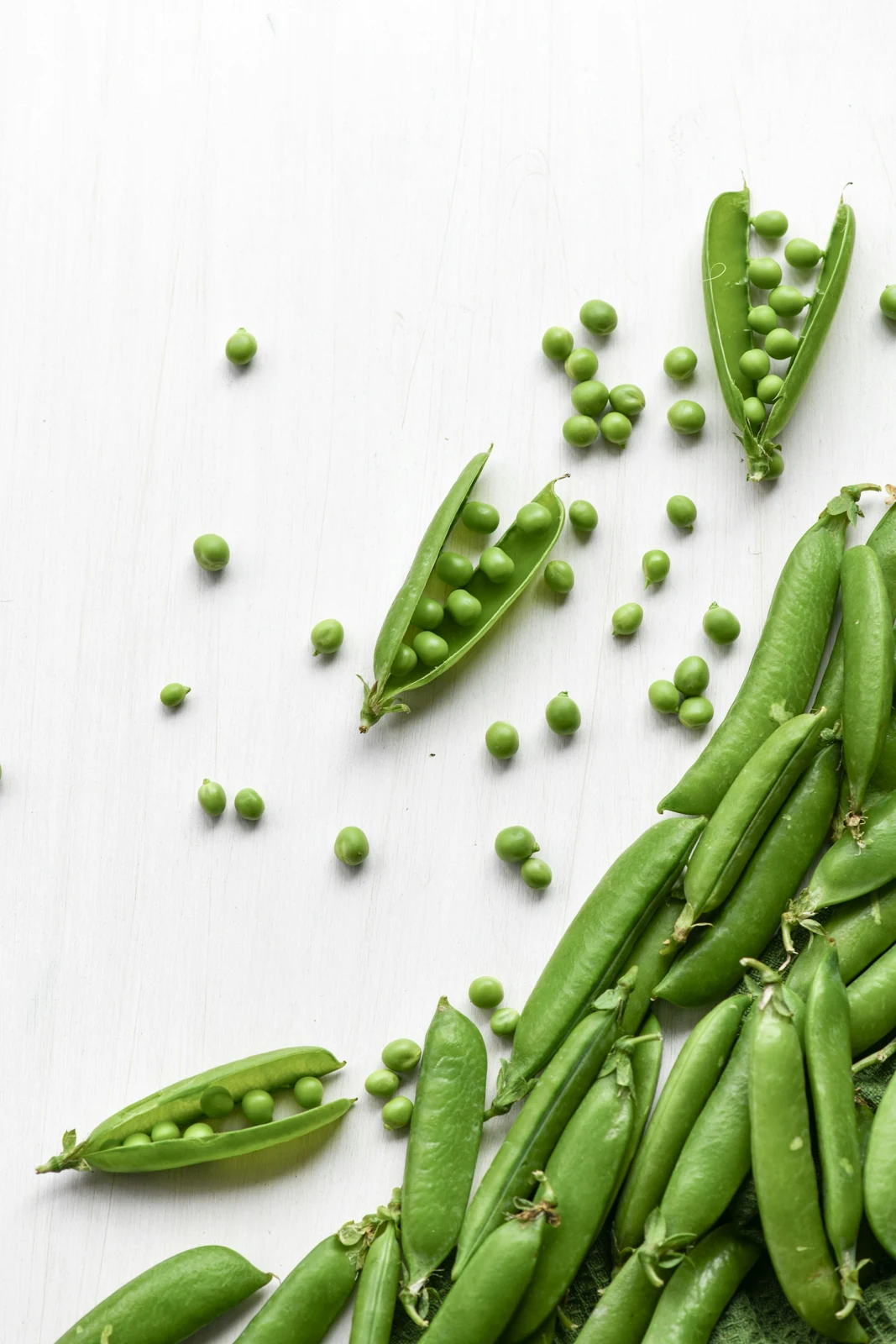 Green Peas