
Back to Today's briefing
Science·Google News - Science·8/17/2026, 8:49:40 AM·
James Webb spotted a bizarre object just 660 million years after the Big Bang that looks like an enormous star but shines with roughly 100 billion Suns' worth of energy — because hidden inside its star-like cocoon is an accreting black hole, rather than a core - Space Daily
The James Webb Space Telescope has detected an unusual celestial object from 660 million years after the Big Bang that resembles a massive star but emits energy equivalent to 100 billion suns. Astronomers determined the object contains an accreting black hole concealed within a gas cocoon rather than a stellar core, representing one of the most distant black hole discoveries and potentially explaining previously mysterious observations.
AI-generated summary. Social Pulse does not publish the full article. This brief is a neutral paraphrase by AI. Read the original at Google News - Science using the link below.
Related briefs
- Google News - ScienceReport confirms record-high greenhouse gases, global sea level and ocean heat in 2025 - Phys.org
- Google News - ScienceAstronomers find the first atmosphere on a rocky world in the habitable zone - ScienceDaily
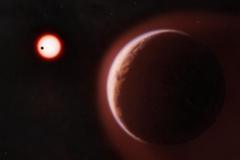 BBC - ScienceFirst atmosphere found on Earth-like planet in habitable zone of distant star
- BBC - ScienceFirst atmosphere found on Earth-like planet in habitable zone of distant star
- Google News - ScienceSan Andreas Fault: New San Jose State University research finds fault is slipping faster than previously thought - ABC7 Los Angeles
- Google News - ScienceChina's Chang'e 7 moon probe will launch this weekend on the most ambitious lunar mission in history - Space
COMMENTS · 0
Join the conversation
Be the first to comment.