
Bell pepper
Research status: AI draft — awaiting expert review


Overview
Bell peppers are mild, hollow fruits of Capsicum annuum, used as vegetables in cooking. Green peppers are usually harvested unripe; ripe colors include red, yellow, and orange, depending on the variety.
Origin & cultivation
Capsicum annuum originated in the Americas, particularly Mexico and Central America. Bell peppers are now grown worldwide, with major producing regions including China, Mexico, Türkiye, Spain, and the United States.
Season
Locally grown peppers generally peak from summer into early fall in temperate climates. Greenhouse production and imports make them available year-round; choose firm, glossy peppers without soft spots.
Texture & flavor
Raw peppers are crisp and juicy, becoming tender and sweeter when cooked. Green peppers taste grassy and slightly bitter, while ripe red, orange, and yellow peppers are generally sweeter; bell peppers lack the heat of hot chiles.
Nutrition
Typical values estimated with AI, not yet checked against lab data. For guidance only.
| Energy | 20 kcal | raw (green bell pepper), per 100 g edible portion | FoodPulse AI estimate |
| Protein | 0.86 g | raw (green bell pepper), per 100 g edible portion | FoodPulse AI estimate |
| Total fat | 0.17 g | raw (green bell pepper), per 100 g edible portion | FoodPulse AI estimate |
| Saturated fat | 0.058 g | raw (green bell pepper), per 100 g edible portion | FoodPulse AI estimate |
| Carbohydrate | 4.64 g | raw (green bell pepper), per 100 g edible portion | FoodPulse AI estimate |
| Dietary fiber | 1.7 g | raw (green bell pepper), per 100 g edible portion | FoodPulse AI estimate |
| Total sugars | 2.4 g | raw (green bell pepper), per 100 g edible portion | FoodPulse AI estimate |
| Water | 93.89 g | raw (green bell pepper), per 100 g edible portion | FoodPulse AI estimate |
| Calcium | 10 mg | raw (green bell pepper), per 100 g edible portion | FoodPulse AI estimate |
| Iron | 0.34 mg | raw (green bell pepper), per 100 g edible portion | FoodPulse AI estimate |
| Magnesium | 10 mg | raw (green bell pepper), per 100 g edible portion | FoodPulse AI estimate |
| Potassium | 175 mg | raw (green bell pepper), per 100 g edible portion | FoodPulse AI estimate |
| Sodium | 3 mg | raw (green bell pepper), per 100 g edible portion | FoodPulse AI estimate |
| Zinc | 0.13 mg | raw (green bell pepper), per 100 g edible portion | FoodPulse AI estimate |
| Vitamin C | 80.4 mg | raw (green bell pepper), per 100 g edible portion | FoodPulse AI estimate |
| Vitamin A (RAE) | 18 µg | raw (green bell pepper), per 100 g edible portion | FoodPulse AI estimate |
| Folate | 10 µg | raw (green bell pepper), per 100 g edible portion | FoodPulse AI estimate |
| Vitamin B12 | 0 µg | raw (green bell pepper), per 100 g edible portion | FoodPulse AI estimate |
| Cholesterol | 0 mg | raw (green bell pepper), per 100 g edible portion | FoodPulse AI estimate |
Glycemic index: Not established.
Bell peppers provide vitamin C, fiber, and carotenoids, with amounts varying by color and ripeness. Pepper allergy is uncommon but possible, including pollen-related oral allergy symptoms; avoid them if you have a known allergy. Educational, not medical advice.
Educational information, not medical advice.
Storage
- Room temperature · About 60–75°F (16–24°C) · 1–2 days for whole, intact peppers; refrigerate sooner for best quality. Keep dry and away from sunlight and heat. Discard peppers with mold, slime, leaking decay, or an off odor; refrigerate once cut. FoodPulse AI estimate
- Refrigerator · Above freezing to 40°F (4°C) · Whole: about 4–14 days, depending on freshness; cut: 3–4 days; cooked: 3–4 days. Keep whole peppers dry in the crisper and cut or cooked peppers in covered containers. Refrigerate cut or cooked peppers within 2 hours, or 1 hour above 90°F (32°C). Discard if moldy, slimy, rotten-smelling, or held warm beyond those limits. FoodPulse AI estimate
- Freezer · 0°F (−18°C) or below · About 8–12 months for best quality; continuously frozen food remains safe longer. Wash, remove stems and seeds, cut, dry, and pack airtight; NCHFP permits freezing bell peppers without blanching. Use from frozen in cooked dishes, as thawed peppers soften. Freezer burn is a quality issue, but discard if thawed above 40°F (4°C) for more than 2 hours or if spoilage appears after thawing. FoodPulse AI estimate
Preparation
Rinse under running water before cutting, without soap or produce wash. Remove the stem, core, and seeds, then cut into strips, dice, or halves as needed. Use separate boards and utensils for raw animal foods, or wash them thoroughly with hot, soapy water before preparing peppers.
Cooking
Sauté thin strips for about 5–8 minutes or larger pieces for 10–15 minutes, depending on desired tenderness. Roast halves or thick strips at 425°F (220°C) for roughly 20–30 minutes, or grill large pieces for 8–15 minutes, turning until tender and lightly charred. For meat-stuffed peppers, verify the filling with a thermometer: ground beef, pork, lamb, or veal must reach 160°F (71°C), and ground poultry 165°F (74°C).
Recipes
No verified recipes yet.
Waste less
Use edible flesh around the stem and the pale inner ribs in soups, sauces, or stir-fries. Firm but wrinkled peppers can be cooked or frozen; add promptly refrigerated cooked leftovers to omelets or grain dishes within 3–4 days. Compost stems, cores, and seeds where accepted, but discard moldy peppers rather than trimming away the mold.
Food waste tips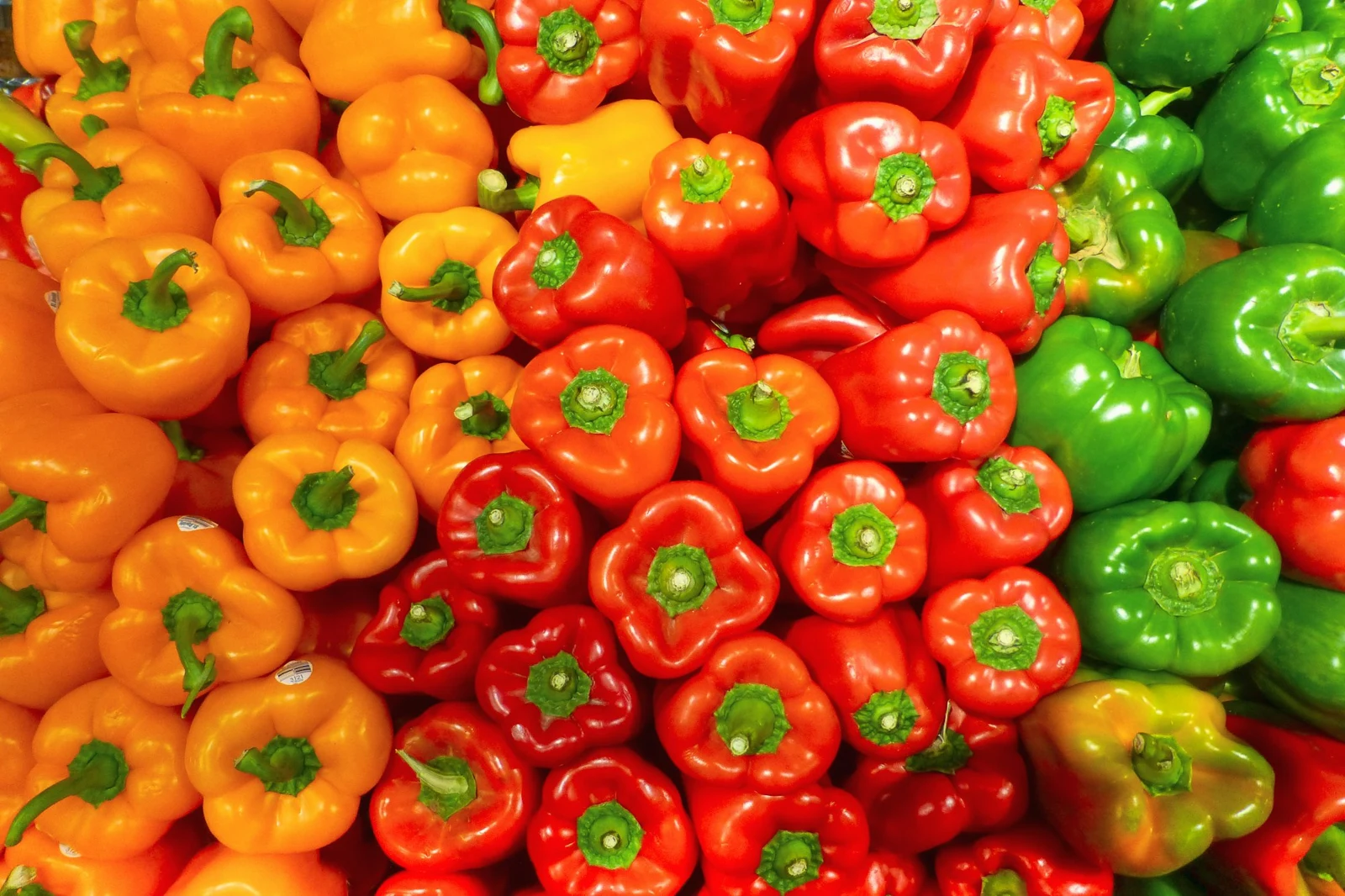 Capsicum - Bell Pepper