
Eggplant
Research status: AI draft — awaiting expert review


Overview
Eggplant, also called aubergine, is a nightshade fruit used as a vegetable. Varieties range from large purple globes to slender Asian types and small white or striped fruits; choose firm specimens with glossy skin and no soft spots.
Origin & cultivation
Eggplant originated in Asia, with a long history of cultivation in South and East Asia. China and India dominate production, with substantial crops also grown in Egypt, Turkey, and other warm regions.
Season
In temperate climates, locally grown eggplant is generally in season from summer into early fall. Imports and greenhouse production make it available year-round in many markets.
Texture & flavor
Raw flesh is spongy, with a mild, sometimes slightly bitter flavor. Cooking makes it tender and creamy; browning adds savory sweetness, while the porous flesh readily absorbs oil and sauces.
Nutrition
Typical values estimated with AI, not yet checked against lab data. For guidance only.
| Energy | 25 kcal | raw, per 100 g edible portion | FoodPulse AI estimate |
| Protein | 0.98 g | raw, per 100 g edible portion | FoodPulse AI estimate |
| Total fat | 0.18 g | raw, per 100 g edible portion | FoodPulse AI estimate |
| Saturated fat | 0.034 g | raw, per 100 g edible portion | FoodPulse AI estimate |
| Carbohydrate | 5.88 g | raw, per 100 g edible portion | FoodPulse AI estimate |
| Dietary fiber | 3 g | raw, per 100 g edible portion | FoodPulse AI estimate |
| Total sugars | 3.53 g | raw, per 100 g edible portion | FoodPulse AI estimate |
| Water | 92.3 g | raw, per 100 g edible portion | FoodPulse AI estimate |
| Calcium | 9 mg | raw, per 100 g edible portion | FoodPulse AI estimate |
| Iron | 0.23 mg | raw, per 100 g edible portion | FoodPulse AI estimate |
| Magnesium | 14 mg | raw, per 100 g edible portion | FoodPulse AI estimate |
| Potassium | 229 mg | raw, per 100 g edible portion | FoodPulse AI estimate |
| Sodium | 2 mg | raw, per 100 g edible portion | FoodPulse AI estimate |
| Zinc | 0.16 mg | raw, per 100 g edible portion | FoodPulse AI estimate |
| Vitamin C | 2.2 mg | raw, per 100 g edible portion | FoodPulse AI estimate |
| Vitamin A (RAE) | 1 µg | raw, per 100 g edible portion | FoodPulse AI estimate |
| Folate | 22 µg | raw, per 100 g edible portion | FoodPulse AI estimate |
| Vitamin B12 | 0 µg | raw, per 100 g edible portion | FoodPulse AI estimate |
| Cholesterol | 0 mg | raw, per 100 g edible portion | FoodPulse AI estimate |
Glycemic index: Not established.
Eggplant supplies fiber and small amounts of several vitamins and minerals; its purple skin contains anthocyanin pigments. Evidence does not establish eggplant as a treatment for disease, and eggplant allergy, though uncommon, can occur. Educational, not medical advice.
Educational information, not medical advice.
Storage
- Room temperature, whole · Cool room, ideally 50–55°F (10–13°C); ordinary rooms are often 68–72°F (20–22°C) · About 1–2 days at ordinary room temperature. Keep whole, unwashed eggplant out of sunlight and away from heat; use sooner in warm conditions. Slight wrinkling indicates declining quality, but discard fruit with mold, slime, leaking decay, or an off odor. FoodPulse AI estimate
- Refrigerator · 32–40°F (0–4°C) · Whole: about 4–7 days; cut: preferably 1–2 days; cooked: 3–4 days. Keep whole eggplant dry in a loosely closed or perforated bag in the crisper; prolonged cold can cause pitting and browning. Cover cut or cooked eggplant and refrigerate within 2 hours, or 1 hour above 90°F (32°C). Discard moldy, slimy, or foul-smelling eggplant, and discard cooked portions left out beyond these limits even if they smell normal. FoodPulse AI estimate
- Freezer · 0°F (-18°C) or below · About 8–12 months for best quality. Following NCHFP guidance, peel and slice ⅓ inch thick, then blanch for 4 minutes in boiling water containing ½ cup lemon juice per gallon; cool promptly in ice water, drain, and pack airtight. Continuously frozen food remains safe beyond the quality window, although texture deteriorates. Thaw in the refrigerator; discard thawed portions held above 40°F (4°C) for more than 2 hours. FoodPulse AI estimate
Preparation
Rinse under running water before cutting, without soap, then trim off the stem and leafy cap. Leave tender skin on, or peel tougher specimens, and cut into evenly sized slices, cubes, or halves. Salting is optional for reducing moisture and changing texture, rather than a necessary safety step. Keep washed produce and utensils separate from raw meat, poultry, seafood, and their juices.
Cooking
Roast 1-inch cubes at 425°F (220°C) for about 20–30 minutes, or halves for 35–50 minutes, depending on size. Grill ½-inch slices for roughly 4–6 minutes per side, or sauté small cubes for 10–15 minutes. Cook until the flesh is tender throughout, adding time for larger pieces; brush with a measured amount of oil to limit absorption.
Recipes
No verified recipes yet.
Waste less
Use the edible skin and seeds along with the flesh; compost the tough stem and cap where accepted. Turn promptly refrigerated cooked eggplant into dips, pasta sauces, sandwiches, or curries within 3–4 days. Freeze extra prepared eggplant before it deteriorates rather than waiting until it becomes soft or moldy.
Food waste tips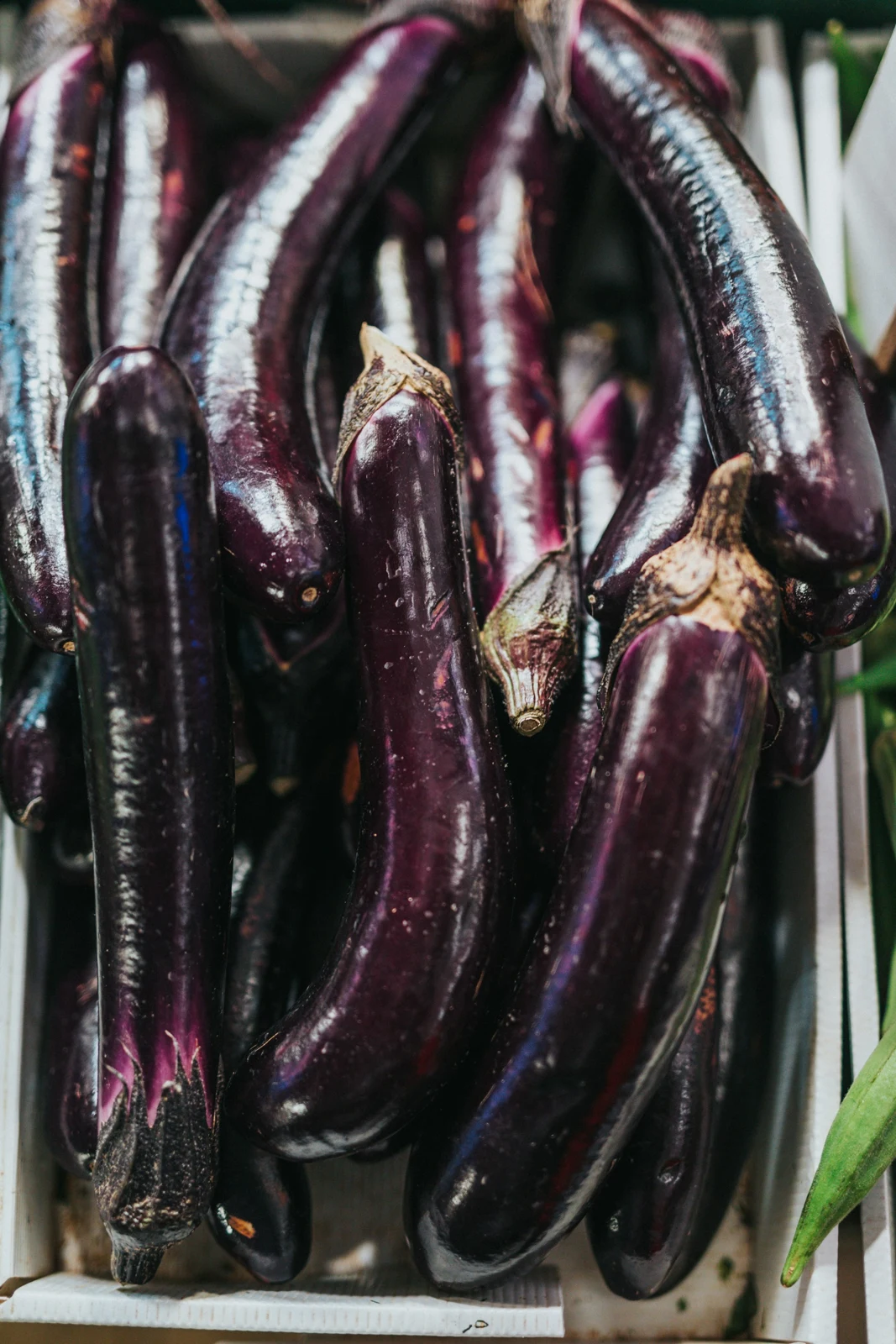 Asian (Chinese) Eggplants - Brinjal
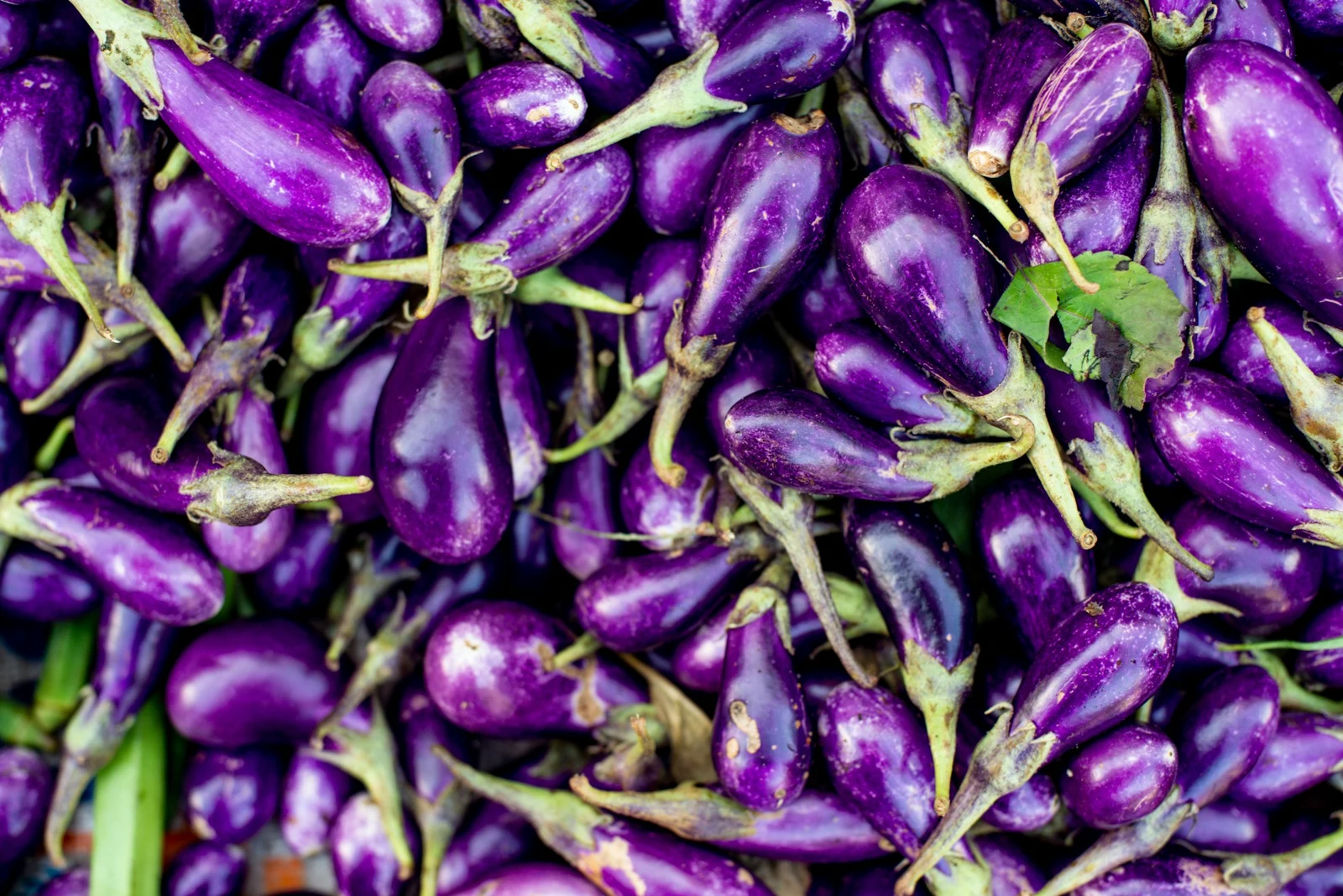 Eggplant (Brinjal)