
Yellow squash
Research status: AI draft — awaiting expert review


Overview
Yellow squash is a tender-skinned summer squash harvested while immature, most often sold as straightneck or crookneck types. Choose firm, small-to-medium squash with glossy skin and no soft spots; larger specimens may have tougher seeds.
Origin & cultivation
Yellow summer squash belongs to a group of squashes domesticated in the Americas, particularly Mexico and nearby regions. It is now grown widely in warm-season vegetable regions, including the United States, Mexico, and Mediterranean countries.
Season
Local yellow squash is typically best from late spring through early fall, depending on climate. Supermarkets often carry it year-round from warmer growing regions.
Texture & flavor
The flesh is moist and tender, with a mild, slightly sweet flavor and edible skin and seeds. Brief cooking preserves some bite, while prolonged cooking makes it soft and watery.
Nutrition
Typical values estimated with AI, not yet checked against lab data. For guidance only.
| Energy | 19 kcal | raw, per 100 g edible portion | FoodPulse AI estimate |
| Protein | 1.01 g | raw, per 100 g edible portion | FoodPulse AI estimate |
| Total fat | 0.27 g | raw, per 100 g edible portion | FoodPulse AI estimate |
| Saturated fat | 0.04 g | raw, per 100 g edible portion | FoodPulse AI estimate |
| Carbohydrate | 3.88 g | raw, per 100 g edible portion | FoodPulse AI estimate |
| Dietary fiber | 1 g | raw, per 100 g edible portion | FoodPulse AI estimate |
| Total sugars | 2.88 g | raw, per 100 g edible portion | FoodPulse AI estimate |
| Water | 94.28 g | raw, per 100 g edible portion | FoodPulse AI estimate |
| Calcium | 21 mg | raw, per 100 g edible portion | FoodPulse AI estimate |
| Iron | 0.44 mg | raw, per 100 g edible portion | FoodPulse AI estimate |
| Magnesium | 20 mg | raw, per 100 g edible portion | FoodPulse AI estimate |
| Potassium | 222 mg | raw, per 100 g edible portion | FoodPulse AI estimate |
| Sodium | 2 mg | raw, per 100 g edible portion | FoodPulse AI estimate |
| Zinc | 0.29 mg | raw, per 100 g edible portion | FoodPulse AI estimate |
| Vitamin C | 19.3 mg | raw, per 100 g edible portion | FoodPulse AI estimate |
| Vitamin A (RAE) | 10 µg | raw, per 100 g edible portion | FoodPulse AI estimate |
| Folate | 19 µg | raw, per 100 g edible portion | FoodPulse AI estimate |
| Vitamin B12 | 0 µg | raw, per 100 g edible portion | FoodPulse AI estimate |
| Cholesterol | 0 mg | raw, per 100 g edible portion | FoodPulse AI estimate |
Glycemic index: Not established.
Yellow squash is low in calories and provides vitamin C, some fiber, and potassium; nutrient levels vary with portion size and cooking. Squash allergy is uncommon but possible, including oral itching in some people with pollen-related food allergies. Educational, not medical advice.
Educational information, not medical advice.
Storage
- Room temperature · About 60–75°F (16–24°C), away from sunlight · Preferably use the same day; refrigerate for longer storage. Keep only whole, intact squash at room temperature briefly for quality. Refrigerate cut or cooked squash within 2 hours, or 1 hour above 90°F (32°C). Discard squash with mold, slime, leaking decay, or an off odor. FoodPulse AI estimate
- Refrigerator · 32–40°F (0–4°C) · Whole: about 4–7 days; cut: 2–3 days; cooked: 3–4 days. Store whole squash unwashed in a perforated bag in the crisper; cover cut squash and place cooked leftovers in shallow covered containers. Keep away from raw animal-food drips. Discard if moldy, slimy, sour-smelling, or extensively soft and watery; discard cooked leftovers left out beyond safe time limits. FoodPulse AI estimate
- Freezer · 0°F (-18°C) or below · About 8–12 months for best quality. Following NCHFP guidance, wash, trim, and cut into ½-inch slices; water-blanch for 3 minutes, cool promptly in ice water, drain, and package in freezer containers with ½-inch headspace. Continuously frozen squash remains safe beyond its quality window, but becomes softer after thawing. Freezer burn is a quality defect; discard thawed squash if moldy or slimy, or if held above 40°F (4°C) for more than 2 hours. FoodPulse AI estimate
Preparation
Rinse under cool running water, rubbing the skin gently; do not use soap or produce detergent. Trim the stem and blossom ends, then slice, dice, or halve as needed; peeling is usually unnecessary. Keep squash and its cutting tools separate from raw meat, poultry, seafood, and their juices, and wash hands and equipment after handling those foods.
Cooking
Sauté thin slices for about 4–7 minutes, or steam slices or small chunks for 3–6 minutes, until just tender. Roast roughly 1-inch pieces at 425°F (220°C) for 15–25 minutes, or grill lengthwise slabs for about 3–5 minutes per side. Thicker pieces take longer; avoid crowding the pan if you want browning rather than steaming.
Recipes
No verified recipes yet.
Waste less
Use the edible skin, tender seeds, and flesh in sautés, soups, fritters, or baked dishes. Refrigerate cooked leftovers promptly and use within 3–4 days, or freeze for later soups and casseroles. Compost sound trimmings where appropriate; discard unusually bitter squash rather than eating it, because bitterness can signal harmful cucurbitacins that cooking does not reliably remove.
Food waste tips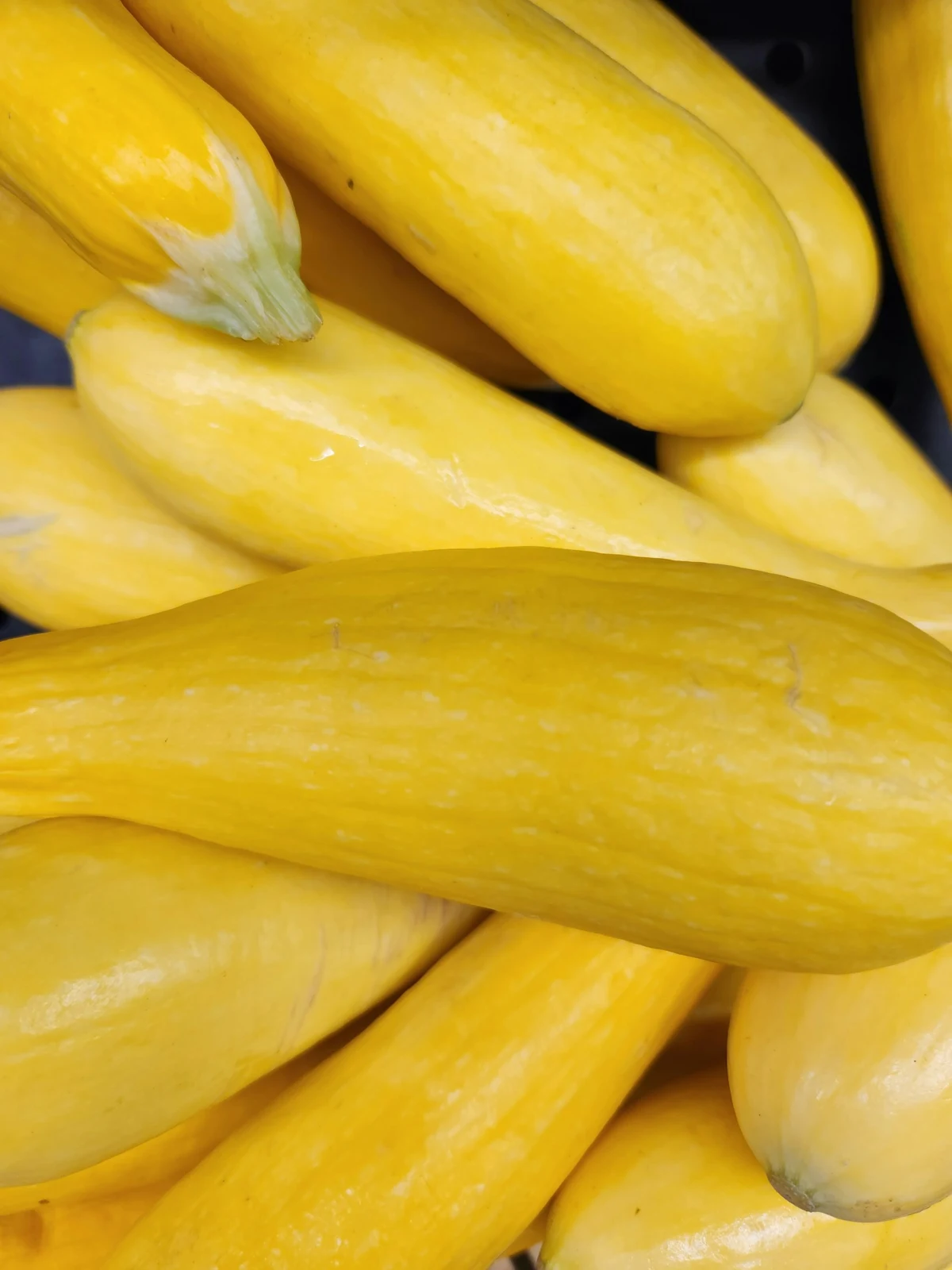 Yellow Squash