
Chayote
Research status: AI draft — awaiting expert review


Overview
Chayote (Sechium edule) is a mild, pear-shaped squash in the gourd family, usually eaten as a vegetable. Its pale green skin may be smooth, wrinkled, or prickly, and the flesh surrounds one large, edible seed.
Origin & cultivation
Chayote originated in Mesoamerica, particularly the region encompassing southern Mexico and Central America. It is now grown across tropical and subtropical regions, including Mexico, Costa Rica, Brazil, China, and India.
Season
Chayote is often available year-round through tropical production and imports. In warm regions with seasonal growing cycles, local harvests commonly peak in late summer and fall.
Texture & flavor
Raw chayote is crisp and juicy, with a subtle sweetness reminiscent of cucumber and mild squash. Cooking makes it tender while preserving some firmness, and it readily takes on seasonings.
Nutrition
Typical values estimated with AI, not yet checked against lab data. For guidance only.
| Energy | 19 kcal | raw, per 100 g edible portion | FoodPulse AI estimate |
| Protein | 0.82 g | raw, per 100 g edible portion | FoodPulse AI estimate |
| Total fat | 0.13 g | raw, per 100 g edible portion | FoodPulse AI estimate |
| Saturated fat | 0.028 g | raw, per 100 g edible portion | FoodPulse AI estimate |
| Carbohydrate | 4.51 g | raw, per 100 g edible portion | FoodPulse AI estimate |
| Dietary fiber | 1.7 g | raw, per 100 g edible portion | FoodPulse AI estimate |
| Total sugars | 1.66 g | raw, per 100 g edible portion | FoodPulse AI estimate |
| Water | 94.24 g | raw, per 100 g edible portion | FoodPulse AI estimate |
| Calcium | 17 mg | raw, per 100 g edible portion | FoodPulse AI estimate |
| Iron | 0.34 mg | raw, per 100 g edible portion | FoodPulse AI estimate |
| Magnesium | 12 mg | raw, per 100 g edible portion | FoodPulse AI estimate |
| Potassium | 125 mg | raw, per 100 g edible portion | FoodPulse AI estimate |
| Sodium | 2 mg | raw, per 100 g edible portion | FoodPulse AI estimate |
| Zinc | 0.74 mg | raw, per 100 g edible portion | FoodPulse AI estimate |
| Vitamin C | 7.7 mg | raw, per 100 g edible portion | FoodPulse AI estimate |
| Vitamin A (RAE) | 0 µg | raw, per 100 g edible portion | FoodPulse AI estimate |
| Folate | 93 µg | raw, per 100 g edible portion | FoodPulse AI estimate |
| Vitamin B12 | 0 µg | raw, per 100 g edible portion | FoodPulse AI estimate |
| Cholesterol | 0 mg | raw, per 100 g edible portion | FoodPulse AI estimate |
Glycemic index: Not established.
Chayote is low in calories and provides fiber, folate, and vitamin C; cooking and portion size affect nutrient intake. Chayote allergy is possible, although uncommon, and sap from peeling can irritate skin without necessarily indicating an allergy. Educational, not medical advice.
Educational information, not medical advice.
Storage
- Room temperature · 60–75°F (16–24°C) · About 2–3 days for best quality. Keep whole, uncut chayote dry, shaded, and ventilated; refrigerate for longer storage. Discard if moldy, slimy, leaking, or sour-smelling; slight wrinkling alone usually indicates moisture loss. FoodPulse AI estimate
- Refrigerator · 32–40°F (0–4°C) · Whole: about 2–4 weeks; cut: 3–4 days; cooked: 3–4 days. Store whole chayote dry in a perforated bag in the crisper, and keep cut or cooked portions in covered containers. Refrigerate cut or cooked chayote within 2 hours, or 1 hour above 90°F (32°C). Discard moldy, slimy, or foul-smelling pieces and leftovers held beyond the recommended time, even if they look normal. FoodPulse AI estimate
- Freezer · 0°F (−18°C) or below · About 8–12 months for best quality. Following NCHFP summer-squash guidance, cut into ½-inch slices, blanch in boiling water for 3 minutes, cool promptly in ice water, drain, and pack airtight. Expect a softer texture after thawing; use in cooked dishes. Continuously frozen food remains safe beyond the quality window, but discard thawed portions held above 40°F (4°C) for more than 2 hours. FoodPulse AI estimate
Preparation
Rinse under running water and scrub gently; do not use soap or bleach. Trim the stem and blossom ends, peel tough or prickly skin, and halve lengthwise before slicing or dicing; the seed and tender skin are edible. Wear gloves if the sticky sap irritates your hands, and keep produce, knives, and cutting boards separate from raw meat, poultry, and seafood.
Cooking
Steam or simmer ½-inch cubes for about 8–15 minutes, or sauté thin slices for 6–10 minutes, until as tender as you prefer. Roast bite-sized pieces at 400°F (204°C) for roughly 20–30 minutes, turning once; larger wedges take longer. Chayote also works raw in slaws or added to soups near the end of cooking.
Recipes
No verified recipes yet.
Waste less
Leave tender skin on and cook the soft seed with the flesh to reduce waste. Add cooked leftovers to soups, rice dishes, or omelets within their refrigerated storage window. Compost tough peels and trimmings where accepted.
Food waste tips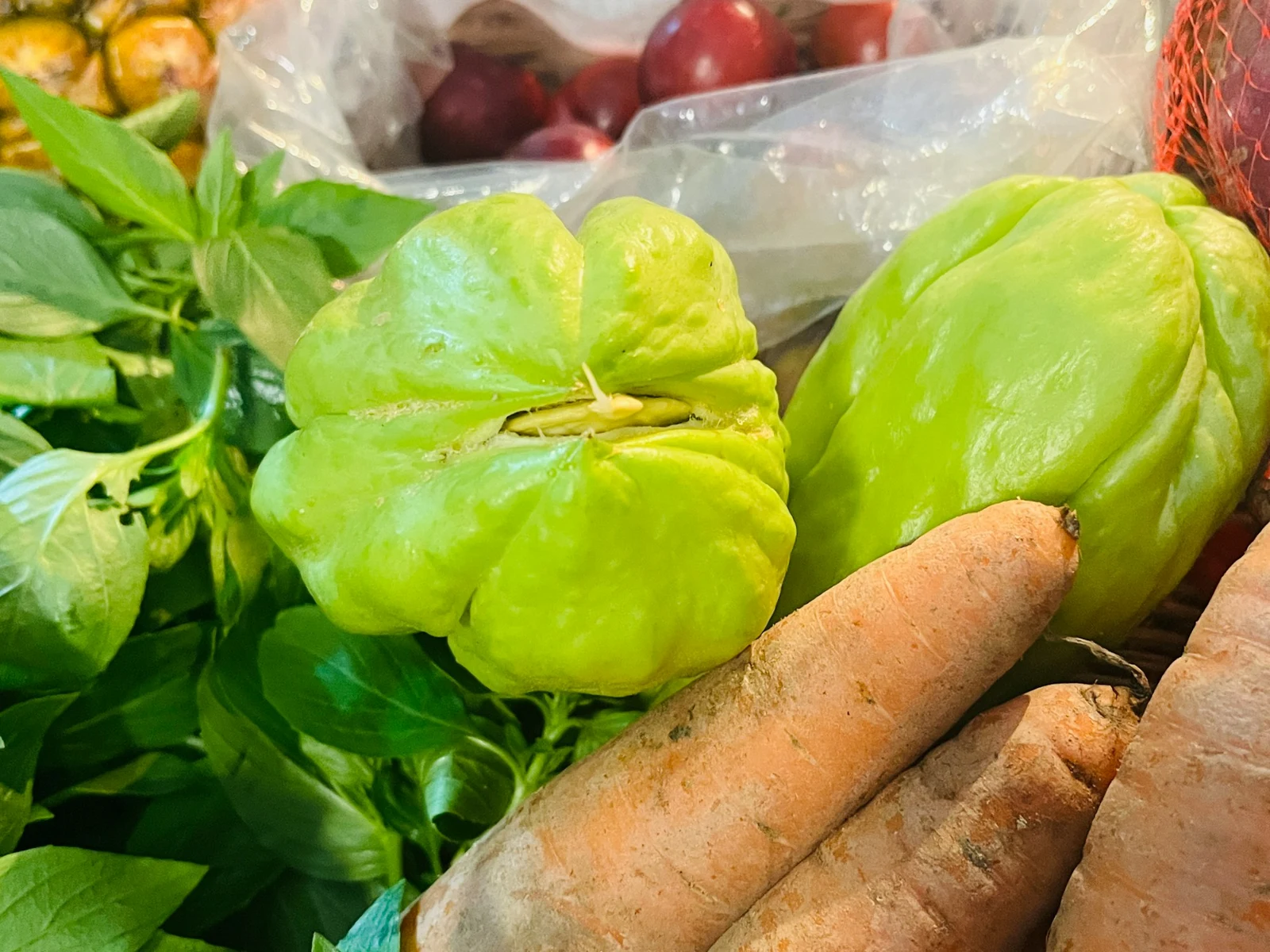 Chayote - Vegetable Pear