
Parsnip
Research status: AI draft — awaiting expert review


Overview
Parsnips are cream-colored root vegetables in the carrot family, usually with broad shoulders and a tapered tip. Choose firm roots without soft spots; smaller or medium roots are often less woody.
Origin & cultivation
Native to Europe and western Asia, parsnips have been cultivated since antiquity. They are grown mainly in temperate regions, including the United Kingdom, continental Europe, and North America.
Season
Parsnips are typically harvested from autumn through early spring, depending on climate. Cold weather encourages sweeter flavor, and stored roots extend their availability.
Texture & flavor
Raw parsnips are firm and crunchy, with a sweet, earthy flavor and a slightly nutty, peppery aroma. Cooking softens the flesh, while roasting develops browned edges and concentrated sweetness; large roots may have fibrous cores.
Nutrition
Typical values estimated with AI, not yet checked against lab data. For guidance only.
| Energy | 75 kcal | raw, per 100 g edible portion | FoodPulse AI estimate |
| Protein | 1.2 g | raw, per 100 g edible portion | FoodPulse AI estimate |
| Total fat | 0.3 g | raw, per 100 g edible portion | FoodPulse AI estimate |
| Saturated fat | 0.05 g | raw, per 100 g edible portion | FoodPulse AI estimate |
| Carbohydrate | 17.99 g | raw, per 100 g edible portion | FoodPulse AI estimate |
| Dietary fiber | 4.9 g | raw, per 100 g edible portion | FoodPulse AI estimate |
| Total sugars | 4.8 g | raw, per 100 g edible portion | FoodPulse AI estimate |
| Water | 79.53 g | raw, per 100 g edible portion | FoodPulse AI estimate |
| Calcium | 36 mg | raw, per 100 g edible portion | FoodPulse AI estimate |
| Iron | 0.59 mg | raw, per 100 g edible portion | FoodPulse AI estimate |
| Magnesium | 29 mg | raw, per 100 g edible portion | FoodPulse AI estimate |
| Potassium | 375 mg | raw, per 100 g edible portion | FoodPulse AI estimate |
| Sodium | 10 mg | raw, per 100 g edible portion | FoodPulse AI estimate |
| Zinc | 0.59 mg | raw, per 100 g edible portion | FoodPulse AI estimate |
| Vitamin C | 17 mg | raw, per 100 g edible portion | FoodPulse AI estimate |
| Vitamin A (RAE) | 0 µg | raw, per 100 g edible portion | FoodPulse AI estimate |
| Folate | 67 µg | raw, per 100 g edible portion | FoodPulse AI estimate |
| Vitamin B12 | 0 µg | raw, per 100 g edible portion | FoodPulse AI estimate |
| Cholesterol | 0 mg | raw, per 100 g edible portion | FoodPulse AI estimate |
Glycemic index: Not established.
Parsnips provide fiber, vitamin C, folate, and potassium and can contribute to a varied, balanced diet. Allergy is possible, including cross-reactions in some people with celery or pollen allergies; sap from parsnip foliage can cause skin irritation and sunlight-triggered burns. Educational, not medical advice.
Educational information, not medical advice.
Storage
- Room temperature · 60–75°F (16–24°C) · 1–2 days for whole, uncut roots. Keep dry, shaded, and away from heat; refrigerate for longer keeping. Discard roots with mold, slime, extensive soft rot, or an unpleasant odor. FoodPulse AI estimate
- Refrigerator · 32–40°F (0–4°C) · Whole raw roots: about 2–3 weeks; cooked parsnips: 3–4 days. Remove foliage and keep raw roots in a perforated bag in the crisper. Refrigerate cooked parsnips in shallow covered containers within 2 hours, or 1 hour above 90°F (32°C). Discard moldy, slimy, or rotting roots and cooked leftovers kept too long, even if they smell normal. FoodPulse AI estimate
- Freezer · 0°F (−18°C) or below · 8–12 months for best quality. Following NCHFP guidance, wash, peel, cut into ½-inch cubes, water-blanch for 2 minutes, cool promptly in ice water, drain, and pack in freezer containers. Continuously frozen food remains safe beyond the quality window; freezer burn alone is not spoilage. Discard thawed parsnips held above 40°F (4°C) for more than 2 hours. FoodPulse AI estimate
Preparation
Scrub under running water, trim the crown and tip, and peel only if the skin is tough or blemished. Cut into evenly sized coins, chunks, or sticks; quarter large roots lengthwise and remove any woody core. Keep washed roots and utensils separate from raw meat, poultry, seafood, and their juices.
Cooking
Roast evenly cut ½–1-inch pieces at 400°F (204°C) for about 25–40 minutes, turning once. Boil or steam chunks for roughly 10–20 minutes, or simmer them in soups for 15–25 minutes, until easily pierced with a fork. Smaller pieces cook faster; mash cooked parsnips alone or with potatoes.
Recipes
No verified recipes yet.
Waste less
Leave tender skins on after scrubbing, and use clean trimmings in vegetable stock. Add cooked leftovers to soups, mash, or fritters within their refrigerated storage window. Compost sound scraps and woody cores; do not treat parsnip foliage as an edible herb.
Food waste tips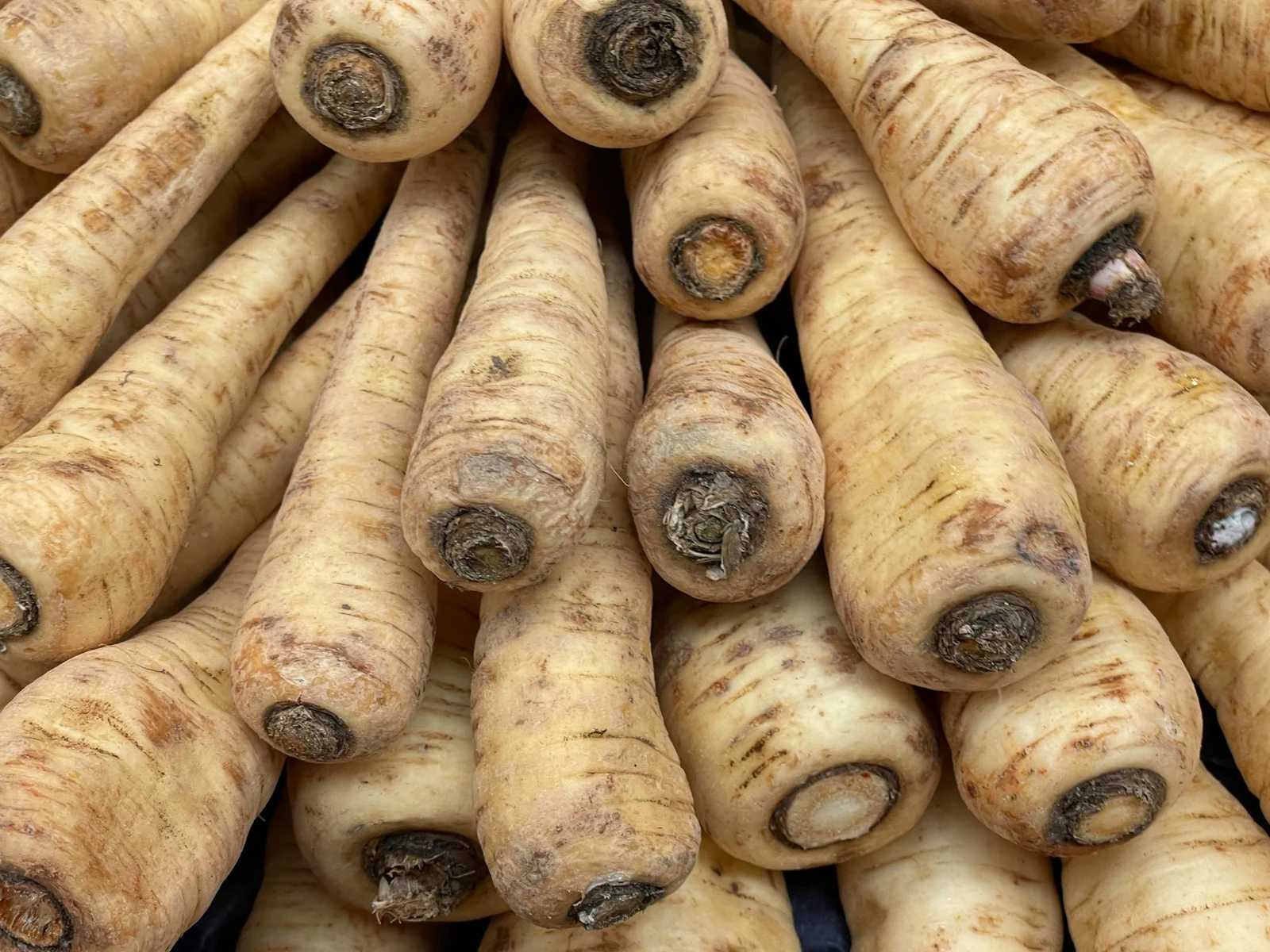 Parsnips