
Passion fruit
Research status: AI draft — awaiting expert review


Overview
Passion fruit is a tropical vine fruit with a tough purple or yellow rind surrounding juicy, seed-filled pulp. Choose fruit that feels heavy for its size; wrinkling often indicates ripeness rather than spoilage.
Origin & cultivation
Passion fruit originates in tropical and subtropical South America, particularly areas of Brazil, Paraguay, and Argentina. Major producing regions include Brazil, Colombia, Ecuador, Peru, and parts of East Africa and Southeast Asia.
Season
Harvest seasons vary with climate and variety, often peaking in summer and autumn with additional crops in warm regions. Imports make passion fruit available much of the year in many markets.
Texture & flavor
The pulp is jelly-like and juicy, with edible, crunchy black seeds. Its intensely fragrant, sweet-tart flavor has citrus and tropical notes; yellow varieties are often more acidic than purple ones.
Nutrition
Typical values estimated with AI, not yet checked against lab data. For guidance only.
| Energy | 97 kcal | raw, per 100 g edible portion | FoodPulse AI estimate |
| Protein | 2.2 g | raw, per 100 g edible portion | FoodPulse AI estimate |
| Total fat | 0.7 g | raw, per 100 g edible portion | FoodPulse AI estimate |
| Saturated fat | 0.059 g | raw, per 100 g edible portion | FoodPulse AI estimate |
| Carbohydrate | 23.38 g | raw, per 100 g edible portion | FoodPulse AI estimate |
| Dietary fiber | 10.4 g | raw, per 100 g edible portion | FoodPulse AI estimate |
| Total sugars | 11.2 g | raw, per 100 g edible portion | FoodPulse AI estimate |
| Water | 72.93 g | raw, per 100 g edible portion | FoodPulse AI estimate |
| Calcium | 12 mg | raw, per 100 g edible portion | FoodPulse AI estimate |
| Iron | 1.6 mg | raw, per 100 g edible portion | FoodPulse AI estimate |
| Magnesium | 29 mg | raw, per 100 g edible portion | FoodPulse AI estimate |
| Potassium | 348 mg | raw, per 100 g edible portion | FoodPulse AI estimate |
| Sodium | 28 mg | raw, per 100 g edible portion | FoodPulse AI estimate |
| Zinc | 0.1 mg | raw, per 100 g edible portion | FoodPulse AI estimate |
| Vitamin C | 30 mg | raw, per 100 g edible portion | FoodPulse AI estimate |
| Vitamin A (RAE) | 64 µg | raw, per 100 g edible portion | FoodPulse AI estimate |
| Folate | 14 µg | raw, per 100 g edible portion | FoodPulse AI estimate |
| Vitamin B12 | 0 µg | raw, per 100 g edible portion | FoodPulse AI estimate |
| Cholesterol | 0 mg | raw, per 100 g edible portion | FoodPulse AI estimate |
Glycemic index: Not established.
Passion fruit supplies fiber, especially when the seeds are eaten, along with vitamin C and other nutrients; amounts depend on portion size. Allergic reactions are possible, including in some people with latex allergy. Educational, not medical advice.
Educational information, not medical advice.
Storage
- Room temperature · Approximately 65–75°F (18–24°C) · About 2–5 days, until ripe. Keep whole fruit out of direct sunlight and refrigerate once ripe. Wrinkling alone is normal; discard fruit with mold, leaking decay, or a fermented or rotten odor. FoodPulse AI estimate
- Refrigerator · 32–40°F (0–4°C) · Whole ripe fruit: about 1–2 weeks; scooped pulp or cut fruit: 3–4 days. Cover cut fruit or pulp and refrigerate within 2 hours, or within 1 hour above 90°F (32°C). Discard for mold, slime, unexpected bubbling, or off odors; do not taste questionable fruit. FoodPulse AI estimate
- Freezer · 0°F (−18°C) or below · About 6–8 months for best quality. Freeze scooped pulp promptly in airtight freezer containers, leaving room for expansion, and thaw in the refrigerator. Continuously frozen food remains safe beyond this quality window, but freezing does not make spoiled fruit safe. FoodPulse AI estimate
Preparation
Rinse the whole fruit under running water and rub the rind before cutting; do not use soap. Halve with a clean knife and scoop out the pulp, leaving the rind behind; strain if you prefer a seedless juice. Keep knives, boards, and fruit separate from raw meat, poultry, and seafood and their juices.
Cooking
Use the pulp raw in yogurt, drinks, dressings, or fruit salads. For a sauce, gently simmer a small batch for about 3–5 minutes, or a larger batch for 5–10 minutes, stopping when it reaches the desired consistency. For curds or custards, follow a tested recipe and cook egg mixtures to 160°F (71°C).
Recipes
No verified recipes yet.
Waste less
Eat the seeds with the pulp, or strain them out only when a smooth texture is important. Freeze leftover pulp in small portions for sauces and drinks, then transfer to a freezer container. Compost the rind and unwanted seeds where accepted rather than treating the tough rind as a ready-to-eat ingredient.
Food waste tips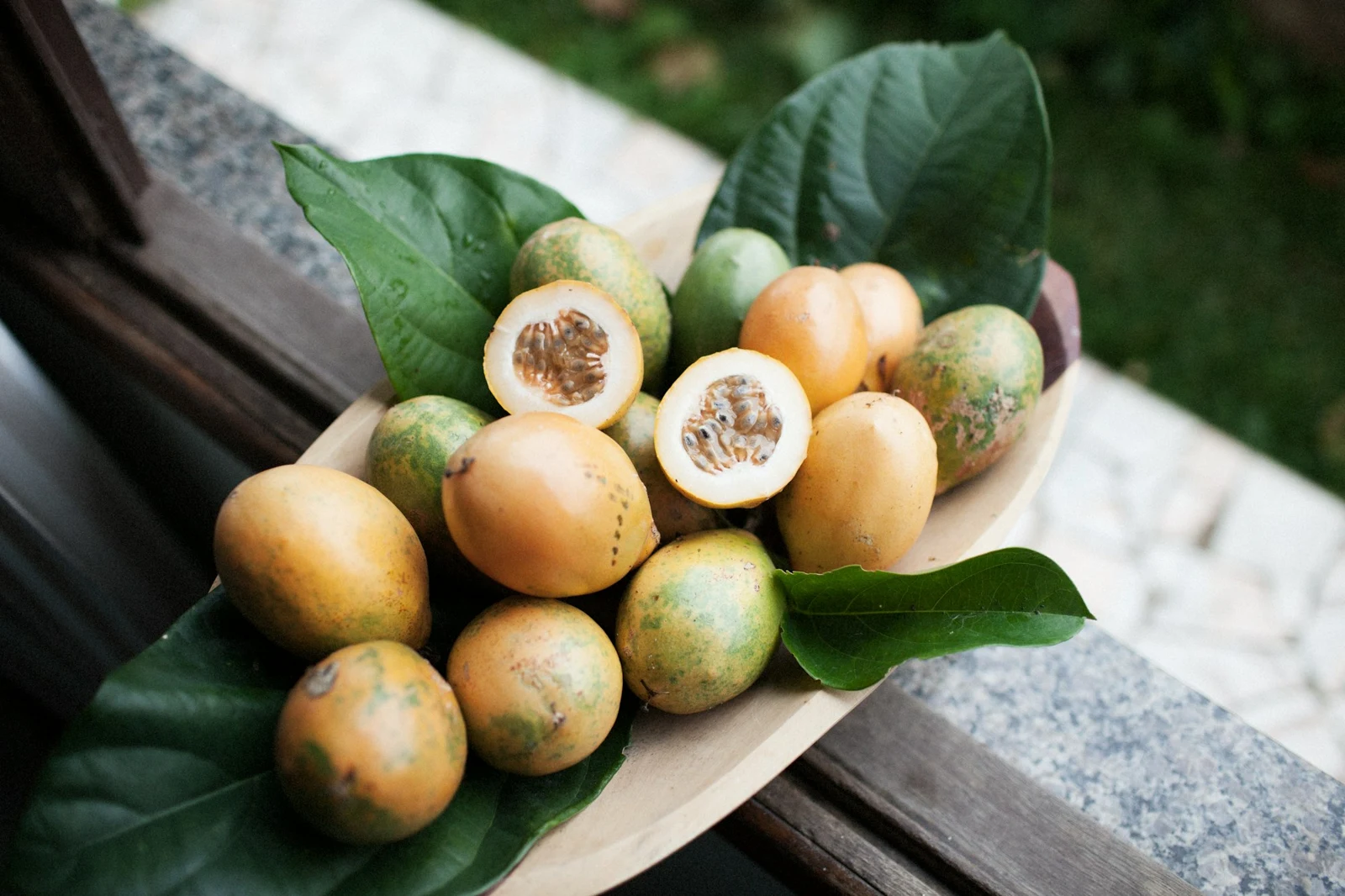 Passion Fruit