
Pineapple
Research status: AI draft — awaiting expert review


Overview
Pineapple is a tropical fruit formed from many small fruits fused around a central core. Its tough, patterned rind and leafy crown enclose yellow flesh eaten fresh, cooked, canned, or dried.
Origin & cultivation
Pineapple originated in tropical South America and spread worldwide through cultivation and trade. Major producing regions include Costa Rica, Indonesia, the Philippines, Brazil, and tropical parts of Asia and Africa.
Season
Fresh pineapple is available year-round, with peak harvest periods varying by growing region. Choose fruit that feels heavy, smells pleasantly sweet at the base, and has no mold, leaking juice, or sunken soft spots; green skin alone does not mean it is unripe.
Texture & flavor
The flesh is juicy and fibrous, with a sweet-tart flavor and tropical aroma; the core is firmer and more woody. Heating softens the flesh and mellows its sharpness, while grilling or roasting adds browned, caramel-like flavors.
Nutrition
Typical values estimated with AI, not yet checked against lab data. For guidance only.
| Energy | 50 kcal | raw, per 100 g edible portion | FoodPulse AI estimate |
| Protein | 0.54 g | raw, per 100 g edible portion | FoodPulse AI estimate |
| Total fat | 0.12 g | raw, per 100 g edible portion | FoodPulse AI estimate |
| Saturated fat | 0.009 g | raw, per 100 g edible portion | FoodPulse AI estimate |
| Carbohydrate | 13.12 g | raw, per 100 g edible portion | FoodPulse AI estimate |
| Dietary fiber | 1.4 g | raw, per 100 g edible portion | FoodPulse AI estimate |
| Total sugars | 9.85 g | raw, per 100 g edible portion | FoodPulse AI estimate |
| Water | 86 g | raw, per 100 g edible portion | FoodPulse AI estimate |
| Calcium | 13 mg | raw, per 100 g edible portion | FoodPulse AI estimate |
| Iron | 0.29 mg | raw, per 100 g edible portion | FoodPulse AI estimate |
| Magnesium | 12 mg | raw, per 100 g edible portion | FoodPulse AI estimate |
| Potassium | 109 mg | raw, per 100 g edible portion | FoodPulse AI estimate |
| Sodium | 1 mg | raw, per 100 g edible portion | FoodPulse AI estimate |
| Zinc | 0.12 mg | raw, per 100 g edible portion | FoodPulse AI estimate |
| Vitamin C | 47.8 mg | raw, per 100 g edible portion | FoodPulse AI estimate |
| Vitamin A (RAE) | 3 µg | raw, per 100 g edible portion | FoodPulse AI estimate |
| Folate | 18 µg | raw, per 100 g edible portion | FoodPulse AI estimate |
| Vitamin B12 | 0 µg | raw, per 100 g edible portion | FoodPulse AI estimate |
| Cholesterol | 0 mg | raw, per 100 g edible portion | FoodPulse AI estimate |
Glycemic index: Not established.
Pineapple provides vitamin C, manganese, and some fiber, but it is not a treatment for disease. Its acidity and protein-digesting enzyme bromelain may cause temporary mouth irritation; true pineapple allergy is also possible, including in some people with latex allergy. Educational, not medical advice.
Educational information, not medical advice.
Storage
- Room temperature · About 60–75°F (16–24°C), away from sun and heat · 1–2 days for a whole, intact pineapple. Pineapple does not become sweeter after harvest, so prolonged counter storage offers little benefit. Discard fruit with mold, leaking decay, extensive soft spots, or an alcoholic or rotten odor. Refrigerate cut pineapple within 2 hours, or within 1 hour above 90°F (32°C). FoodPulse AI estimate
- Refrigerator · 32–40°F (0–4°C) · Whole: about 3–5 days; cut: 3–4 days. Keep cut fruit in a clean, covered container, separate from and above raw animal foods. Discard for mold, slime, fermentation, or an off odor; also discard cut fruit left unrefrigerated beyond the safe time limit, even if it looks normal. FoodPulse AI estimate
- Freezer · 0°F (−18°C) or below · 8–12 months for best quality. Peel, core, and cut sound fruit, then freeze in freezer-safe containers or bags with excess air removed. Continuously frozen fruit remains safe longer, though quality declines; thaw in the refrigerator or use frozen. Discard thawed fruit with mold, slime, an off odor, or unsafe room-temperature exposure. FoodPulse AI estimate
Preparation
Rinse the whole fruit under running water and scrub the rind with a clean produce brush before cutting; do not use soap. Cut off the crown and base, stand upright, slice away the rind and remaining eyes, then quarter, core, and cut as needed. Keep pineapple and its utensils separate from raw meat, poultry, fish, and seafood, and wash hands, knives, and boards after handling raw animal foods.
Cooking
Grill ½–1-inch slices over medium-high heat for about 3–5 minutes per side, or roast bite-size chunks at 400°F (204°C) for roughly 15–25 minutes, depending on size and desired browning. Sauté small pieces for about 5–10 minutes, or simmer in sauces until tender. Fresh pineapple can soften meat excessively in long marinades and prevent gelatin from setting; cooked or canned pineapple has much less enzyme activity.
Recipes
No verified recipes yet.
Waste less
Chop a tender core finely for cooked sauces or blend it into smoothies, straining if too fibrous. Use leftover flesh in salsa, oatmeal, stir-fries, or frozen portions for drinks. Compost the crown, rind, and tough core where accepted; do not use moldy or spoiled scraps for food or drinks.
Food waste tips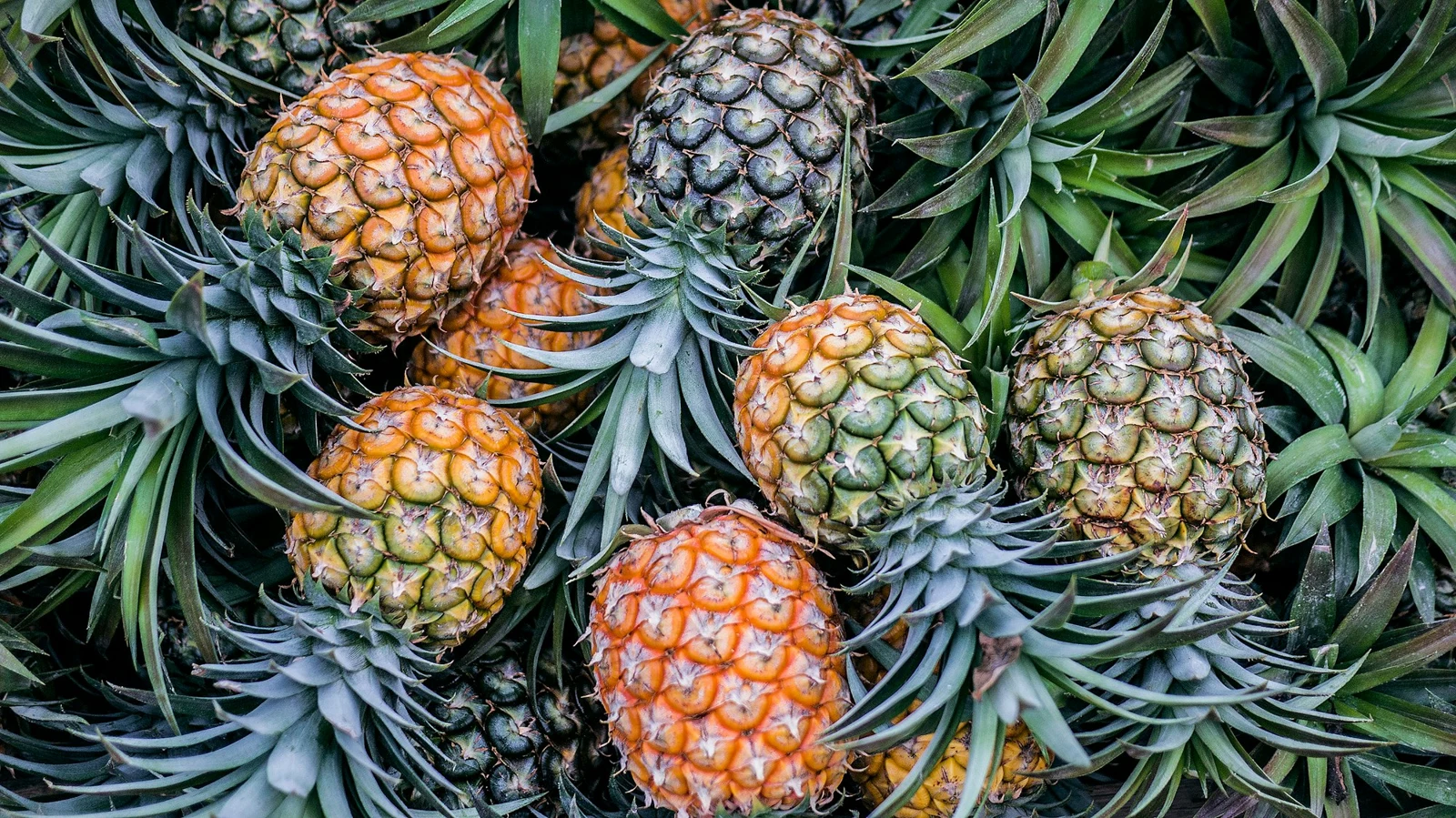 Pineapples