
Artichoke
Research status: AI draft — awaiting expert review


Overview
The globe artichoke is the immature flower bud of a cultivated thistle. Eat the tender flesh at the bases of the leaves and the heart; discard the tough leaf portions and fuzzy central choke.
Origin & cultivation
Artichokes originated in the Mediterranean region, although their precise domestication history is uncertain. Major producers include Italy, Egypt, Spain, and Peru; most U.S. production comes from coastal California.
Season
In Mediterranean climates and California, the main harvest is in spring, with a smaller fall crop. Choose buds that feel heavy, with firm, closely packed leaves; light frost bronzing does not necessarily indicate poor quality.
Texture & flavor
Cooked artichokes have a tender, meaty heart and soft leaf bases, with a nutty, earthy flavor and mild bitterness. Their natural compound cynarin can make foods or drinks tasted afterward seem sweeter.
Nutrition
Typical values estimated with AI, not yet checked against lab data. For guidance only.
| Energy | 47 kcal | raw, per 100 g edible portion | FoodPulse AI estimate |
| Protein | 3.27 g | raw, per 100 g edible portion | FoodPulse AI estimate |
| Total fat | 0.15 g | raw, per 100 g edible portion | FoodPulse AI estimate |
| Saturated fat | 0.036 g | raw, per 100 g edible portion | FoodPulse AI estimate |
| Carbohydrate | 10.51 g | raw, per 100 g edible portion | FoodPulse AI estimate |
| Dietary fiber | 5.4 g | raw, per 100 g edible portion | FoodPulse AI estimate |
| Total sugars | 0.99 g | raw, per 100 g edible portion | FoodPulse AI estimate |
| Water | 84.94 g | raw, per 100 g edible portion | FoodPulse AI estimate |
| Calcium | 44 mg | raw, per 100 g edible portion | FoodPulse AI estimate |
| Iron | 1.28 mg | raw, per 100 g edible portion | FoodPulse AI estimate |
| Magnesium | 60 mg | raw, per 100 g edible portion | FoodPulse AI estimate |
| Potassium | 370 mg | raw, per 100 g edible portion | FoodPulse AI estimate |
| Sodium | 94 mg | raw, per 100 g edible portion | FoodPulse AI estimate |
| Zinc | 0.49 mg | raw, per 100 g edible portion | FoodPulse AI estimate |
| Vitamin C | 11.7 mg | raw, per 100 g edible portion | FoodPulse AI estimate |
| Vitamin A (RAE) | 1 µg | raw, per 100 g edible portion | FoodPulse AI estimate |
| Folate | 68 µg | raw, per 100 g edible portion | FoodPulse AI estimate |
| Vitamin B12 | 0 µg | raw, per 100 g edible portion | FoodPulse AI estimate |
| Cholesterol | 0 mg | raw, per 100 g edible portion | FoodPulse AI estimate |
Glycemic index: Not established.
Artichokes provide fiber, folate, and other nutrients; their fermentable carbohydrates may cause gas or discomfort in sensitive people. Allergy is uncommon but possible, particularly in people sensitive to plants in the daisy family, and evidence about artichoke extracts should not be assumed to apply to eating the vegetable. Educational, not medical advice.
Educational information, not medical advice.
Storage
- Room temperature · Approximately 60–75°F (16–24°C) · A few hours during preparation; refrigerate whole raw buds promptly for best quality.. Whole raw artichokes wilt rapidly in warm conditions. Discard buds with mold, slime, or a rotten smell; cut or cooked artichokes must be refrigerated within 2 hours, or 1 hour above 90°F (32°C). FoodPulse AI estimate
- Refrigerator · 32–40°F (0–4°C) · Whole raw: approximately 3–5 days; cooked: 3–4 days.. Store raw buds unwashed in a perforated bag; refrigerate cooked portions promptly in shallow, covered containers. Discard for mold, slime, or sour odors, and discard cooked leftovers beyond the recommended time even if they look normal. FoodPulse AI estimate
- Freezer · 0°F (−18°C) or colder · Approximately 8–12 months for best quality when properly prepared.. Use the NCHFP artichoke-heart freezing procedure: trim to hearts, blanch for 7 minutes in water acidified as directed, cool promptly, drain, and package airtight. Continuous freezing keeps food safe beyond the quality window, but does not rescue spoiled food; freezer burn affects quality rather than safety. Thaw in the refrigerator and discard thawed portions with mold, slime, or off odors. FoodPulse AI estimate
Preparation
Rinse under running water, gently opening the leaves to flush out grit; do not use soap. Trim the dry stem end, remove tough outer leaves, and cut off the upper quarter and sharp leaf tips; peel a tender stem for cooking. For halves or quarters, scoop out the fuzzy choke and rub cut surfaces with lemon to limit browning; keep produce and utensils separate from raw meat, poultry, and seafood.
Cooking
Steam whole artichokes for roughly 25–50 minutes or boil gently for 20–45 minutes, depending on size; very large buds may take longer. Roast trimmed, choke-free halves covered at 400°F (204°C) for about 35–60 minutes, with a little water in the pan. They are ready when a knife slides easily into the base and a leaf pulls away with little resistance.
Recipes
No verified recipes yet.
Waste less
Peel and cook tender stems along with the hearts rather than throwing them away. Refrigerate leftover cooked hearts promptly and add them to pasta, omelets, or grain salads within 3–4 days. Compost tough leaves, dry trimmings, and the fuzzy choke where local composting rules permit.
Food waste tips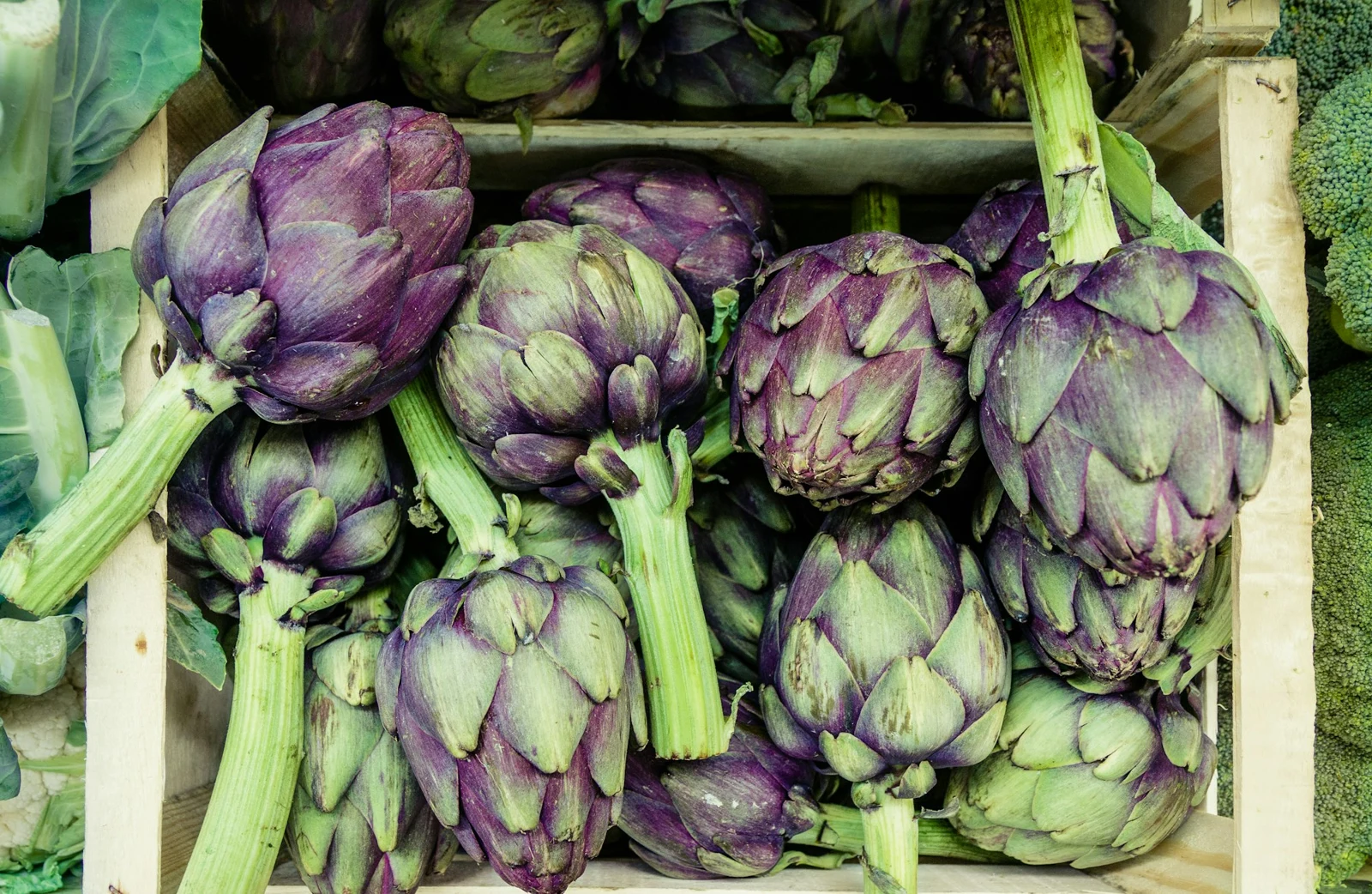 Artichoke