
Celery
Research status: AI draft — awaiting expert review


Overview
Celery is a vegetable grown for its crisp, ribbed leaf stalks, which form a bunch around a tender central heart. The stalks, heart, and leaves are edible; celeriac is a related variety grown for its swollen base.
Origin & cultivation
Celery descends from wild plants native to the Mediterranean region and nearby parts of Europe and western Asia. It is now grown widely in temperate regions, with major production in China, Europe, and the United States, particularly California and Michigan.
Season
Celery is available year-round through staggered growing seasons and regional supply. Local harvests generally peak from summer into autumn in cooler climates and during cooler months in warm regions.
Texture & flavor
Raw celery is crunchy, juicy, and somewhat stringy, with a fresh, grassy flavor and mild bitterness. Cooking softens the stalks and mellows their flavor; the inner stalks are more tender, while the leaves taste stronger.
Nutrition
Typical values estimated with AI, not yet checked against lab data. For guidance only.
| Energy | 14 kcal | raw, per 100 g edible portion | FoodPulse AI estimate |
| Protein | 0.69 g | raw, per 100 g edible portion | FoodPulse AI estimate |
| Total fat | 0.17 g | raw, per 100 g edible portion | FoodPulse AI estimate |
| Saturated fat | 0.042 g | raw, per 100 g edible portion | FoodPulse AI estimate |
| Carbohydrate | 2.97 g | raw, per 100 g edible portion | FoodPulse AI estimate |
| Dietary fiber | 1.6 g | raw, per 100 g edible portion | FoodPulse AI estimate |
| Total sugars | 1.34 g | raw, per 100 g edible portion | FoodPulse AI estimate |
| Water | 95.43 g | raw, per 100 g edible portion | FoodPulse AI estimate |
| Calcium | 40 mg | raw, per 100 g edible portion | FoodPulse AI estimate |
| Iron | 0.2 mg | raw, per 100 g edible portion | FoodPulse AI estimate |
| Magnesium | 11 mg | raw, per 100 g edible portion | FoodPulse AI estimate |
| Potassium | 260 mg | raw, per 100 g edible portion | FoodPulse AI estimate |
| Sodium | 80 mg | raw, per 100 g edible portion | FoodPulse AI estimate |
| Zinc | 0.13 mg | raw, per 100 g edible portion | FoodPulse AI estimate |
| Vitamin C | 3.1 mg | raw, per 100 g edible portion | FoodPulse AI estimate |
| Vitamin A (RAE) | 22 µg | raw, per 100 g edible portion | FoodPulse AI estimate |
| Folate | 36 µg | raw, per 100 g edible portion | FoodPulse AI estimate |
| Vitamin B12 | 0 µg | raw, per 100 g edible portion | FoodPulse AI estimate |
| Cholesterol | 0 mg | raw, per 100 g edible portion | FoodPulse AI estimate |
Glycemic index: Not established.
Celery provides water, some fiber, and vitamin K, but evidence does not support claims that celery juice detoxifies the body or cures disease. Celery can cause serious allergic reactions, particularly in some people with pollen-related allergies, and cooking does not reliably eliminate its allergens. Educational, not medical advice.
Educational information, not medical advice.
Storage
- Room temperature · 60–75°F (16–24°C) · A few hours for best quality; not recommended for routine storage. Celery wilts quickly in warm conditions. Refrigerate cut or peeled celery within 2 hours, or within 1 hour above 90°F (32°C); discard cut celery left out longer. FoodPulse AI estimate
- Refrigerator · 32–40°F (0–4°C) · Whole bunch: about 1–2 weeks; cut stalks: about 3–5 days. Keep whole celery in the crisper, loosely wrapped or in a perforated bag; refrigerate washed, dried cut stalks in a clean covered container. Store away from raw animal-food drips. Discard stalks with mold, slime, or an unpleasant odor; simple limpness alone is a quality issue. FoodPulse AI estimate
- Freezer · 0°F (−18°C) or below · About 10–12 months for best quality. Wash, trim, and cut into roughly 1-inch lengths; water-blanch for 3 minutes, cool promptly in ice water, drain, and package airtight. Frozen celery softens and is best used cooked. Continuously frozen food remains safe beyond the quality window; discard if contaminated or if thawed above 40°F (4°C) for more than 2 hours. FoodPulse AI estimate
Preparation
Separate the stalks and rinse under cool running water, rubbing away grit from the grooves and base; do not use soap. Trim damaged areas and the tough base, peel coarse strings if desired, and slice crosswise or cut into sticks. Keep celery and its utensils separate from raw meat, poultry, fish, and seafood, and wash hands and equipment after handling those foods.
Cooking
Sauté thin slices for about 5–8 minutes, or simmer small pieces in soups for 10–20 minutes until as tender as desired. Braise larger stalk sections for roughly 20–35 minutes, or roast at 400°F (205°C) for 20–30 minutes, depending on thickness. Add leaves near the end of cooking for a stronger celery aroma.
Recipes
No verified recipes yet.
Waste less
Chop tender leaves into salads or use them in soups, and save clean stalk ends and tougher leaves for stock. Use limp but otherwise sound celery in cooked dishes, and refrigerate cooked leftovers promptly for use within 3–4 days. Compost plant trimmings where accepted, but discard moldy or slimy celery rather than using it for stock.
Food waste tips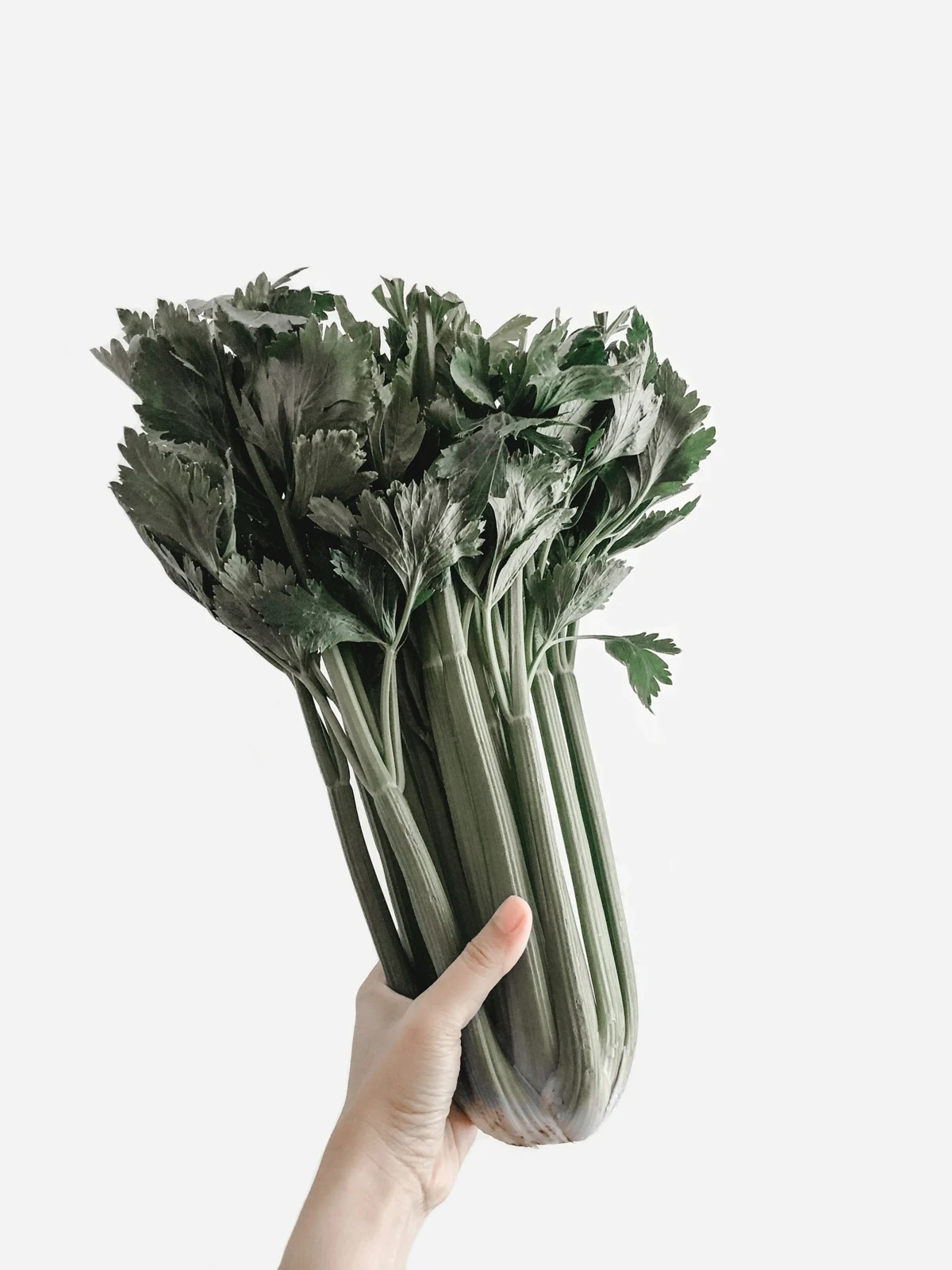 Celery