
Onion
Research status: AI draft — awaiting expert review


Overview
Onion (Allium cepa) is an edible bulb vegetable related to garlic, leeks, and chives. Yellow, white, and red onions are common; sweet onions generally have milder flavor and a shorter storage life.
Origin & cultivation
Onions likely originated in Central or southwestern Asia and have been cultivated for thousands of years. They now grow worldwide, with India, China, Egypt, Turkey, and the United States among major producing countries.
Season
Storage onions are available year-round because cured bulbs keep well after harvest. In temperate regions, fresh sweet onions often arrive in spring and summer, while mature storage onions are generally harvested in late summer or fall.
Texture & flavor
Raw onions are crisp and juicy, with pungency ranging from mild to sharply peppery. Cooking softens them and mellows their bite; slow browning develops a rich, sweet flavor.
Nutrition
Typical values estimated with AI, not yet checked against lab data. For guidance only.
| Energy | 40 kcal | raw, per 100 g edible portion | FoodPulse AI estimate |
| Protein | 1.1 g | raw, per 100 g edible portion | FoodPulse AI estimate |
| Total fat | 0.1 g | raw, per 100 g edible portion | FoodPulse AI estimate |
| Saturated fat | 0.042 g | raw, per 100 g edible portion | FoodPulse AI estimate |
| Carbohydrate | 9.34 g | raw, per 100 g edible portion | FoodPulse AI estimate |
| Dietary fiber | 1.7 g | raw, per 100 g edible portion | FoodPulse AI estimate |
| Total sugars | 4.24 g | raw, per 100 g edible portion | FoodPulse AI estimate |
| Water | 89.11 g | raw, per 100 g edible portion | FoodPulse AI estimate |
| Calcium | 23 mg | raw, per 100 g edible portion | FoodPulse AI estimate |
| Iron | 0.21 mg | raw, per 100 g edible portion | FoodPulse AI estimate |
| Magnesium | 10 mg | raw, per 100 g edible portion | FoodPulse AI estimate |
| Potassium | 146 mg | raw, per 100 g edible portion | FoodPulse AI estimate |
| Sodium | 4 mg | raw, per 100 g edible portion | FoodPulse AI estimate |
| Zinc | 0.17 mg | raw, per 100 g edible portion | FoodPulse AI estimate |
| Vitamin C | 7.4 mg | raw, per 100 g edible portion | FoodPulse AI estimate |
| Vitamin A (RAE) | 0 µg | raw, per 100 g edible portion | FoodPulse AI estimate |
| Folate | 19 µg | raw, per 100 g edible portion | FoodPulse AI estimate |
| Vitamin B12 | 0 µg | raw, per 100 g edible portion | FoodPulse AI estimate |
| Cholesterol | 0 mg | raw, per 100 g edible portion | FoodPulse AI estimate |
Glycemic index: Not established.
Onions provide small amounts of fiber and vitamin C, along with plant compounds such as quercetin, but evidence does not establish onions as a treatment for disease. Their fructans may trigger digestive symptoms in people with IBS, and onion allergy is possible, though uncommon. Educational, not medical advice.
Educational information, not medical advice.
Storage
- Room temperature: whole, cured onions · 60–70°F (16–21°C), ideally toward the cooler end · About 2–4 weeks; sweet onions often only 1–2 weeks. Keep dry in a dark, well-ventilated place, not a sealed plastic bag, and separate from potatoes. Discard bulbs with mold, wet or slimy decay, or an off odor; sprouting alone is not a spoilage sign if the bulb remains firm and sound. FoodPulse AI estimate
- Refrigerator: peeled, cut, or cooked onions · 32–40°F (0–4°C) · Peeled or cut: up to 7 days; cooked: 3–4 days. Store covered in a clean container. Refrigerate within 2 hours of cutting or cooking, or within 1 hour above 90°F (32°C); discard if left out longer. Discard for mold, slime, or sour/off odors, and do not taste to test safety. FoodPulse AI estimate
- Freezer: chopped or sliced onions · 0°F (−18°C) or below · About 3–6 months for best quality; continuously frozen food remains safe longer. Peel and chop, then freeze in airtight freezer packaging; blanching is not necessary for chopped onions intended for cooking. Frozen onions lose crispness and work best in cooked dishes; add directly from frozen or thaw in the refrigerator. Freezer burn affects quality, but discard onions showing mold, slime, or an off odor after thawing. FoodPulse AI estimate
Preparation
Rinse under running water before cutting, remove papery skin and damaged layers, and trim the stem and roots; do not use soap. Halve lengthwise, then slice or dice on a stable board, leaving the root end attached temporarily if helpful for dicing. Keep onions separate from raw meat, poultry, fish, and seafood, and wash hands, knives, and boards after handling those foods.
Cooking
Sauté diced or thinly sliced onions over medium heat for about 5–10 minutes to soften, or cook over medium-low heat for roughly 35–60 minutes or longer to caramelize, stirring regularly. Roast wedges at 400°F (204°C) for about 25–45 minutes, depending on thickness, until tender and browned. Smaller cuts cook faster; avoid high heat that burns the outside before the center softens.
Recipes
No verified recipes yet.
Waste less
Use sound trimmings and clean outer layers to flavor stock, then strain them out; papery skins can add color but may taste bitter. Add refrigerated leftover onion to soups, omelets, or stir-fries, or freeze portions before they spoil. Compost skins and unusable plant trimmings where local guidance permits.
Food waste tips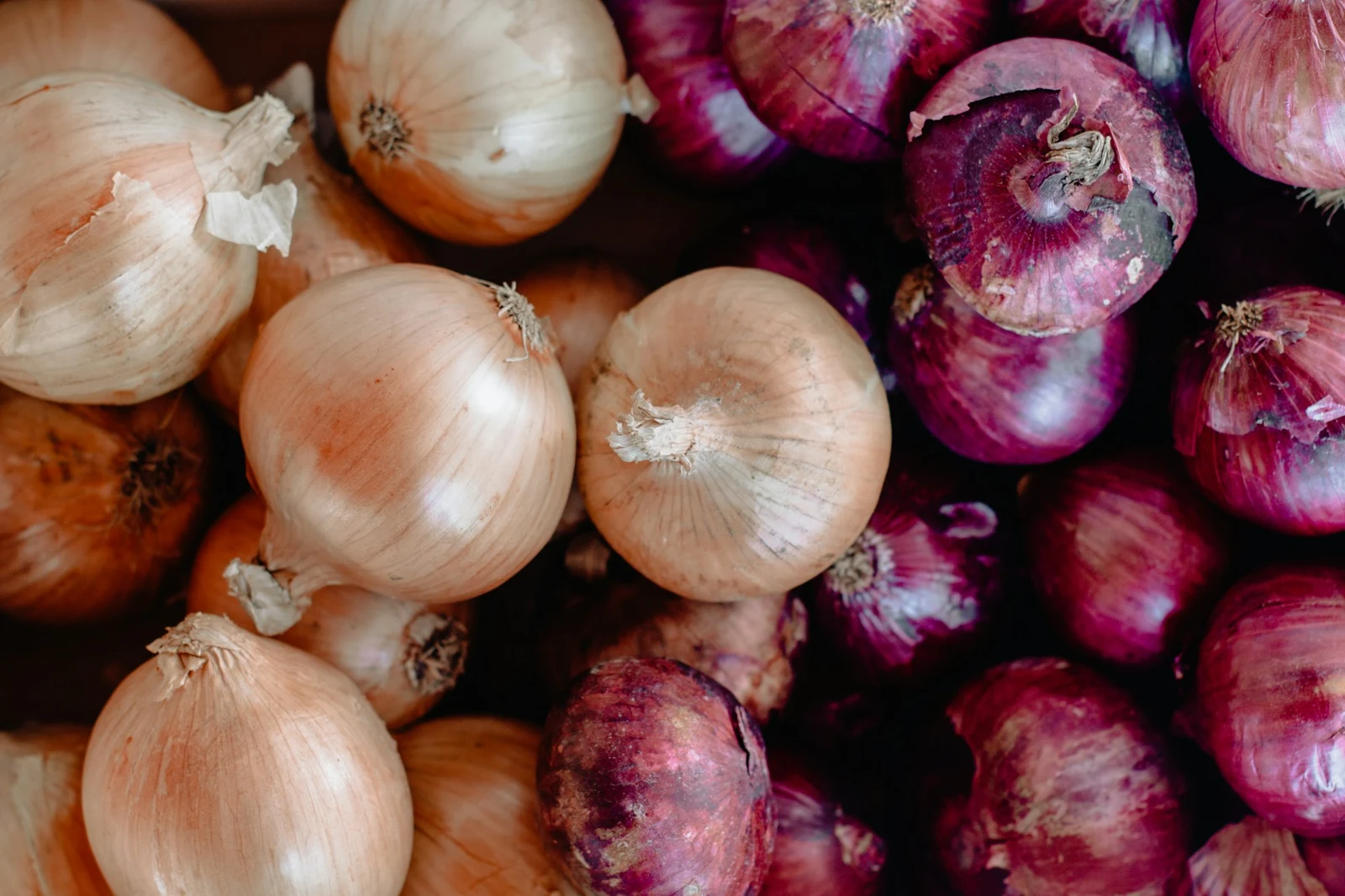 Onions