
Asparagus
Research status: AI draft — awaiting expert review


Overview
Asparagus is a perennial vegetable grown for its tender young shoots, called spears. Green is most common; white asparagus is grown without light, while purple varieties usually turn green when cooked.
Origin & cultivation
Asparagus is native to parts of Europe, northern Africa, and western Asia and has been cultivated since ancient times. Major producing regions include China, Peru, Mexico, and parts of Europe; U.S. production includes Michigan, Washington, and California.
Season
Asparagus is a spring crop, typically available locally from March through June in much of the Northern Hemisphere, depending on climate. Imports make it available year-round, but freshly harvested local spears often have better sweetness and tenderness.
Texture & flavor
Fresh asparagus tastes grassy, mildly sweet, and slightly earthy, with tender tips and firmer stalks. Thin spears cook quickly, while thick spears can be equally tender when their woody bases are removed and tough lower skin is peeled.
Nutrition
Typical values estimated with AI, not yet checked against lab data. For guidance only.
| Energy | 20 kcal | raw, per 100 g edible portion | FoodPulse AI estimate |
| Protein | 2.2 g | raw, per 100 g edible portion | FoodPulse AI estimate |
| Total fat | 0.12 g | raw, per 100 g edible portion | FoodPulse AI estimate |
| Saturated fat | 0.04 g | raw, per 100 g edible portion | FoodPulse AI estimate |
| Carbohydrate | 3.88 g | raw, per 100 g edible portion | FoodPulse AI estimate |
| Dietary fiber | 2.1 g | raw, per 100 g edible portion | FoodPulse AI estimate |
| Total sugars | 1.88 g | raw, per 100 g edible portion | FoodPulse AI estimate |
| Water | 93.22 g | raw, per 100 g edible portion | FoodPulse AI estimate |
| Calcium | 24 mg | raw, per 100 g edible portion | FoodPulse AI estimate |
| Iron | 2.14 mg | raw, per 100 g edible portion | FoodPulse AI estimate |
| Magnesium | 14 mg | raw, per 100 g edible portion | FoodPulse AI estimate |
| Potassium | 202 mg | raw, per 100 g edible portion | FoodPulse AI estimate |
| Sodium | 2 mg | raw, per 100 g edible portion | FoodPulse AI estimate |
| Zinc | 0.54 mg | raw, per 100 g edible portion | FoodPulse AI estimate |
| Vitamin C | 5.6 mg | raw, per 100 g edible portion | FoodPulse AI estimate |
| Vitamin A (RAE) | 38 µg | raw, per 100 g edible portion | FoodPulse AI estimate |
| Folate | 52 µg | raw, per 100 g edible portion | FoodPulse AI estimate |
| Vitamin B12 | 0 µg | raw, per 100 g edible portion | FoodPulse AI estimate |
| Cholesterol | 0 mg | raw, per 100 g edible portion | FoodPulse AI estimate |
Glycemic index: Not established.
Asparagus provides folate, vitamin K, and fiber, which support normal body functions as part of a varied diet. Allergy is uncommon but possible; its fermentable carbohydrates may cause gas in sensitive people, and people taking warfarin should keep vitamin K intake consistent. Educational, not medical advice.
Educational information, not medical advice.
Storage
- Room temperature · About 60–75°F (16–24°C) · For brief preparation only; refrigerate fresh spears promptly. Whole raw asparagus quickly loses quality at room temperature. Refrigerate cut or cooked asparagus within 2 hours, or within 1 hour above 90°F (32°C); discard it if these limits are exceeded. FoodPulse AI estimate
- Refrigerator · 32–40°F (0–4°C) · Fresh: 3–5 days; cooked: 3–4 days. Stand fresh spears upright with their cut ends in a little water and loosely cover, or wrap the bases in a damp paper towel and bag loosely. Store cooked asparagus in a covered shallow container. Discard spears with slime, mold, mushy tips, or an off odor; unsafe food may show no visible spoilage. FoodPulse AI estimate
- Freezer · 0°F (−18°C) or below · 8–12 months for best quality. Wash and trim, then blanch small spears for 2 minutes, medium spears for 3 minutes, and large spears for 4 minutes. Cool promptly in ice water, drain well, and freeze in airtight freezer packaging. Continuously frozen food remains safe beyond the quality window; freezer burn affects quality, but discard thawed asparagus held above 40°F (4°C) for more than 2 hours. FoodPulse AI estimate
Preparation
Rinse under cool running water, gently loosening grit around the tips; do not use soap. Trim dry, woody bases and peel tough lower stalks if needed, then leave whole or cut into even lengths. Keep washed asparagus and its utensils separate from raw meat, poultry, and seafood, and wash hands and surfaces after handling those foods.
Cooking
Steam or simmer thin spears for about 3–5 minutes and thick spears for 6–10 minutes, until just tender. Roast at 425°F (220°C) for roughly 8–12 minutes for thin spears or 12–18 minutes for thick ones, tossing with a little oil. Grill over medium-high heat for about 5–10 minutes, turning occasionally; adjust all times to spear thickness and desired tenderness.
Recipes
No verified recipes yet.
Waste less
Use the tender stalks as well as the tips; simmer clean woody trimmings briefly in stock, then strain out the fibers. Add promptly refrigerated cooked leftovers to omelets, pasta, or soup within 3–4 days. Compost sound vegetable scraps where accepted, but discard moldy spears rather than trying to salvage them for stock.
Food waste tips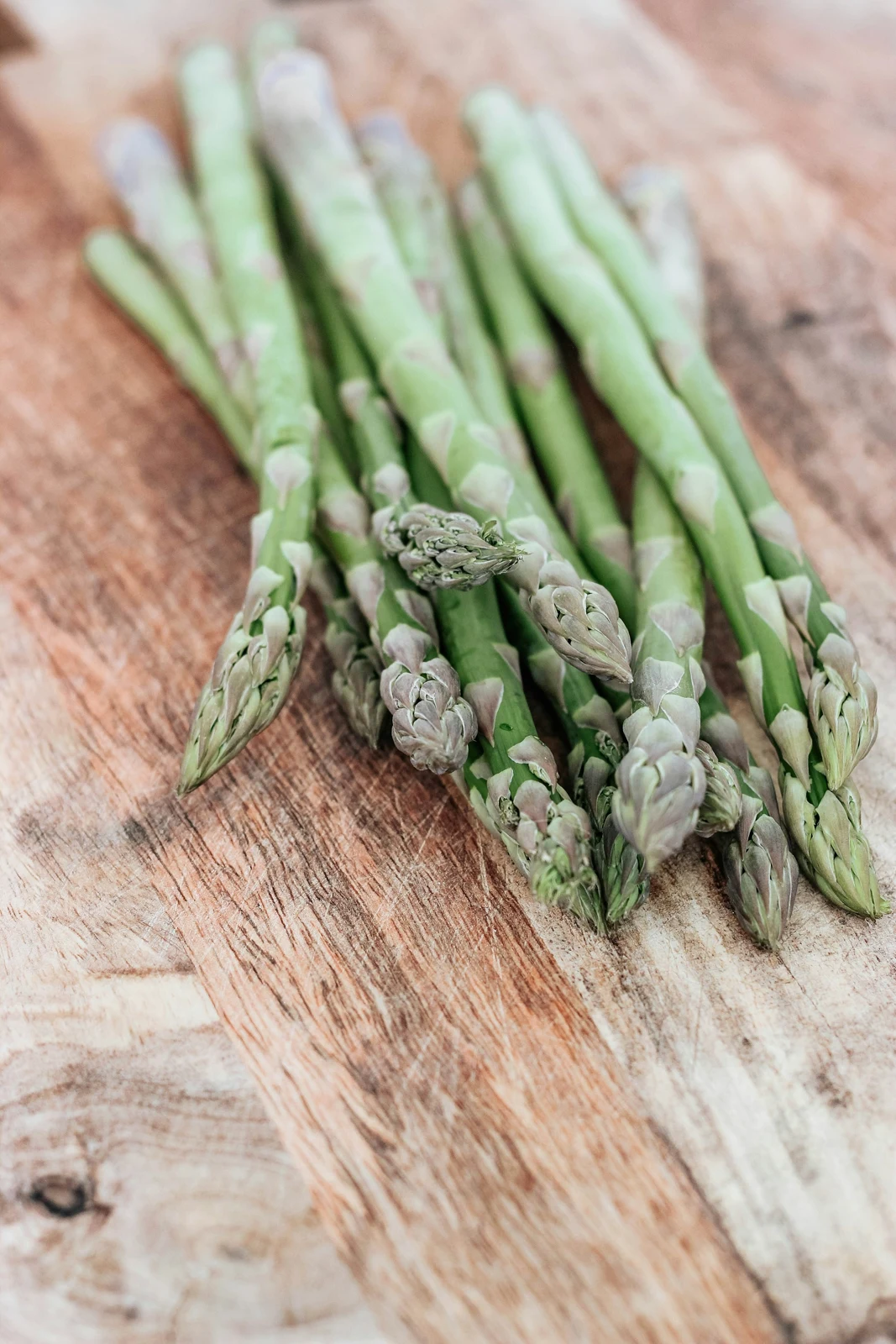 Asparagus