
Beetroot
Research status: AI draft — awaiting expert review


Overview
Beetroot is the swollen root of a beet plant, commonly sold in red, golden, or striped varieties. Both the root and its leafy tops are edible.
Origin & cultivation
Cultivated beets descend from wild sea beet native to Mediterranean and nearby European coastal regions. Table beetroot is now grown across temperate regions, notably Europe, Russia, North America, and China; it is distinct from sugar beet grown for sugar production.
Season
Beetroot is available year-round through storage and staggered harvests. Local crops are often best from summer through autumn in temperate climates, with young roots and tender greens appearing earlier.
Texture & flavor
Raw beetroot is firm and crunchy, with earthy sweetness that becomes more pronounced when cooked. Roasting concentrates its flavor, while boiling produces a milder, tender root; lemon juice or vinegar balances the sweetness.
Nutrition
Typical values estimated with AI, not yet checked against lab data. For guidance only.
| Energy | 43 kcal | raw, per 100 g edible portion | FoodPulse AI estimate |
| Protein | 1.61 g | raw, per 100 g edible portion | FoodPulse AI estimate |
| Total fat | 0.17 g | raw, per 100 g edible portion | FoodPulse AI estimate |
| Saturated fat | 0.027 g | raw, per 100 g edible portion | FoodPulse AI estimate |
| Carbohydrate | 9.56 g | raw, per 100 g edible portion | FoodPulse AI estimate |
| Dietary fiber | 2.8 g | raw, per 100 g edible portion | FoodPulse AI estimate |
| Total sugars | 6.76 g | raw, per 100 g edible portion | FoodPulse AI estimate |
| Water | 87.58 g | raw, per 100 g edible portion | FoodPulse AI estimate |
| Calcium | 16 mg | raw, per 100 g edible portion | FoodPulse AI estimate |
| Iron | 0.8 mg | raw, per 100 g edible portion | FoodPulse AI estimate |
| Magnesium | 23 mg | raw, per 100 g edible portion | FoodPulse AI estimate |
| Potassium | 325 mg | raw, per 100 g edible portion | FoodPulse AI estimate |
| Sodium | 78 mg | raw, per 100 g edible portion | FoodPulse AI estimate |
| Zinc | 0.35 mg | raw, per 100 g edible portion | FoodPulse AI estimate |
| Vitamin C | 4.9 mg | raw, per 100 g edible portion | FoodPulse AI estimate |
| Vitamin A (RAE) | 2 µg | raw, per 100 g edible portion | FoodPulse AI estimate |
| Folate | 109 µg | raw, per 100 g edible portion | FoodPulse AI estimate |
| Vitamin B12 | 0 µg | raw, per 100 g edible portion | FoodPulse AI estimate |
| Cholesterol | 0 mg | raw, per 100 g edible portion | FoodPulse AI estimate |
Glycemic index: Not established.
Beetroot provides fiber, folate, and dietary nitrates; studies suggest nitrate-rich beet juice may modestly lower blood pressure in some people, but results and doses vary. Beet allergy is uncommon but possible, and people advised to restrict oxalates should discuss portions with their clinician; harmless red urine or stools can occur after eating beets. Educational, not medical advice.
Educational information, not medical advice.
Storage
- Room temperature · 50–70°F (10–21°C), preferably cool and away from sunlight · 1–2 days for whole, uncut roots. Keep dry and ventilated; refrigerate promptly for longer storage. Discard roots with mold, slime, leaking decay, or an unpleasant odor; refrigerate cut or cooked beetroot within 2 hours, or 1 hour above 90°F (32°C). FoodPulse AI estimate
- Refrigerator · 32–40°F (0–4°C) · Whole roots: 2–3 weeks; detached greens: 2–3 days; cooked beetroot: 3–4 days. Remove greens, leave about 1 inch of stem, and store unwashed roots in a perforated bag; refrigerate greens separately. Keep cooked beetroot in covered containers, and discard anything moldy, slimy, rotten-smelling, or showing decay. FoodPulse AI estimate
- Freezer · 0°F (−18°C) or below · 8–12 months for best quality. Following NCHFP guidance, cook whole roots until tender, cool promptly, peel, trim, and slice or dice larger roots before packing in freezer containers with ½-inch headspace. Continuously frozen food remains safe beyond this quality window; thaw in the refrigerator and discard if subsequently moldy, slimy, or held above 40°F (4°C) for more than 2 hours. FoodPulse AI estimate
Preparation
Cut off the greens, leaving about 1 inch of stem and the root tail intact if cooking whole to limit color loss. Scrub roots under running water without soap, rinse greens thoroughly, and peel raw roots before slicing or grate them unpeeled if well scrubbed; cooked skins usually slip off easily. Use separate boards and utensils for raw animal foods, and wash hands and surfaces before handling ready-to-eat beetroot.
Cooking
Roast whole, scrubbed beetroot at 400°F (204°C) for about 45–90 minutes, depending on size, or roast 1-inch pieces for 25–40 minutes. Boil or steam whole small-to-medium roots for roughly 25–60 minutes; large ones may take longer, and all should be easily pierced with a knife. Sauté washed greens for about 3–5 minutes until wilted and tender.
Recipes
No verified recipes yet.
Waste less
Cook tender leaves like spinach and finely chop the stems for sautés or soups, adding stems first because they take longer. Use refrigerated leftover roots in salads, soups, dips, or grain bowls within 3–4 days. Compost sound trimmings and peels rather than discarding them.
Food waste tips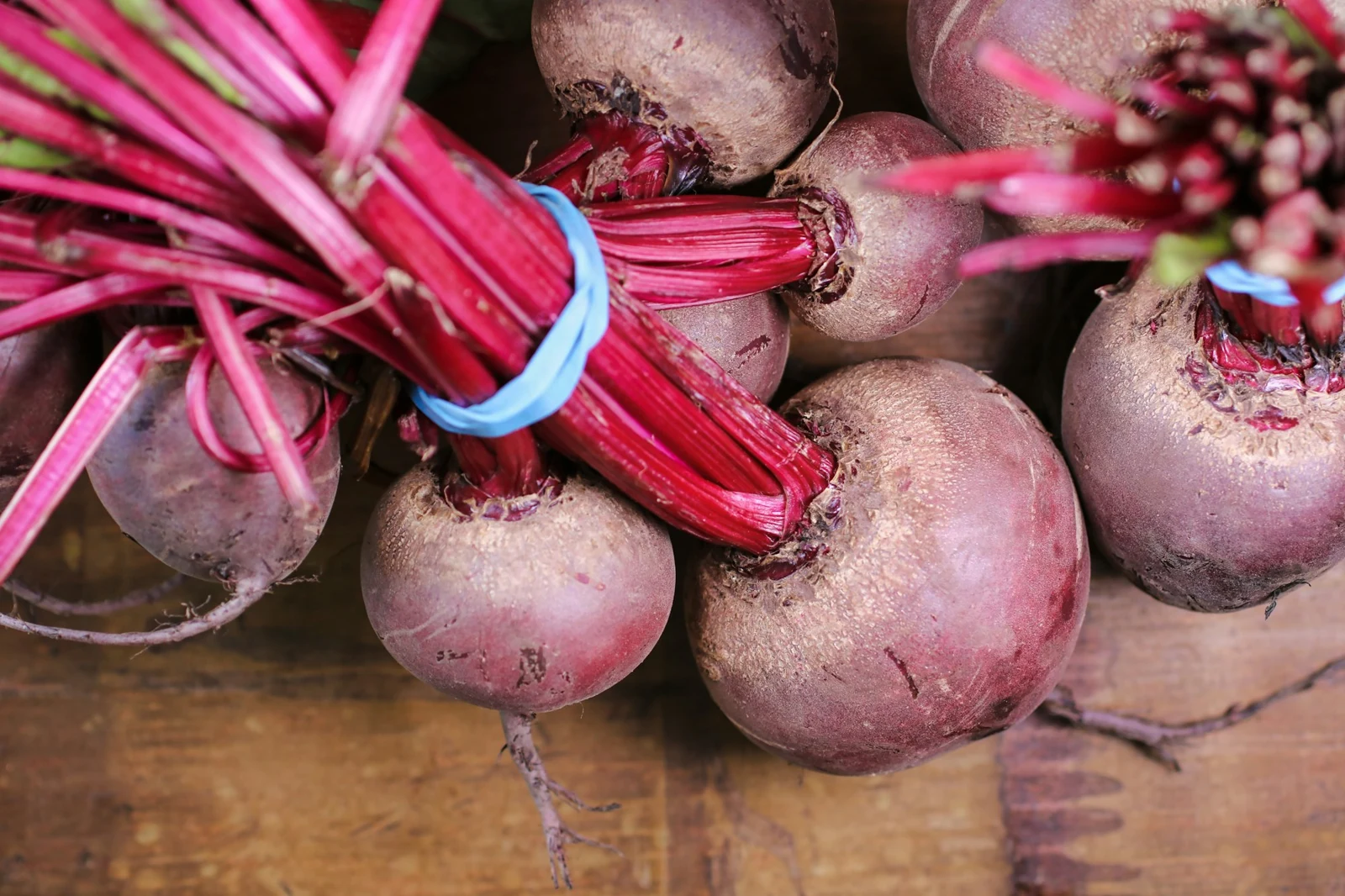 Beets - Beetroot