
Blackberry
Research status: AI draft — awaiting expert review


Overview
Blackberries are small, dark purple-black fruits made up of clustered juice-filled segments called drupelets. Unlike raspberries, they retain their soft central core when picked; the entire berry is edible.
Origin & cultivation
Blackberries belong to the genus Rubus, with species native across Europe, Asia, and the Americas. Major commercial growing regions include Mexico, the United States—particularly Oregon—and parts of Europe.
Season
Local blackberries generally ripen from early summer through early autumn, depending on climate and variety. Imports extend supermarket availability, but locally harvested berries often offer better flavor.
Texture & flavor
Ripe berries are juicy and tender, with noticeable seeds and a sweet-tart, sometimes floral or earthy flavor. Choose plump, deeply colored berries that release easily from their stems; underripe fruit can be sharply sour.
Nutrition
Typical values estimated with AI, not yet checked against lab data. For guidance only.
| Energy | 43 kcal | raw, per 100 g edible portion | FoodPulse AI estimate |
| Protein | 1.39 g | raw, per 100 g edible portion | FoodPulse AI estimate |
| Total fat | 0.49 g | raw, per 100 g edible portion | FoodPulse AI estimate |
| Saturated fat | 0.014 g | raw, per 100 g edible portion | FoodPulse AI estimate |
| Carbohydrate | 9.61 g | raw, per 100 g edible portion | FoodPulse AI estimate |
| Dietary fiber | 5.3 g | raw, per 100 g edible portion | FoodPulse AI estimate |
| Total sugars | 4.88 g | raw, per 100 g edible portion | FoodPulse AI estimate |
| Water | 88.15 g | raw, per 100 g edible portion | FoodPulse AI estimate |
| Calcium | 29 mg | raw, per 100 g edible portion | FoodPulse AI estimate |
| Iron | 0.62 mg | raw, per 100 g edible portion | FoodPulse AI estimate |
| Magnesium | 20 mg | raw, per 100 g edible portion | FoodPulse AI estimate |
| Potassium | 162 mg | raw, per 100 g edible portion | FoodPulse AI estimate |
| Sodium | 1 mg | raw, per 100 g edible portion | FoodPulse AI estimate |
| Zinc | 0.53 mg | raw, per 100 g edible portion | FoodPulse AI estimate |
| Vitamin C | 21 mg | raw, per 100 g edible portion | FoodPulse AI estimate |
| Vitamin A (RAE) | 11 µg | raw, per 100 g edible portion | FoodPulse AI estimate |
| Folate | 25 µg | raw, per 100 g edible portion | FoodPulse AI estimate |
| Vitamin B12 | 0 µg | raw, per 100 g edible portion | FoodPulse AI estimate |
| Cholesterol | 0 mg | raw, per 100 g edible portion | FoodPulse AI estimate |
Glycemic index: Not established.
Blackberries provide fiber, vitamin C, and anthocyanin pigments, but evidence does not establish that eating them prevents or treats specific diseases. Blackberry allergy is possible, including pollen-related mouth itching; anyone with a known allergy should avoid them. Educational, not medical advice.
Educational information, not medical advice.
Storage
- Room temperature · 60–75°F (16–24°C) · A few hours for serving; refrigerate promptly for longer storage.. Keep out of direct sun and heat. Discard moldy, slimy, or fermented-smelling berries; cut berries should be refrigerated within 2 hours, or 1 hour above 90°F (32°C). FoodPulse AI estimate
- Refrigerator · 32–40°F (0–4°C) · Usually 2–3 days.. Store unwashed in a shallow, ventilated container lined with a dry paper towel, away from raw animal foods. Discard moldy berries and those directly touching them; discard the batch if mold is widespread or berries are slimy or smell fermented. FoodPulse AI estimate
- Freezer · 0°F (−18°C) or below · 8–12 months for best quality; continuously frozen berries remain safe longer.. Rinse, drain, and dry sound berries, freeze in a single layer, then transfer to airtight freezer containers. Freezing does not sanitize spoiled fruit; thaw in the refrigerator or cook from frozen, and discard thawed berries showing mold or an off odor. FoodPulse AI estimate
Preparation
Sort out spoiled berries, remove any leaves or stems, and gently rinse under cool running water just before use; do not use soap or soak them. Drain and pat dry; trimming or cutting is usually unnecessary, though large berries can be halved. Keep berries and their utensils separate from raw meat, poultry, seafood, and their juices.
Cooking
Use raw in salads and desserts, or simmer into a sauce for about 5–15 minutes, depending on berry size, batch volume, and desired thickness. Bake in muffins or small pastries for roughly 18–30 minutes, or in pies and cobblers for 35–60 minutes, until the pastry is cooked and the filling bubbles in the center. For shelf-stable jam, use a tested USDA or NCHFP recipe and its specified boiling-water processing time, adjusted for altitude.
Recipes
No verified recipes yet.
Waste less
Use the whole berry, including its edible core and seeds; sound but soft berries work well in sauces, baking, or smoothies. Freeze surplus promptly, and use strained seed pulp in oatmeal or baked goods if desired. Compost stems and spoiled fruit where accepted rather than using moldy berries in food.
Food waste tips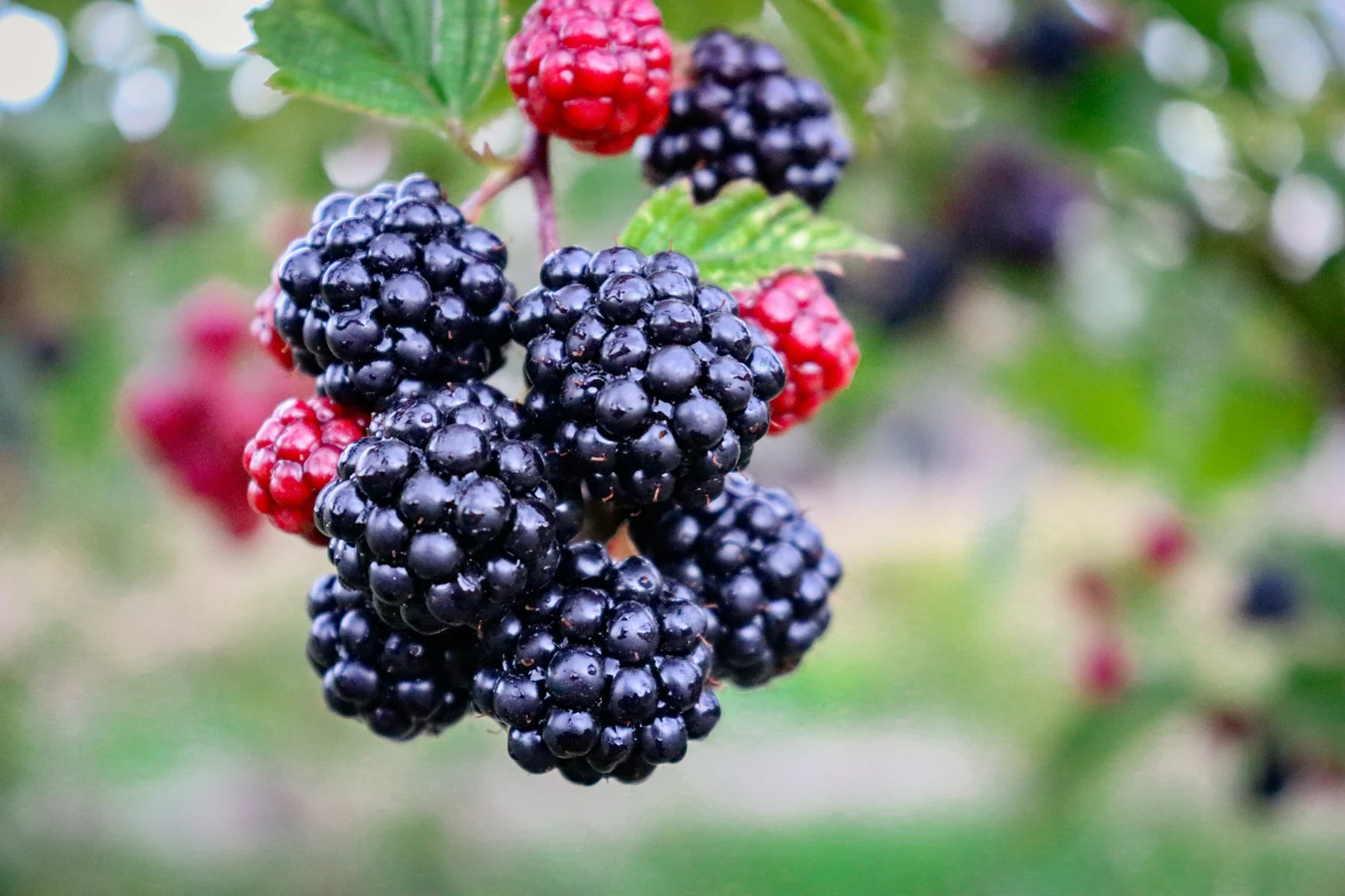 Black Berries