
Nectarine
Research status: AI draft — awaiting expert review


Overview
A nectarine is a smooth-skinned variety of peach, not a peach–plum hybrid. Yellow- or white-fleshed varieties may be freestone, with an easily removed pit, or clingstone, with flesh attached to it.
Origin & cultivation
Nectarines belong to the peach species, which originated in China. Major producing regions include China, Mediterranean countries such as Spain and Italy, and the United States, particularly California.
Season
In the Northern Hemisphere, nectarines are generally in season from late spring through early autumn, with peak supplies in summer. Southern Hemisphere harvests and imports extend availability through other months.
Texture & flavor
Ripe nectarines are juicy and tender, with floral aromas and a sweet-tart flavor; yellow-fleshed types are often tangier than white-fleshed ones. Choose fragrant fruit that yields slightly to gentle pressure, avoiding deep bruises, leaking spots, or shriveled skin.
Nutrition
Typical values estimated with AI, not yet checked against lab data. For guidance only.
| Energy | 44 kcal | raw, per 100 g edible portion | FoodPulse AI estimate |
| Protein | 1.06 g | raw, per 100 g edible portion | FoodPulse AI estimate |
| Total fat | 0.32 g | raw, per 100 g edible portion | FoodPulse AI estimate |
| Saturated fat | 0.025 g | raw, per 100 g edible portion | FoodPulse AI estimate |
| Carbohydrate | 10.55 g | raw, per 100 g edible portion | FoodPulse AI estimate |
| Dietary fiber | 1.7 g | raw, per 100 g edible portion | FoodPulse AI estimate |
| Total sugars | 7.89 g | raw, per 100 g edible portion | FoodPulse AI estimate |
| Water | 87.59 g | raw, per 100 g edible portion | FoodPulse AI estimate |
| Calcium | 6 mg | raw, per 100 g edible portion | FoodPulse AI estimate |
| Iron | 0.28 mg | raw, per 100 g edible portion | FoodPulse AI estimate |
| Magnesium | 9 mg | raw, per 100 g edible portion | FoodPulse AI estimate |
| Potassium | 201 mg | raw, per 100 g edible portion | FoodPulse AI estimate |
| Sodium | 0 mg | raw, per 100 g edible portion | FoodPulse AI estimate |
| Zinc | 0.17 mg | raw, per 100 g edible portion | FoodPulse AI estimate |
| Vitamin C | 5.4 mg | raw, per 100 g edible portion | FoodPulse AI estimate |
| Vitamin A (RAE) | 17 µg | raw, per 100 g edible portion | FoodPulse AI estimate |
| Folate | 5 µg | raw, per 100 g edible portion | FoodPulse AI estimate |
| Vitamin B12 | 0 µg | raw, per 100 g edible portion | FoodPulse AI estimate |
| Cholesterol | 0 mg | raw, per 100 g edible portion | FoodPulse AI estimate |
Glycemic index: Not established.
Nectarines provide fiber, vitamin C, and potassium as part of a varied diet. They can cause allergic reactions, including pollen-food allergy syndrome in people sensitive to birch pollen; some peach-related allergies can be more severe. Educational, not medical advice.
Educational information, not medical advice.
Storage
- Room temperature · About 60–75°F (16–24°C) · Usually 1–3 days, until ripe. Keep whole, unwashed fruit out of direct sunlight; a loosely closed paper bag can speed ripening. Check daily and refrigerate when ripe. Discard fruit with mold, leaking decay, or a fermented odor. FoodPulse AI estimate
- Refrigerator · 32–40°F (0–4°C) · Ripe whole fruit: about 3–5 days; cut fruit: 3–4 days. Keep whole fruit dry and store cut fruit in a covered container. Refrigerate cut fruit within 2 hours, or within 1 hour above 90°F (32°C). Discard moldy, slimy, sour-smelling, or improperly held cut fruit. FoodPulse AI estimate
- Freezer · 0°F (-18°C) or below · Best quality within 8–12 months. Wash, pit, and slice sound fruit; an ascorbic-acid treatment following package directions helps limit browning. Freeze in freezer-safe packaging with excess air removed, and thaw in the refrigerator. Continuously frozen fruit remains safe beyond the quality window; discard thawed fruit with mold, slime, or fermented odors. FoodPulse AI estimate
Preparation
Rinse under cool running water just before use, gently rub the skin, and dry; do not use soap or produce detergent. Cut around the seam and twist freestone halves apart, or slice clingstone flesh away from the pit; peeling is optional. Use clean hands, knives, and boards, and keep fruit separate from raw meat, poultry, seafood, and their juices.
Cooking
Grill lightly oiled halves over medium heat for about 6–10 minutes total, or roast at 400°F (205°C) for roughly 15–25 minutes, depending on size and ripeness. Simmer slices for a compote for 5–15 minutes, stopping when they reach your preferred tenderness. Smaller pieces and very ripe fruit cook faster; nectarines also work well in crisps, tarts, and savory sauces.
Recipes
No verified recipes yet.
Waste less
Eat the edible skin, and use sound, soft fruit in smoothies, compotes, or baked dishes. Refrigerate leftover cut fruit promptly, or freeze it before it deteriorates. Compost pits and unusable scraps where accepted; do not crack pits to eat the kernels, and discard moldy fruit rather than trimming it.
Food waste tips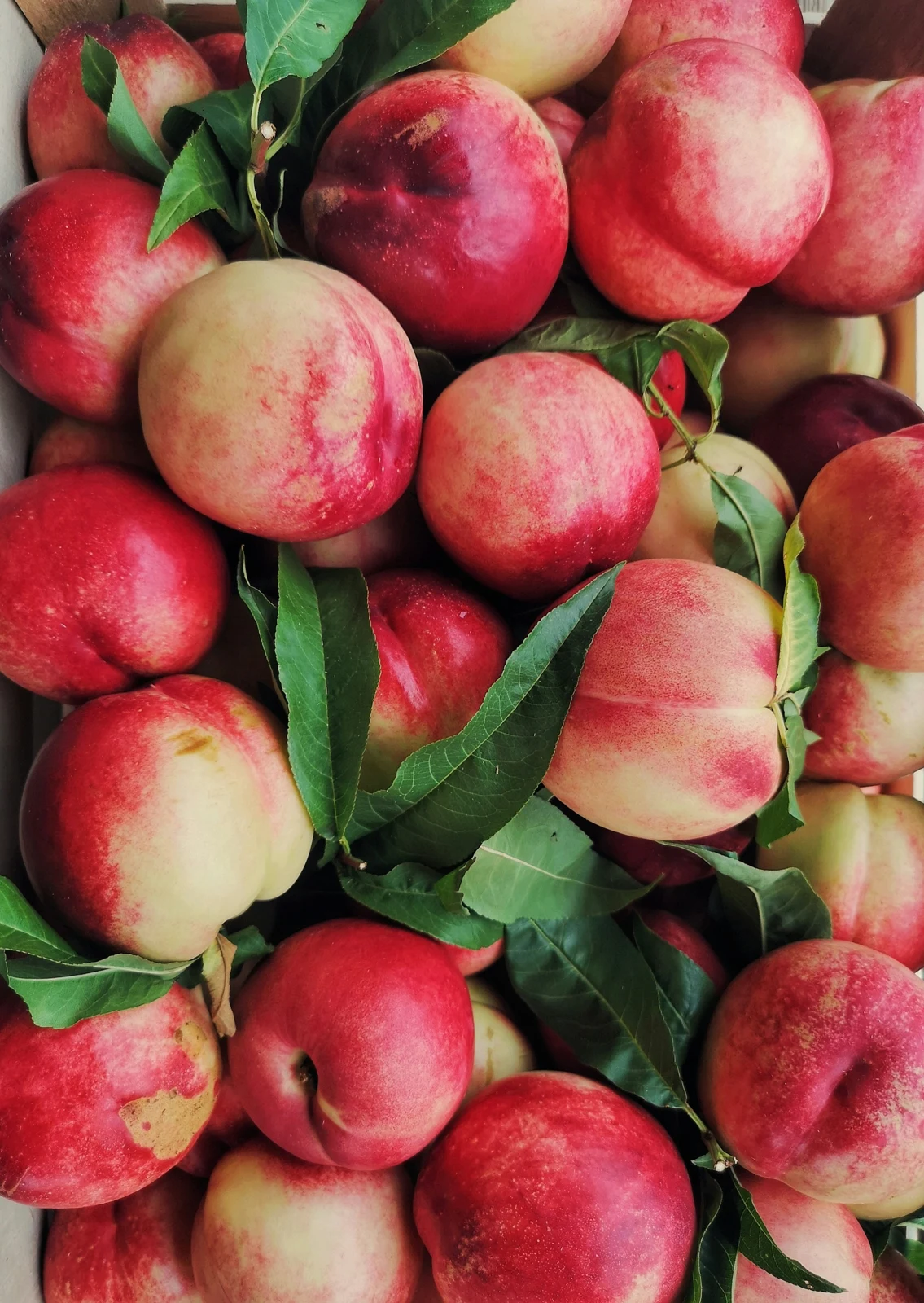 Nectarines