
Blueberry
Research status: AI draft — awaiting expert review


Overview
Blueberries are small, round fruits with blue-purple skins, pale flesh, and a powdery natural coating called bloom. Cultivated highbush berries are usually larger than wild lowbush berries; both work well fresh or cooked.
Origin & cultivation
The main commercial blueberry species are native to North America, where Indigenous peoples have long gathered and used them. Major producing regions now include the United States, Canada, Peru, Chile, Mexico, Europe, and China.
Season
Fresh local blueberries generally peak from late spring through summer in North America, with timing varying by region and variety. Southern Hemisphere harvests and imports extend availability, while frozen berries are available year-round.
Texture & flavor
Fresh blueberries have tender skins, juicy flesh, and flavors ranging from tart and grassy to sweet and floral. Smaller wild berries often taste more concentrated, and cooking softens the fruit and deepens its color.
Nutrition
Typical values estimated with AI, not yet checked against lab data. For guidance only.
| Energy | 57 kcal | raw, per 100 g edible portion | FoodPulse AI estimate |
| Protein | 0.74 g | raw, per 100 g edible portion | FoodPulse AI estimate |
| Total fat | 0.33 g | raw, per 100 g edible portion | FoodPulse AI estimate |
| Saturated fat | 0.028 g | raw, per 100 g edible portion | FoodPulse AI estimate |
| Carbohydrate | 14.49 g | raw, per 100 g edible portion | FoodPulse AI estimate |
| Dietary fiber | 2.4 g | raw, per 100 g edible portion | FoodPulse AI estimate |
| Total sugars | 9.96 g | raw, per 100 g edible portion | FoodPulse AI estimate |
| Water | 84.21 g | raw, per 100 g edible portion | FoodPulse AI estimate |
| Calcium | 6 mg | raw, per 100 g edible portion | FoodPulse AI estimate |
| Iron | 0.28 mg | raw, per 100 g edible portion | FoodPulse AI estimate |
| Magnesium | 6 mg | raw, per 100 g edible portion | FoodPulse AI estimate |
| Potassium | 77 mg | raw, per 100 g edible portion | FoodPulse AI estimate |
| Sodium | 1 mg | raw, per 100 g edible portion | FoodPulse AI estimate |
| Zinc | 0.16 mg | raw, per 100 g edible portion | FoodPulse AI estimate |
| Vitamin C | 9.7 mg | raw, per 100 g edible portion | FoodPulse AI estimate |
| Vitamin A (RAE) | 3 µg | raw, per 100 g edible portion | FoodPulse AI estimate |
| Folate | 6 µg | raw, per 100 g edible portion | FoodPulse AI estimate |
| Vitamin B12 | 0 µg | raw, per 100 g edible portion | FoodPulse AI estimate |
| Cholesterol | 0 mg | raw, per 100 g edible portion | FoodPulse AI estimate |
Glycemic index: Not established.
Blueberries provide fiber, vitamin C, and anthocyanin pigments; research suggests possible cardiometabolic benefits, but they are not a treatment or cure. Blueberry allergy is uncommon but possible, and prepared products may contain other allergens. Educational, not medical advice.
Educational information, not medical advice.
Storage
- Room temperature · 60–75°F (16–24°C) · Same day, preferably only a few hours. Keep whole, unwashed berries dry and out of sunlight; refrigeration is best for longer storage. Discard berries with mold, slime, leaking decay, or a fermented odor. FoodPulse AI estimate
- Refrigerator · 32–40°F (0–4°C) · About 5–10 days, depending on freshness. Store unwashed in a ventilated container, removing crushed or spoiled berries promptly. Discard moldy berries and those touching them; discard the batch if mold is widespread or berries are slimy or smell fermented. FoodPulse AI estimate
- Freezer · 0°F (−18°C) or below · 8–12 months for best quality. Following NCHFP guidance, freeze sound blueberries unwashed in a single layer, then package airtight; rinse before use. Continuously frozen fruit remains safe beyond the quality window, but freezing does not sanitize spoiled berries; freezer burn alone is a quality issue. FoodPulse AI estimate
Preparation
Remove stems and discard moldy, leaking, or spoiled berries, then rinse gently under cool running water just before use; do not use soap or produce wash. Drain and pat dry, leaving whole for most recipes or quartering for garnishes. Keep berries and clean utensils separate from raw meat, poultry, seafood, and their juices.
Cooking
Simmer berries for a sauce or compote for about 5–10 minutes, allowing longer for larger berries or batches, until softened and juicy. For roasting, spread in a shallow layer and cook at 375°F (190°C) for roughly 15–25 minutes, until bursting. Add frozen berries directly to many baked goods without thawing, following the recipe and allowing extra baking time if needed.
Recipes
No verified recipes yet.
Waste less
Use the whole berry, including skin and tiny seeds; sound but soft berries are good for sauces, muffins, or smoothies. Freeze surplus fruit or refrigerate cooked sauce promptly and use within 3–4 days. Compost stems and spoiled berries where accepted rather than trying to salvage moldy fruit by cooking.
Food waste tips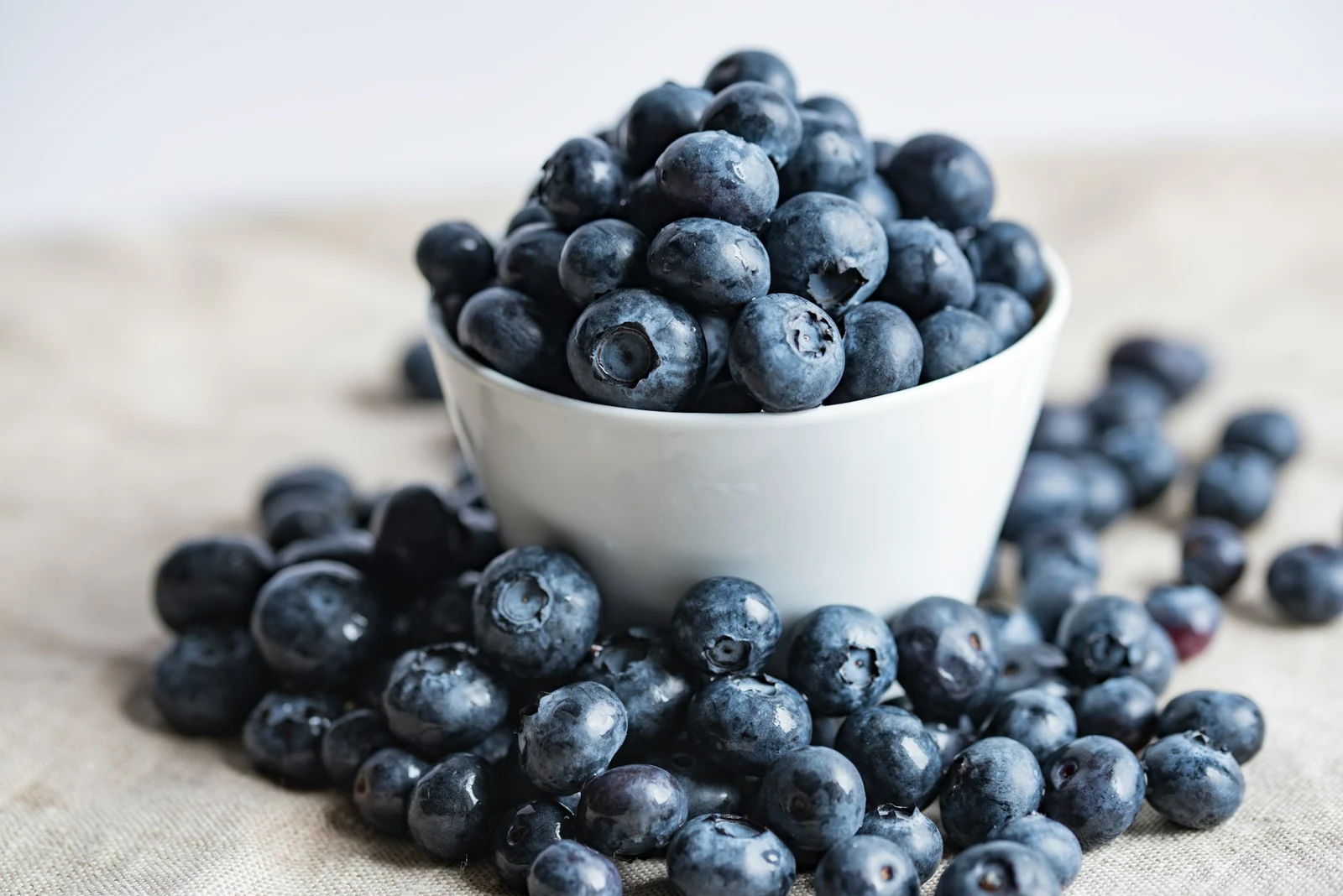 Blueberries