
Kiwi
Research status: AI draft — awaiting expert review


Overview
Kiwi, or kiwifruit, is a small fruit with edible skin, juicy flesh, tiny black seeds, and a pale central core. Green varieties usually have fuzzy brown skin; gold varieties generally have smoother skin and yellow flesh.
Origin & cultivation
Kiwifruit originated in China and was developed into a major commercial crop in New Zealand. Major producing regions include China, New Zealand, Italy, Greece, and Chile.
Season
Kiwi is available year-round in many markets because Northern and Southern Hemisphere harvests overlap. Northern Hemisphere fruit is generally harvested in autumn, while New Zealand and Chilean harvests occur mainly in spring; refrigerated supplies extend availability.
Texture & flavor
Ripe kiwi is juicy and tender, with a sweet-tart flavor and lightly crunchy seeds. Green kiwi is usually tangier than gold kiwi; a ripe fruit yields slightly to gentle pressure without feeling mushy.
Nutrition
Typical values estimated with AI, not yet checked against lab data. For guidance only.
| Energy | 61 kcal | raw, per 100 g edible portion | FoodPulse AI estimate |
| Protein | 1.14 g | raw, per 100 g edible portion | FoodPulse AI estimate |
| Total fat | 0.52 g | raw, per 100 g edible portion | FoodPulse AI estimate |
| Saturated fat | 0.029 g | raw, per 100 g edible portion | FoodPulse AI estimate |
| Carbohydrate | 14.66 g | raw, per 100 g edible portion | FoodPulse AI estimate |
| Dietary fiber | 3 g | raw, per 100 g edible portion | FoodPulse AI estimate |
| Total sugars | 8.99 g | raw, per 100 g edible portion | FoodPulse AI estimate |
| Water | 83.07 g | raw, per 100 g edible portion | FoodPulse AI estimate |
| Calcium | 34 mg | raw, per 100 g edible portion | FoodPulse AI estimate |
| Iron | 0.31 mg | raw, per 100 g edible portion | FoodPulse AI estimate |
| Magnesium | 17 mg | raw, per 100 g edible portion | FoodPulse AI estimate |
| Potassium | 312 mg | raw, per 100 g edible portion | FoodPulse AI estimate |
| Sodium | 3 mg | raw, per 100 g edible portion | FoodPulse AI estimate |
| Zinc | 0.14 mg | raw, per 100 g edible portion | FoodPulse AI estimate |
| Vitamin C | 92.7 mg | raw, per 100 g edible portion | FoodPulse AI estimate |
| Vitamin A (RAE) | 4 µg | raw, per 100 g edible portion | FoodPulse AI estimate |
| Folate | 25 µg | raw, per 100 g edible portion | FoodPulse AI estimate |
| Vitamin B12 | 0 µg | raw, per 100 g edible portion | FoodPulse AI estimate |
| Cholesterol | 0 mg | raw, per 100 g edible portion | FoodPulse AI estimate |
Glycemic index: Not established.
Kiwi supplies vitamin C and fiber, and small clinical studies suggest regular consumption may help bowel regularity in some people. Kiwi can cause allergic reactions, including cross-reactions in people with latex or certain pollen allergies; reactions can occasionally be severe. Educational, not medical advice.
Educational information, not medical advice.
Storage
- Room temperature · Approximately 60–75°F (16–24°C) · Usually 2–5 days to ripen; check daily. Keep whole, uncut fruit out of direct sunlight; a paper bag with an apple can speed ripening. Refrigerate once ripe. Discard fruit with mold, leaking flesh, or a fermented odor. FoodPulse AI estimate
- Refrigerator · 32–40°F (0–4°C) · Whole ripe fruit: about 1–2 weeks; cut fruit: 3–4 days. Keep cut fruit in a clean, covered container and refrigerate within 2 hours, or within 1 hour above 90°F (32°C). Discard cut fruit left out longer, or fruit showing mold, slime, or an off odor. FoodPulse AI estimate
- Freezer · 0°F (-18°C) or below · Best quality within 8–12 months. Wash, peel if desired, and slice; freeze pieces on a tray, then transfer to airtight freezer containers. Continuously frozen fruit remains safe beyond the quality window but softens after thawing; thaw in the refrigerator or use frozen. Discard if thawed and held above 40°F (4°C) for more than 2 hours. FoodPulse AI estimate
Preparation
Rinse under running water before cutting, gently rubbing the skin; do not use soap or produce detergent. Trim the firm stem end, then halve and scoop, peel and slice, or eat skin-on if preferred. Use clean hands, knives, and boards, keeping fruit separate from raw meat, poultry, seafood, and their juices.
Cooking
Kiwi is usually served raw, but sliced or chopped fruit can be simmered into a sauce for about 5–10 minutes, with larger pieces needing longer. For grilling, use firm-ripe, thick slices and cook roughly 1–2 minutes per side, just until lightly marked. Raw kiwi contains an enzyme that prevents gelatin from setting and can over-tenderize meat; heating deactivates it.
Recipes
No verified recipes yet.
Waste less
The skin and central core are edible, so peeling is optional after washing. Blend sound, overripe fruit into smoothies or cook it into a quick sauce; freeze extra peeled slices for later use. Compost skins and stem ends where accepted, but discard moldy fruit rather than trimming it for eating.
Food waste tips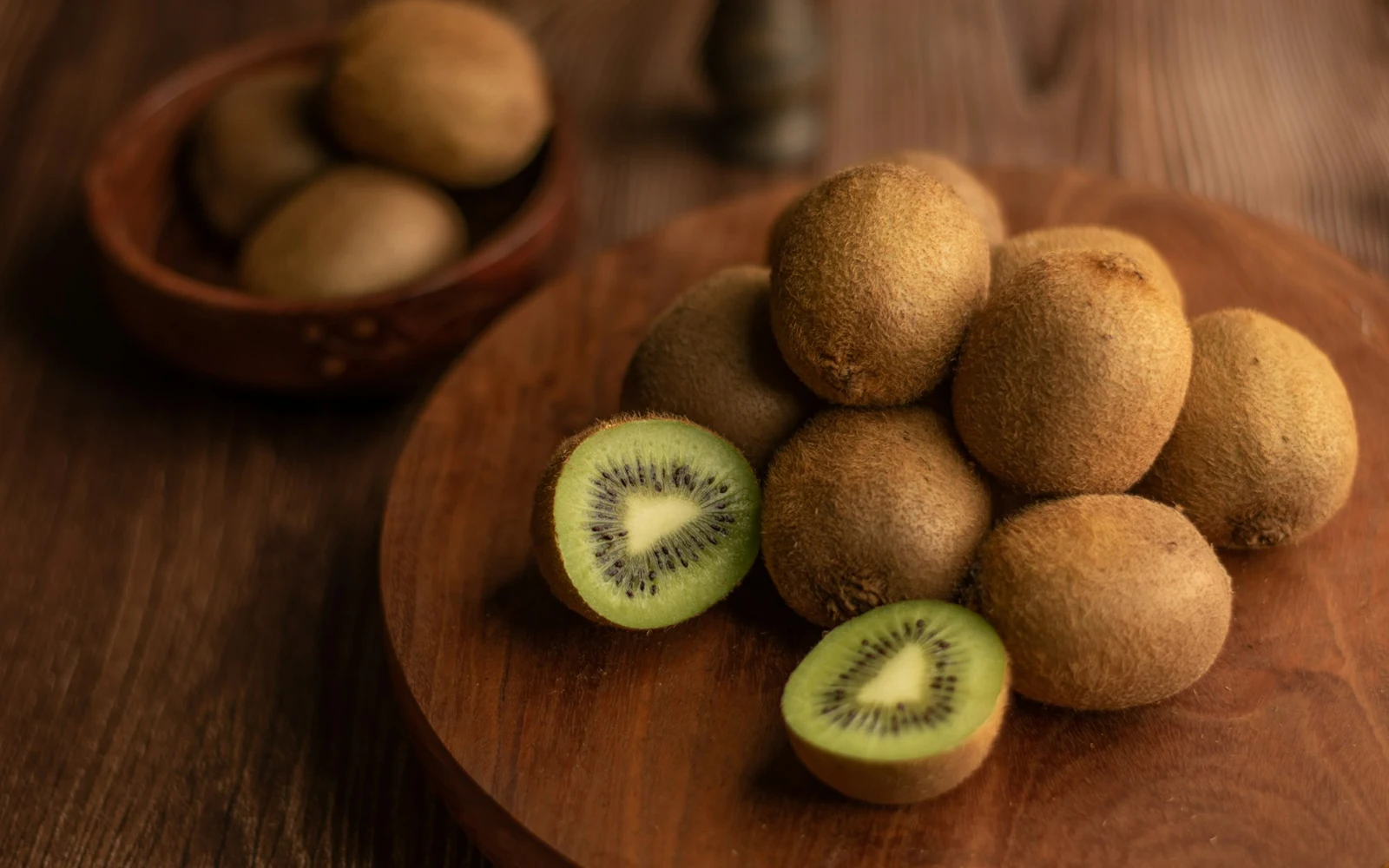 Kiwis