
Rambutan
Research status: AI draft — awaiting expert review


Overview
Rambutan is a tropical fruit with a red or yellow rind covered in soft, hairlike spines. Inside is translucent white flesh surrounding a single seed; only the flesh is normally eaten.
Origin & cultivation
Native to Southeast Asia, rambutan is closely related to lychee and longan. Major producing regions include Thailand, Indonesia, Malaysia, and Vietnam, with additional production in tropical Central America.
Season
Harvest seasons vary by climate, and some growing regions produce two crops each year. Imported fruit may be available much of the year; choose plump fruit with intact skins, avoiding cracks, leaks, or mold.
Texture & flavor
The flesh is juicy, tender, and slightly springy, with a sweet, mildly tart flavor reminiscent of grapes and lychees. In some varieties, the flesh separates easily from the seed; in others, it clings tightly.
Nutrition
Typical values estimated with AI, not yet checked against lab data. For guidance only.
| Energy | 68 kcal | raw, peeled and seed removed; typical estimates per 100 g edible flesh, per 100 g edible portion | FoodPulse AI estimate |
| Protein | 0.9 g | raw, peeled and seed removed; typical estimates per 100 g edible flesh, per 100 g edible portion | FoodPulse AI estimate |
| Total fat | 0.2 g | raw, peeled and seed removed; typical estimates per 100 g edible flesh, per 100 g edible portion | FoodPulse AI estimate |
| Saturated fat | 0.06 g | raw, peeled and seed removed; typical estimates per 100 g edible flesh, per 100 g edible portion | FoodPulse AI estimate |
| Carbohydrate | 16.5 g | raw, peeled and seed removed; typical estimates per 100 g edible flesh, per 100 g edible portion | FoodPulse AI estimate |
| Dietary fiber | 0.9 g | raw, peeled and seed removed; typical estimates per 100 g edible flesh, per 100 g edible portion | FoodPulse AI estimate |
| Total sugars | 14 g | raw, peeled and seed removed; typical estimates per 100 g edible flesh, per 100 g edible portion | FoodPulse AI estimate |
| Water | 82 g | raw, peeled and seed removed; typical estimates per 100 g edible flesh, per 100 g edible portion | FoodPulse AI estimate |
| Calcium | 22 mg | raw, peeled and seed removed; typical estimates per 100 g edible flesh, per 100 g edible portion | FoodPulse AI estimate |
| Iron | 0.35 mg | raw, peeled and seed removed; typical estimates per 100 g edible flesh, per 100 g edible portion | FoodPulse AI estimate |
| Magnesium | 7 mg | raw, peeled and seed removed; typical estimates per 100 g edible flesh, per 100 g edible portion | FoodPulse AI estimate |
| Potassium | 140 mg | raw, peeled and seed removed; typical estimates per 100 g edible flesh, per 100 g edible portion | FoodPulse AI estimate |
| Sodium | 2 mg | raw, peeled and seed removed; typical estimates per 100 g edible flesh, per 100 g edible portion | FoodPulse AI estimate |
| Zinc | 0.08 mg | raw, peeled and seed removed; typical estimates per 100 g edible flesh, per 100 g edible portion | FoodPulse AI estimate |
| Vitamin C | 36.4 mg | raw, peeled and seed removed; typical estimates per 100 g edible flesh, per 100 g edible portion | FoodPulse AI estimate |
| Vitamin A (RAE) | 0 µg | raw, peeled and seed removed; typical estimates per 100 g edible flesh, per 100 g edible portion | FoodPulse AI estimate |
| Folate | 8 µg | raw, peeled and seed removed; typical estimates per 100 g edible flesh, per 100 g edible portion | FoodPulse AI estimate |
| Vitamin B12 | 0 µg | raw, peeled and seed removed; typical estimates per 100 g edible flesh, per 100 g edible portion | FoodPulse AI estimate |
| Cholesterol | 0 mg | raw, peeled and seed removed; typical estimates per 100 g edible flesh, per 100 g edible portion | FoodPulse AI estimate |
Glycemic index: Not established.
Rambutan provides vitamin C, water, and some fiber, though amounts vary with variety and serving size. Allergic reactions are possible; anyone with a known rambutan allergy should avoid it, and the seed and rind should not be eaten. Educational, not medical advice.
Educational information, not medical advice.
Storage
- Room temperature, whole · 68–77°F (20–25°C) · 1–2 days. Keep out of direct sunlight and use promptly, especially in warm conditions. Browning spines alone can indicate drying, but discard fruit with mold, leaking flesh, or a sour or fermented odor. FoodPulse AI estimate
- Refrigerator, whole · 32–40°F (0–4°C) · 5–7 days. Store dry in a loosely closed or perforated bag, and wash just before use. Discard moldy, slimy, leaking, or fermented-smelling fruit; rind darkening alone does not necessarily mean spoilage. FoodPulse AI estimate
- Refrigerator, peeled and seeded · 32–40°F (0–4°C) · 3–4 days. Refrigerate in a covered container within 2 hours of preparation, or within 1 hour above 90°F (32°C). Discard if left out longer, or if mold, slime, bubbling, or an off odor develops. FoodPulse AI estimate
- Freezer, peeled and seeded · 0°F (−18°C) or below · 8–12 months for best quality. Freeze in airtight freezer containers or bags; continuously frozen fruit remains safe beyond this quality window. Thaw in the refrigerator, expecting a softer texture, and discard thawed fruit with mold or an off odor. FoodPulse AI estimate
Preparation
Rinse the whole fruit under running water before peeling; do not use soap or bleach. Make a shallow cut around the rind, twist it open, and split the flesh to remove the seed without cutting through it. Use clean hands and utensils, and keep fruit separate from raw meat, poultry, seafood, and their juices.
Cooking
Rambutan is usually served raw in fruit salads, desserts, or chilled drinks. For compote, gently simmer peeled, seeded flesh for about 3–5 minutes for halves or 5–8 minutes for whole pieces, stopping when just softened. Add it near the end of cooking to preserve its texture.
Recipes
No verified recipes yet.
Waste less
Peel only what you need, and use leftover seeded flesh in smoothies, fruit salads, or a quick compote. Freeze surplus flesh before it deteriorates; do not eat the rind or seeds. Compost the rind and seeds where accepted, recognizing that seeds may break down slowly.
Food waste tips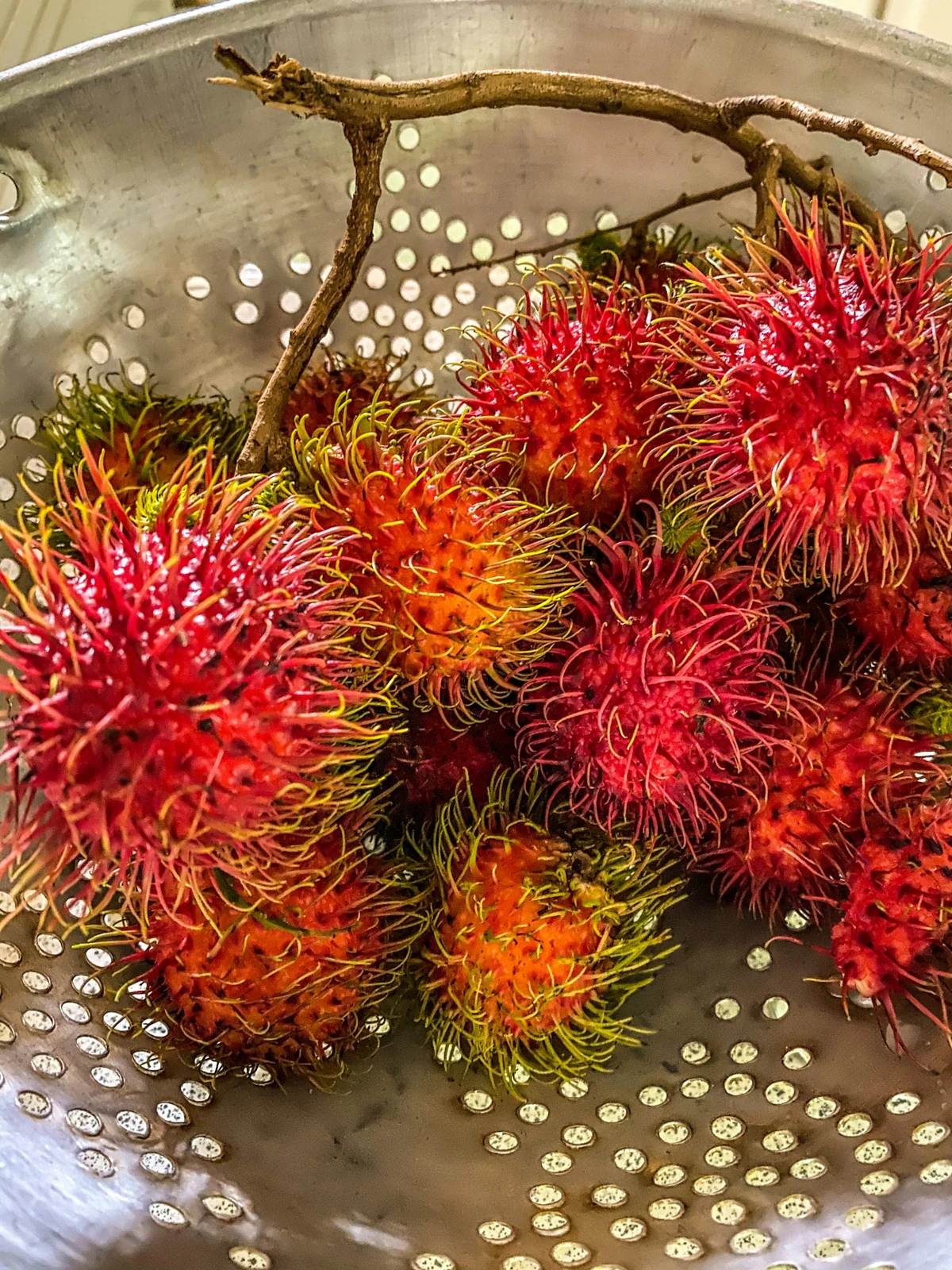 Rambutan