
Raspberry
Research status: AI draft — awaiting expert review


Overview
Raspberries are delicate fruits made up of many tiny juice-filled segments surrounding a hollow center. Red varieties are most common, but black, purple, and golden raspberries also work well in desserts, salads, sauces, and preserves.
Origin & cultivation
Raspberries are native to temperate regions of Europe, Asia, and North America, depending on the species. Major producing regions include Russia, Mexico, Serbia, Poland, and the United States, particularly the Pacific Northwest.
Season
Local raspberries generally peak from early summer into early fall in temperate climates, with timing varying by variety and location. Imports and frozen fruit provide year-round availability.
Texture & flavor
Ripe raspberries are tender and juicy, with noticeable tiny seeds and a sweet-tart, floral flavor. Golden varieties are often milder, while black raspberries tend to taste deeper and more intensely fruity.
Nutrition
Typical values estimated with AI, not yet checked against lab data. For guidance only.
| Energy | 52 kcal | raw, per 100 g edible portion | FoodPulse AI estimate |
| Protein | 1.2 g | raw, per 100 g edible portion | FoodPulse AI estimate |
| Total fat | 0.65 g | raw, per 100 g edible portion | FoodPulse AI estimate |
| Saturated fat | 0.019 g | raw, per 100 g edible portion | FoodPulse AI estimate |
| Carbohydrate | 11.94 g | raw, per 100 g edible portion | FoodPulse AI estimate |
| Dietary fiber | 6.5 g | raw, per 100 g edible portion | FoodPulse AI estimate |
| Total sugars | 4.42 g | raw, per 100 g edible portion | FoodPulse AI estimate |
| Water | 85.75 g | raw, per 100 g edible portion | FoodPulse AI estimate |
| Calcium | 25 mg | raw, per 100 g edible portion | FoodPulse AI estimate |
| Iron | 0.69 mg | raw, per 100 g edible portion | FoodPulse AI estimate |
| Magnesium | 22 mg | raw, per 100 g edible portion | FoodPulse AI estimate |
| Potassium | 151 mg | raw, per 100 g edible portion | FoodPulse AI estimate |
| Sodium | 1 mg | raw, per 100 g edible portion | FoodPulse AI estimate |
| Zinc | 0.42 mg | raw, per 100 g edible portion | FoodPulse AI estimate |
| Vitamin C | 26.2 mg | raw, per 100 g edible portion | FoodPulse AI estimate |
| Vitamin A (RAE) | 2 µg | raw, per 100 g edible portion | FoodPulse AI estimate |
| Folate | 21 µg | raw, per 100 g edible portion | FoodPulse AI estimate |
| Vitamin B12 | 0 µg | raw, per 100 g edible portion | FoodPulse AI estimate |
| Cholesterol | 0 mg | raw, per 100 g edible portion | FoodPulse AI estimate |
Glycemic index: Not established.
Raspberries provide fiber, vitamin C, and polyphenols; they can contribute to a balanced diet, but evidence does not establish them as a treatment for disease. Raspberry allergy is possible, including pollen-related mouth itching; anyone with a known allergy should avoid them. Educational, not medical advice.
Educational information, not medical advice.
Storage
- Room temperature · About 60–75°F (16–24°C) · A few hours; refrigerate promptly for longer keeping. Keep whole berries dry, shaded, and away from heat; room-temperature storage quickly reduces quality. Refrigerate cut or crushed berries within 2 hours, or 1 hour above 90°F (32°C). Discard berries with mold, slime, or fermented odors. FoodPulse AI estimate
- Refrigerator · 32–40°F (0–4°C) · Usually 1–3 days. Store unwashed in a shallow, ventilated container lined with a dry paper towel, away from raw animal foods. Discard moldy berries and berries directly touching them; discard the batch if mold is widespread or berries are slimy or smell fermented. FoodPulse AI estimate
- Freezer · 0°F (−18°C) or below · 8–12 months for best quality. Rinse, drain, and dry sound berries, freeze in a single layer, then transfer to airtight freezer containers. Continuously frozen fruit remains safe beyond this quality window, but freezing does not reliably kill pathogens. Thaw in the refrigerator and use promptly; discard if mold, slime, or an off odor develops. FoodPulse AI estimate
Preparation
Sort out damaged or moldy berries, then rinse gently under cool running water just before use; do not use soap or soak them. Drain and pat dry carefully; remove any attached leaves or stems, and leave whole unless a recipe calls for crushing or cutting. Keep berries and their utensils separate from raw meat, poultry, seafood, and their juices.
Cooking
Serve raw, or simmer into a sauce for about 5–10 minutes for a small batch, allowing longer for larger batches or frozen berries. In muffins and small pastries, berries typically soften during 15–25 minutes of baking; larger cakes and pies often need 35–60 minutes, following the recipe's doneness cues. For shelf-stable preserves, use a tested USDA or NCHFP recipe and its specified processing method, jar size, and altitude adjustment.
Recipes
No verified recipes yet.
Waste less
Use sound, soft berries promptly in smoothies, sauces, or baking, and freeze surplus fruit before it deteriorates. Add leftover cooked sauce to yogurt or oatmeal, or freeze it in small portions. Compost stems and spoiled fruit where accepted; never use moldy berries in cooking or preserves.
Food waste tips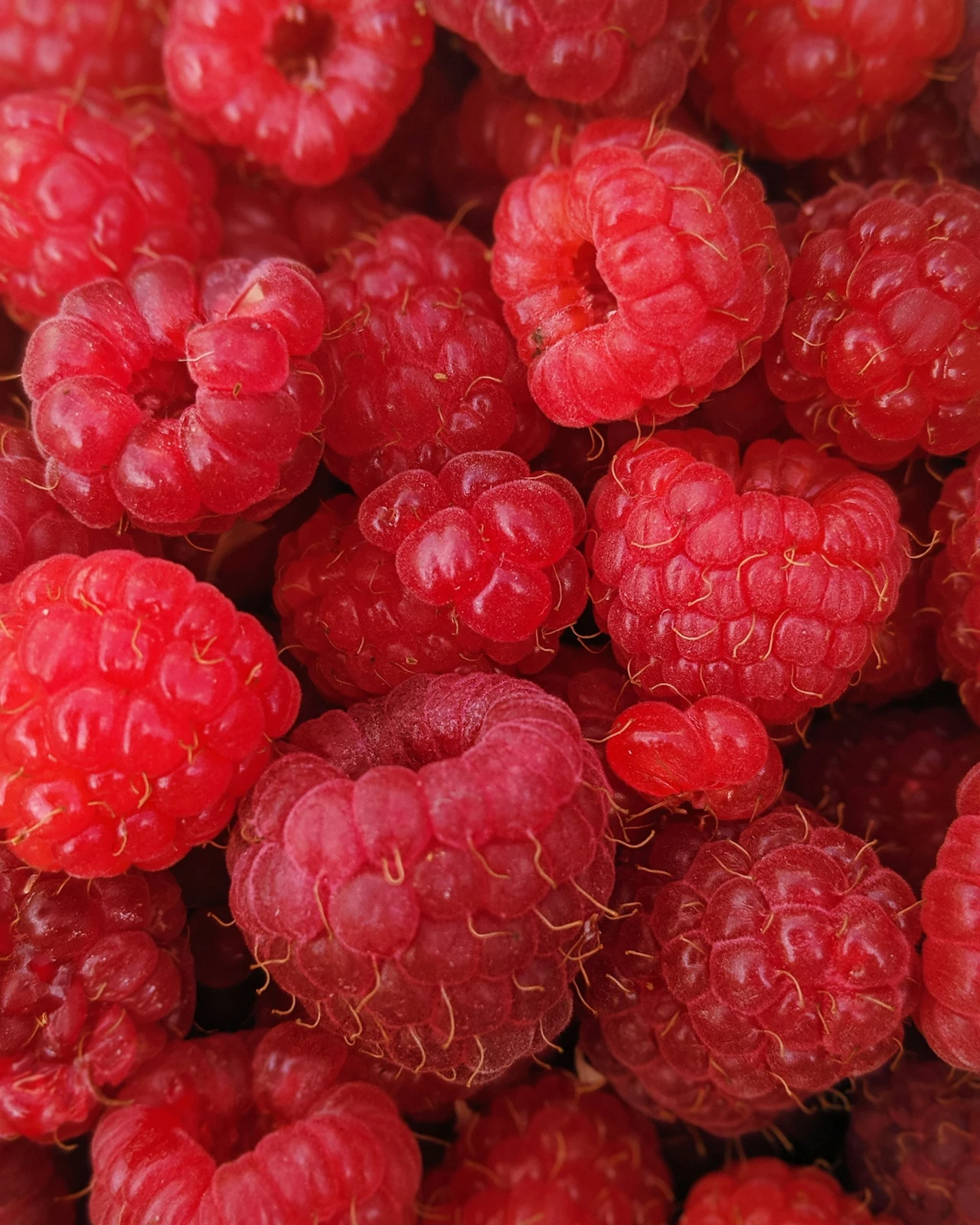 Raspberries