
Clam
Research status: AI draft — awaiting expert review


Overview
Clams are edible bivalve mollusks enclosed in two hinged shells. Common market types include littlenecks, cherrystones, steamers, Manila clams, and razor clams; their size and tenderness determine the best cooking method.
Origin & cultivation
Clams live in coastal sand or mud and are harvested wild or farmed in saltwater and brackish waters. Major producing regions include China, Japan, South Korea, Europe, and the Atlantic and Pacific coasts of North America.
Season
Farmed and commercially harvested clams are available year-round, although local availability varies with species, spawning, weather, and harvest closures. Buy from reputable sellers using approved harvest waters; calendar rules such as eating shellfish only in months containing an 'r' do not guarantee safety.
Texture & flavor
Clams taste briny, mildly sweet, and savory, with texture ranging from tender to pleasantly chewy. Smaller clams generally suit steaming or quick cooking, while larger ones work well chopped into chowders or stuffings; overcooking makes them rubbery.
Nutrition
Typical values estimated with AI, not yet checked against lab data. For guidance only.
| Energy | 86 kcal | raw, per 100 g edible portion | FoodPulse AI estimate |
| Protein | 14.67 g | raw, per 100 g edible portion | FoodPulse AI estimate |
| Total fat | 0.96 g | raw, per 100 g edible portion | FoodPulse AI estimate |
| Saturated fat | 0.188 g | raw, per 100 g edible portion | FoodPulse AI estimate |
| Carbohydrate | 3.57 g | raw, per 100 g edible portion | FoodPulse AI estimate |
| Dietary fiber | 0 g | raw, per 100 g edible portion | FoodPulse AI estimate |
| Total sugars | 0 g | raw, per 100 g edible portion | FoodPulse AI estimate |
| Water | 78.98 g | raw, per 100 g edible portion | FoodPulse AI estimate |
| Calcium | 39 mg | raw, per 100 g edible portion | FoodPulse AI estimate |
| Iron | 1.62 mg | raw, per 100 g edible portion | FoodPulse AI estimate |
| Magnesium | 19 mg | raw, per 100 g edible portion | FoodPulse AI estimate |
| Potassium | 46 mg | raw, per 100 g edible portion | FoodPulse AI estimate |
| Sodium | 601 mg | raw, per 100 g edible portion | FoodPulse AI estimate |
| Zinc | 0.51 mg | raw, per 100 g edible portion | FoodPulse AI estimate |
| Vitamin C | 0 mg | raw, per 100 g edible portion | FoodPulse AI estimate |
| Vitamin A (RAE) | 90 µg | raw, per 100 g edible portion | FoodPulse AI estimate |
| Folate | 5 µg | raw, per 100 g edible portion | FoodPulse AI estimate |
| Vitamin B12 | 11.28 µg | raw, per 100 g edible portion | FoodPulse AI estimate |
| Cholesterol | 30 mg | raw, per 100 g edible portion | FoodPulse AI estimate |
Glycemic index: Not applicable / not meaningful (very little carbohydrate).
Clams provide protein, vitamin B12, iron, and other minerals, though amounts vary by species. They can cause molluscan shellfish allergies, and raw or undercooked clams can transmit serious infections, especially in people with liver disease or weakened immunity; cooking does not reliably destroy marine biotoxins. Educational, not medical advice.
Educational information, not medical advice.
Storage
- Room temperature — handling only · Above 40°F (4°C); especially above 90°F (32°C) · No more than 2 hours out of refrigeration, or 1 hour above 90°F (32°C). Do not store clams on the counter. Discard seafood that exceeds these limits; smell cannot establish safety. FoodPulse AI estimate
- Refrigerator — live clams · 32–40°F (0–4°C), without freezing · Preferably cook within 1–2 days. Keep in a bowl or ventilated container under a damp cloth, separate from ready-to-eat foods. Do not seal airtight or submerge in water or melting ice; discard broken shells, dead or unresponsive clams, and those with sour or ammonia-like odors. FoodPulse AI estimate
- Refrigerator — shucked or cooked clams · 40°F (4°C) or below · Raw shucked: 1–2 days; cooked: 3–4 days. Keep covered; cool cooked clams promptly in shallow containers. Discard for sour odor, mold, or unusual slime, and discard when storage limits are exceeded even if they appear normal. FoodPulse AI estimate
- Freezer — shucked clams · 0°F (−18°C) or below · 3–4 months for best quality. Following NCHFP guidance, shuck fresh live clams, wash meat free of sand, drain, and pack in freezer containers covered with clam liquor or water, leaving ½-inch headspace. Thaw in the refrigerator; continuous freezing preserves safety longer than this quality window but does not make contaminated clams safe. FoodPulse AI estimate
Preparation
Discard cracked shells and clams that do not close when tapped; soft-shell clams may gape naturally, but their siphons should retract when touched. Scrub shells under cold running water without splashing, and follow the supplier's instructions if sandy clams need purging—never use freshwater soaking for live marine clams. Shuck with a clam knife and hand protection, remove shell fragments, and chop large meats as needed; wash hands, tools, and surfaces afterward and keep raw juices away from ready-to-eat foods.
Cooking
Steam, boil, bake, or add shucked clams to chowders and sauces; cook seafood to a USDA-recommended internal temperature of 145°F (63°C). For shell-on clams, boil until shells open and then continue for 3–5 minutes, or steam in an already-steaming covered pot for 4–9 minutes, allowing longer for larger clams and avoiding overcrowding. Discard clams that remain closed after cooking; shucked clams generally need only a few minutes, depending on size and method, so check temperature rather than relying on time alone.
Recipes
No verified recipes yet.
Waste less
Strain cooking liquor through a fine filter to remove grit and use it in soups, sauces, or rice, reducing added salt accordingly. Refrigerate leftover meat and liquor promptly and use within 3–4 days, reheating leftovers to 165°F (74°C). Keep meat scraps out of ordinary home compost; shells break down very slowly, so use an approved shell-recycling program or follow local composting rules.
Food waste tips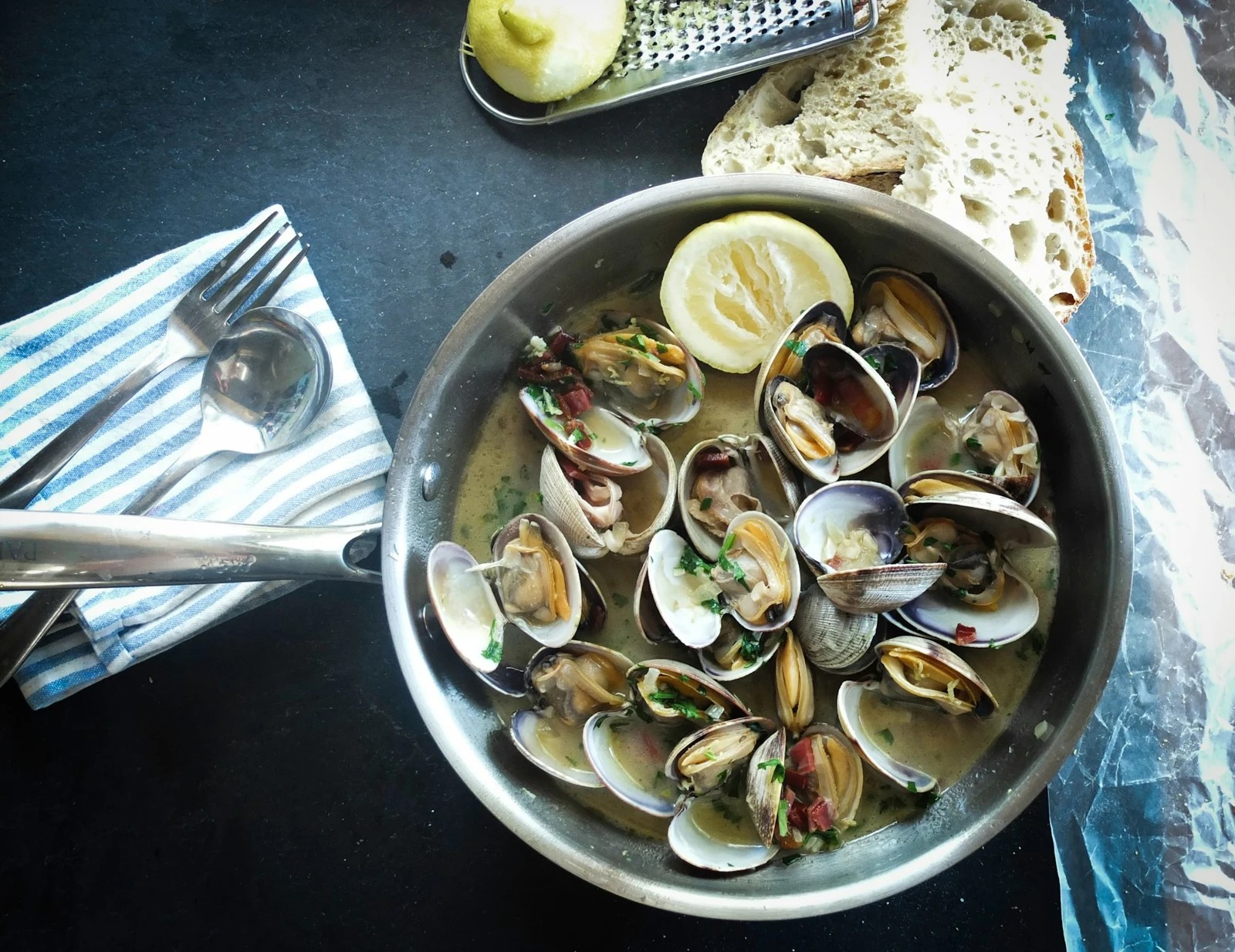 Clams