
Oyster
Research status: AI draft — awaiting expert review


Overview
Oysters are saltwater bivalve mollusks eaten for their soft flesh and flavorful liquid, called liquor. They are sold live in the shell, freshly shucked, frozen, smoked, or canned.
Origin & cultivation
Oysters grow in coastal bays and estuaries and are harvested from wild beds or raised on farms. Major producing regions include China, South Korea, Japan, France, and the Atlantic, Gulf, and Pacific coasts of North America.
Season
Farmed oysters are available year-round, subject to local harvest closures and water-quality controls. Many varieties are plumper in cooler months and softer during warm-weather spawning; the traditional “R-month” rule is not a reliable safety guide.
Texture & flavor
Oysters range from tender and silky to firm and meaty, with briny, sweet, mineral, or mildly buttery flavors. Species and growing waters strongly influence taste; excessive cooking makes the flesh tough.
Nutrition
Typical values estimated with AI, not yet checked against lab data. For guidance only.
| Energy | 51 kcal | raw, per 100 g edible portion | FoodPulse AI estimate |
| Protein | 5.71 g | raw, per 100 g edible portion | FoodPulse AI estimate |
| Total fat | 1.71 g | raw, per 100 g edible portion | FoodPulse AI estimate |
| Saturated fat | 0.474 g | raw, per 100 g edible portion | FoodPulse AI estimate |
| Carbohydrate | 2.72 g | raw, per 100 g edible portion | FoodPulse AI estimate |
| Dietary fiber | 0 g | raw, per 100 g edible portion | FoodPulse AI estimate |
| Total sugars | 0.62 g | raw, per 100 g edible portion | FoodPulse AI estimate |
| Water | 89.04 g | raw, per 100 g edible portion | FoodPulse AI estimate |
| Calcium | 59 mg | raw, per 100 g edible portion | FoodPulse AI estimate |
| Iron | 4.61 mg | raw, per 100 g edible portion | FoodPulse AI estimate |
| Magnesium | 18 mg | raw, per 100 g edible portion | FoodPulse AI estimate |
| Potassium | 156 mg | raw, per 100 g edible portion | FoodPulse AI estimate |
| Sodium | 85 mg | raw, per 100 g edible portion | FoodPulse AI estimate |
| Zinc | 39.3 mg | raw, per 100 g edible portion | FoodPulse AI estimate |
| Vitamin C | 0 mg | raw, per 100 g edible portion | FoodPulse AI estimate |
| Vitamin A (RAE) | 13 µg | raw, per 100 g edible portion | FoodPulse AI estimate |
| Folate | 7 µg | raw, per 100 g edible portion | FoodPulse AI estimate |
| Vitamin B12 | 8.75 µg | raw, per 100 g edible portion | FoodPulse AI estimate |
| Cholesterol | 40 mg | raw, per 100 g edible portion | FoodPulse AI estimate |
Glycemic index: Not applicable / not meaningful (very little carbohydrate).
Oysters provide protein, vitamin B12, zinc, and iron, but they can trigger molluscan shellfish allergies. Raw or undercooked oysters can carry Vibrio bacteria and other pathogens; pregnant people, older adults, and people with liver disease or weakened immunity should avoid them, and lemon juice or hot sauce does not make them safe. Educational, not medical advice.
Educational information, not medical advice.
Storage
- Room temperature — preparation or serving only · Above 40°F (4°C); especially hazardous above 90°F (32°C) · No more than 2 hours total outside refrigeration, or 1 hour above 90°F (32°C). Keep oysters chilled over draining ice when serving. Discard after these limits even if they smell normal; harmful contamination may have no visible or detectable signs. FoodPulse AI estimate
- Refrigerator — live or freshly shucked · 32–40°F (0–4°C), without freezing live oysters · Use within 1–2 days, or sooner if the package directs. Keep live oysters in a ventilated container under a clean damp cloth, never submerged in water or sealed airtight. Keep shucked oysters covered in their liquor; discard dead live oysters, cracked shells, or oysters with sour, rancid, or ammonia-like odors. FoodPulse AI estimate
- Freezer — shucked oysters · 0°F (-18°C) or below · About 3 months for best quality. Freeze fresh shucked oysters in their strained liquor in freezer-safe containers, leaving expansion space. Thaw in the refrigerator and cook promptly; freezing does not reliably eliminate pathogens or make raw oysters safe. FoodPulse AI estimate
- Refrigerator — cooked leftovers · 32–40°F (0–4°C) · 3–4 days. Refrigerate promptly in shallow, covered containers and reheat leftovers to 165°F (74°C). Discard leftovers with mold or off odors, or those held beyond safe time limits; do not taste them to assess safety. FoodPulse AI estimate
Preparation
Buy from reputable, regulated sellers; discard cracked shells and live oysters that remain open when tapped. Scrub shells under cold running water, then shuck with an oyster knife and protective glove, keeping shell fragments out of the meat; trimming or cutting is usually unnecessary. Keep raw oysters and their juices away from ready-to-eat foods, and wash hands, utensils, and work surfaces afterward.
Cooking
Steam, boil, bake, broil, or grill oysters, cooking the flesh to the USDA safe minimum internal temperature of 145°F (63°C). For live shell-on oysters, boil until the shells open and continue boiling for 3–5 minutes, or place in an already-steaming pot and steam for 4–9 minutes; larger oysters and fuller batches may need longer, and unopened shells should be discarded. Shucked oysters can be simmered in chowder or baked, with timing adjusted to size and verified by temperature rather than appearance alone.
Recipes
No verified recipes yet.
Waste less
Strain oyster liquor through a fine filter to remove grit, then cook it in chowder, sauces, or rice dishes. Refrigerate cooked leftovers promptly and use within 3–4 days. Offer shells to an approved local oyster-shell recycling program; shells decompose very slowly in home compost, and oyster flesh should only go into compost systems that explicitly accept animal foods.
Food waste tips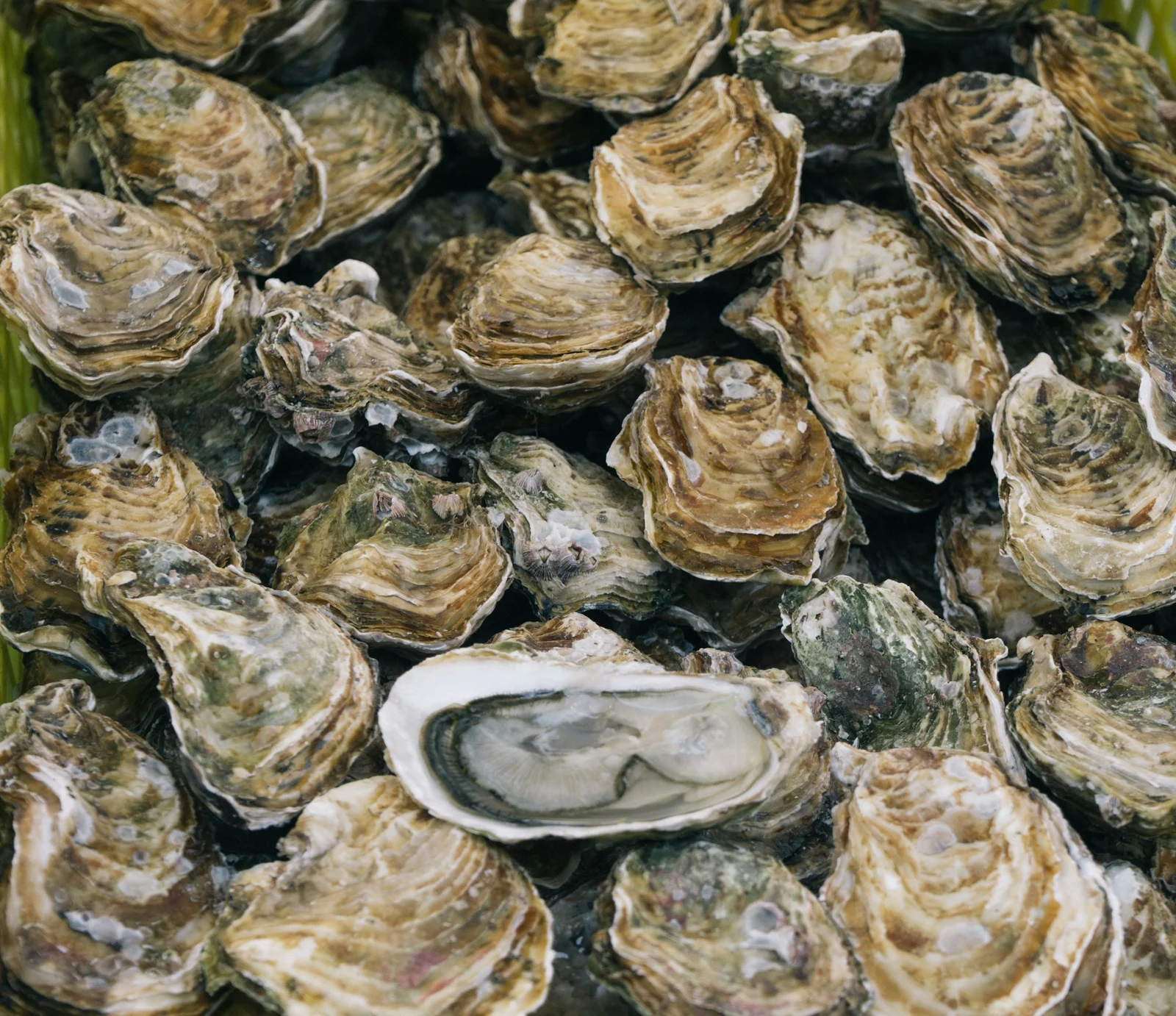 Oysters