
Mussel
Research status: AI draft — awaiting expert review


Overview
Mussels are edible bivalve mollusks with elongated, usually dark shells enclosing a small portion of meat. They are sold live in the shell, cooked, or frozen and are commonly steamed, added to soups, or served with pasta.
Origin & cultivation
Edible mussels come mainly from coastal marine waters and are harvested wild or farmed on ropes and other suspended systems. Major producing regions include China, Chile, Spain, France, and New Zealand; species and farming methods vary by region.
Season
Farmed and frozen mussels are available year-round, while local fresh availability depends on species, spawning cycles, and harvest closures. Meat is often fuller outside the spawning season, but calendar-based rules do not guarantee safety: buy from approved suppliers and follow local shellfish advisories.
Texture & flavor
Mussels have tender, slightly springy flesh with a sweet, briny flavor. Overcooking makes them rubbery; meat may be cream-colored or orange depending on species and reproductive state.
Nutrition
Typical values estimated with AI, not yet checked against lab data. For guidance only.
| Energy | 86 kcal | raw, per 100 g edible portion | FoodPulse AI estimate |
| Protein | 11.9 g | raw, per 100 g edible portion | FoodPulse AI estimate |
| Total fat | 2.24 g | raw, per 100 g edible portion | FoodPulse AI estimate |
| Saturated fat | 0.425 g | raw, per 100 g edible portion | FoodPulse AI estimate |
| Carbohydrate | 3.69 g | raw, per 100 g edible portion | FoodPulse AI estimate |
| Dietary fiber | 0 g | raw, per 100 g edible portion | FoodPulse AI estimate |
| Total sugars | 0 g | raw, per 100 g edible portion | FoodPulse AI estimate |
| Water | 80.58 g | raw, per 100 g edible portion | FoodPulse AI estimate |
| Calcium | 26 mg | raw, per 100 g edible portion | FoodPulse AI estimate |
| Iron | 3.95 mg | raw, per 100 g edible portion | FoodPulse AI estimate |
| Magnesium | 34 mg | raw, per 100 g edible portion | FoodPulse AI estimate |
| Potassium | 320 mg | raw, per 100 g edible portion | FoodPulse AI estimate |
| Sodium | 286 mg | raw, per 100 g edible portion | FoodPulse AI estimate |
| Zinc | 1.6 mg | raw, per 100 g edible portion | FoodPulse AI estimate |
| Vitamin C | 8 mg | raw, per 100 g edible portion | FoodPulse AI estimate |
| Vitamin A (RAE) | 48 µg | raw, per 100 g edible portion | FoodPulse AI estimate |
| Folate | 42 µg | raw, per 100 g edible portion | FoodPulse AI estimate |
| Vitamin B12 | 12 µg | raw, per 100 g edible portion | FoodPulse AI estimate |
| Cholesterol | 28 mg | raw, per 100 g edible portion | FoodPulse AI estimate |
Glycemic index: Not applicable / not meaningful (very little carbohydrate).
Mussels provide protein, vitamin B12, iron, and some omega-3 fats, though amounts vary. They are molluscan shellfish and can cause serious allergic reactions; raw or undercooked mussels also pose infection risks, especially during pregnancy or for people with weakened immunity or liver disease. Cooking does not reliably destroy marine biotoxins, so approved sourcing matters. Educational, not medical advice.
Educational information, not medical advice.
Storage
- Room temperature — handling only · Above 40°F (4°C); especially above 90°F (32°C) · No more than 2 hours total unrefrigerated, or 1 hour above 90°F (32°C). Do not store mussels on the counter. Discard after these limits, even if they smell normal; discard sooner for sour or ammonia-like odors. FoodPulse AI estimate
- Refrigerator — live mussels · 32–40°F (0–4°C), without freezing · Use within 1–2 days. Keep in an open bowl or breathable container covered with a clean, damp cloth, on a tray below ready-to-eat foods. Do not seal airtight or submerge in water; drain melted ice. Discard cracked shells, mussels that fail to close when tapped, or those with an unpleasant odor. FoodPulse AI estimate
- Refrigerator — cooked mussels · 40°F (4°C) or below · 3–4 days. Refrigerate within 2 hours of cooking, or 1 hour in temperatures above 90°F (32°C), in shallow covered containers. Discard for mold, sliminess, or sour odors; normal appearance and smell do not override the storage limit. FoodPulse AI estimate
- Freezer — cooked, shucked mussels · 0°F (−18°C) or below · 2–3 months for best quality. Freeze promptly in airtight freezer containers, optionally with a little strained cooking liquid. Thaw in the refrigerator, not on the counter. Continuous freezing preserves safety longer than this quality window, but does not make previously spoiled or temperature-abused mussels safe. FoodPulse AI estimate
Preparation
Discard cracked mussels and any open live mussels that do not close when tapped. Just before cooking, scrub shells under cold running water and pull off the fibrous beard; do not soak or store them in fresh water, and no cutting is usually needed. Wash hands, utensils, and work surfaces after handling raw shellfish, and keep them and their juices away from ready-to-eat foods.
Cooking
Steam in a covered pot with a little simmering liquid, allowing roughly 4–6 minutes for smaller mussels and 6–9 minutes for larger ones, depending on batch size and heat. USDA guidance is to cook seafood to an internal temperature of 145°F (63°C); check the flesh of a large mussel with a thin-tip thermometer where practical. Shells should open during cooking; discard any that remain closed, and avoid prolonged cooking once done.
Recipes
No verified recipes yet.
Waste less
Strain the cooking liquid through a fine filter to remove grit and use it in soup, sauce, or rice. Refrigerate cooked leftovers promptly, use within 3–4 days, and reheat to 165°F (74°C). Empty shells break down very slowly in home compost; put them in municipal organics only if explicitly accepted, otherwise dispose of them according to local rules.
Food waste tips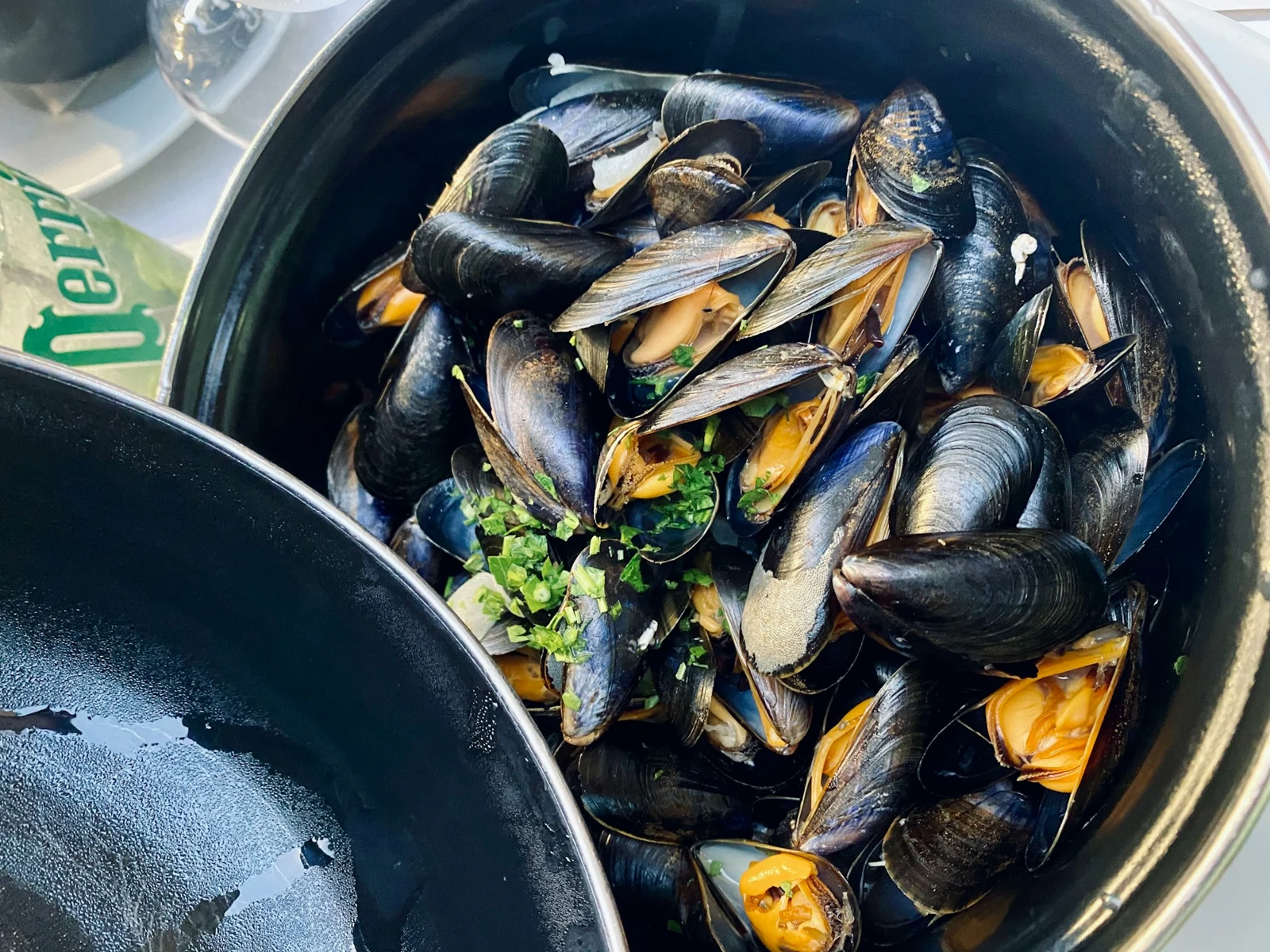 Mussels