
Lobster
Research status: AI draft — awaiting expert review


Overview
Lobster is a marine crustacean sold live, whole cooked, as tails, or as picked meat. Clawed lobsters provide tail, claw, and knuckle meat; spiny lobsters lack large claws and are commonly sold as tails.
Origin & cultivation
American lobster comes mainly from the cold North Atlantic waters off Canada and the northeastern United States. European lobster is harvested around Europe, while spiny and rock lobsters come from regions including the Caribbean, Australia, New Zealand, and southern Africa.
Season
Lobster is available year-round through regional fisheries and frozen supplies, but local peak seasons and fishing closures vary. North American landings are often strong from summer into autumn; recently molted lobsters have softer shells and generally less meat per animal.
Texture & flavor
Lobster has a mild, sweet, briny flavor and firm, succulent meat. Claws tend to be more tender than tails, and overcooking makes either tough and rubbery.
Nutrition
Typical values estimated with AI, not yet checked against lab data. For guidance only.
| Energy | 77 kcal | raw, per 100 g edible portion | FoodPulse AI estimate |
| Protein | 16.52 g | raw, per 100 g edible portion | FoodPulse AI estimate |
| Total fat | 0.75 g | raw, per 100 g edible portion | FoodPulse AI estimate |
| Saturated fat | 0.181 g | raw, per 100 g edible portion | FoodPulse AI estimate |
| Carbohydrate | 0 g | raw, per 100 g edible portion | FoodPulse AI estimate |
| Dietary fiber | 0 g | raw, per 100 g edible portion | FoodPulse AI estimate |
| Total sugars | 0 g | raw, per 100 g edible portion | FoodPulse AI estimate |
| Water | 80.95 g | raw, per 100 g edible portion | FoodPulse AI estimate |
| Calcium | 84 mg | raw, per 100 g edible portion | FoodPulse AI estimate |
| Iron | 0.26 mg | raw, per 100 g edible portion | FoodPulse AI estimate |
| Magnesium | 38 mg | raw, per 100 g edible portion | FoodPulse AI estimate |
| Potassium | 200 mg | raw, per 100 g edible portion | FoodPulse AI estimate |
| Sodium | 423 mg | raw, per 100 g edible portion | FoodPulse AI estimate |
| Zinc | 3.53 mg | raw, per 100 g edible portion | FoodPulse AI estimate |
| Vitamin C | 0 mg | raw, per 100 g edible portion | FoodPulse AI estimate |
| Vitamin A (RAE) | 1 µg | raw, per 100 g edible portion | FoodPulse AI estimate |
| Folate | 10 µg | raw, per 100 g edible portion | FoodPulse AI estimate |
| Vitamin B12 | 1.25 µg | raw, per 100 g edible portion | FoodPulse AI estimate |
| Cholesterol | 127 mg | raw, per 100 g edible portion | FoodPulse AI estimate |
Glycemic index: Not applicable / not meaningful (very little carbohydrate).
Lobster provides protein, vitamin B12, selenium, and some omega-3 fats; added butter and salty sauces can substantially change the meal's nutritional profile. It is a crustacean shellfish allergen, and susceptible people should avoid it; follow local advisories and avoid eating tomalley, which can concentrate contaminants. Educational, not medical advice.
Educational information, not medical advice.
Storage
- Room temperature — handling and serving only · Above 40°F (4°C); especially above 90°F (32°C) · No more than 2 hours unrefrigerated, or 1 hour above 90°F. Keep raw and cooked lobster chilled rather than storing on the counter. Discard after these limits even if it smells normal; cooking does not reliably rescue temperature-abused seafood. FoodPulse AI estimate
- Refrigerator — live lobster · Approximately 32–40°F (0–4°C), without freezing · Cook the day purchased, preferably within 24 hours. Keep in a ventilated container under damp paper or cloth, separated from other foods. Do not submerge in fresh water, seal airtight, or leave in melting ice; discard a lobster found dead if the time of death is unknown. FoodPulse AI estimate
- Refrigerator — raw meat or cooked lobster · 40°F (4°C) or below · Raw or refrigerator-thawed meat: 1–2 days; cooked lobster: 3–4 days. Store covered, with raw seafood below ready-to-eat foods; refrigerate cooked portions promptly in shallow containers. Discard for sour or ammonia-like odors, unusual slime, mold, or exceeded storage limits; absence of odor does not establish safety. FoodPulse AI estimate
- Freezer — packaged meat or cooked lobster · 0°F (-18°C) or below · Use within 2–3 months for best quality, or follow the commercial package guidance. Freeze promptly in airtight, moisture-resistant packaging; do not freeze live lobsters as a storage method. Continuously frozen seafood remains safe beyond the quality window, but discard if its thawing or temperature history is unsafe; freezer burn alone is a quality issue. FoodPulse AI estimate
Preparation
Thaw frozen lobster in the refrigerator, or in a leakproof bag in cold water changed every 30 minutes, then cook immediately after cold-water thawing. Routine washing is unnecessary; if shell debris needs removal, rinse briefly without splashing, and use shears to open tails and remove the intestinal tract. Keep raw seafood and its juices away from ready-to-eat foods, and wash hands, utensils, and surfaces after handling.
Cooking
Boil or steam whole lobsters, or bake, grill, or gently poach tails and picked meat. As rough guides, boil a 1-pound lobster for about 8–12 minutes after the water returns to a boil, allowing roughly 12–20 minutes for larger specimens; bake 4–8-ounce tails at 425°F for about 8–14 minutes. Follow USDA seafood guidance: reach 145°F in the thickest meat, measured away from the shell; the flesh should also be pearly and opaque.
Recipes
No verified recipes yet.
Waste less
Pick meat from the knuckles and legs, and simmer clean shells into stock, then strain carefully and refrigerate promptly. Use safely stored leftover meat in salads, sandwiches, pasta, or soup within 3–4 days of cooking; reheat hot leftovers to 165°F. Shells break down slowly and attract pests in home compost, so use a municipal program that explicitly accepts seafood scraps or discard them.
Food waste tips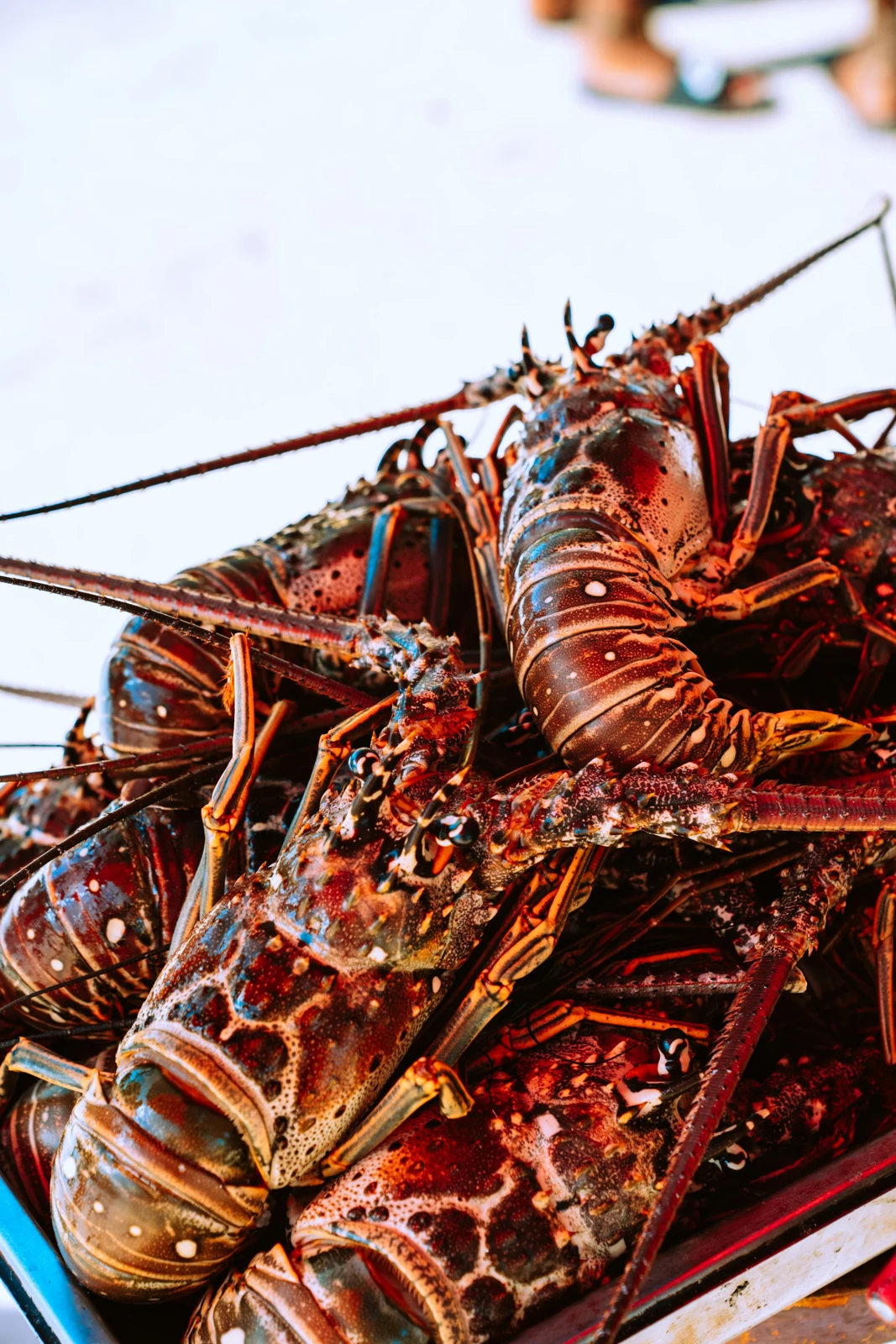 Lobster