
Prawn
Research status: AI draft — awaiting expert review


Overview
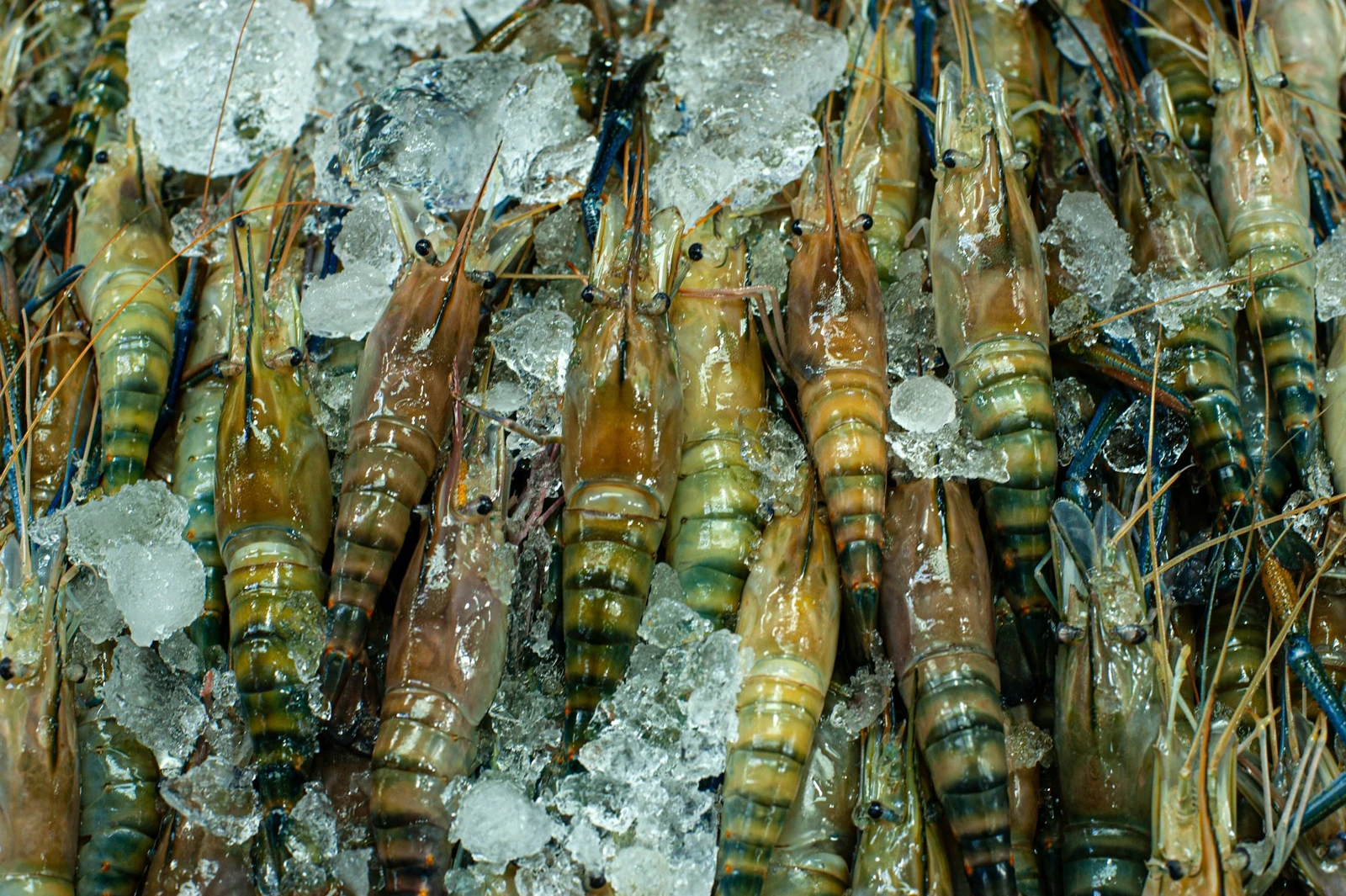
Prawns are edible crustaceans commonly sold alongside, or labeled as, shrimp; the names overlap in everyday cooking. They are available fresh or frozen, whole or peeled, and raw or cooked; size and whether they are shell-on affect cooking time.
Origin & cultivation
Prawns come from marine, brackish, and freshwater habitats and are caught wild or raised on farms. Major producing regions include South and Southeast Asia, China, and Latin America, notably India, Vietnam, Indonesia, Thailand, and Ecuador.
Season
Frozen and farmed prawns are available year-round. Wild-caught seasons vary by species, location, and fishery closures, so ask suppliers about local harvest periods rather than relying on one universal season.
Texture & flavor
Prawns have a mild, sweet, slightly briny flavor and a firm, springy texture when properly cooked. Overcooking makes them dry or rubbery; shells and heads add savory depth to stocks.
Nutrition
Typical values estimated with AI, not yet checked against lab data. For guidance only.
| Water | 78.45 g | raw, per 100 g edible portion | FoodPulse AI estimate |
| Energy | 85 kcal | raw, per 100 g edible portion | FoodPulse AI estimate |
| Protein | 20.1 g | raw, per 100 g edible portion | FoodPulse AI estimate |
| Total fat | 0.51 g | raw, per 100 g edible portion | FoodPulse AI estimate |
| Saturated fat | 0.101 g | raw, per 100 g edible portion | FoodPulse AI estimate |
| Carbohydrate | 0 g | raw, per 100 g edible portion | FoodPulse AI estimate |
| Dietary fiber | 0 g | raw, per 100 g edible portion | FoodPulse AI estimate |
| Total sugars | 0 g | raw, per 100 g edible portion | FoodPulse AI estimate |
| Calcium | 64 mg | raw, per 100 g edible portion | FoodPulse AI estimate |
| Iron | 0.52 mg | raw, per 100 g edible portion | FoodPulse AI estimate |
| Magnesium | 35 mg | raw, per 100 g edible portion | FoodPulse AI estimate |
| Potassium | 264 mg | raw, per 100 g edible portion | FoodPulse AI estimate |
| Sodium | 119 mg | raw, per 100 g edible portion | FoodPulse AI estimate |
| Zinc | 1.34 mg | raw, per 100 g edible portion | FoodPulse AI estimate |
| Vitamin C | 0 mg | raw, per 100 g edible portion | FoodPulse AI estimate |
| Vitamin A (RAE) | 0 µg | raw, per 100 g edible portion | FoodPulse AI estimate |
| Folate | 0 µg | raw, per 100 g edible portion | FoodPulse AI estimate |
| Vitamin B12 | 1.11 µg | raw, per 100 g edible portion | FoodPulse AI estimate |
| Cholesterol | 161 mg | raw, per 100 g edible portion | FoodPulse AI estimate |
Glycemic index: Not applicable / not meaningful (very little carbohydrate).
Prawns provide protein, vitamin B12, and selenium, and are generally low in mercury, although sodium can be higher in brined or treated products. They contain cholesterol and are a major crustacean shellfish allergen; people with shellfish allergy should avoid them and prevent cross-contact. Raw or undercooked prawns can carry harmful microbes, particularly concerning during pregnancy or for older or immunocompromised people. Educational, not medical advice.
Educational information, not medical advice.
Storage
- Room temperature / serving · Above 40°F (4°C); especially above 90°F (32°C) · Maximum 2 hours unrefrigerated, or 1 hour above 90°F (32°C).. Keep cold prawns on ice at 40°F (4°C) or below, or hot dishes at 140°F (60°C) or above. Discard after the time limit even if they smell normal; do not taste to assess safety. FoodPulse AI estimate
- Refrigerator · 32–40°F (0–4°C) · Raw: 1–2 days; cooked: 3–4 days.. Keep covered in a leakproof container; store raw prawns below ready-to-eat foods. Discard prawns with sour or ammonia-like odors, unusual slime, or mold, but remember harmful microbes may cause no visible or detectable change. FoodPulse AI estimate
- Freezer · 0°F (−18°C) or below · Raw: about 6–18 months for best quality; cooked: about 3 months for best quality.. Package airtight and label with the freezing date. Continuously frozen prawns remain safe indefinitely, though quality declines; freezer burn alone is not a safety issue. Discard thawed prawns held above 40°F (4°C) for more than 2 hours, or showing spoilage after thawing. FoodPulse AI estimate
Preparation
Thaw in the refrigerator, or in a leakproof bag submerged in cold water, changing the water every 30 minutes; cook immediately after cold-water or microwave thawing. Peel if desired, then make a shallow cut along the back and lift out the dark intestinal tract; leaving shells on can help protect the flesh. Routine washing is unnecessary: wipe away debris, or rinse briefly with minimal splashing if needed. Keep raw prawns and their juices away from ready-to-eat foods, and wash hands, utensils, and surfaces thoroughly after handling.
Cooking
Sauté, grill, steam, poach, or roast prawns until the flesh is pearly and opaque throughout. Small to medium peeled prawns often take 2–4 minutes total in a hot pan or gently simmering liquid, while large or shell-on prawns may take 4–8 minutes; starting temperature and cooking method affect timing. Follow USDA guidance to reach an internal temperature of 145°F (63°C), checking the thickest part with a thin-tip thermometer where practical. Add already-cooked prawns near the end of cooking to limit toughening; reheat leftovers to 165°F (74°C).
Recipes
No verified recipes yet.
Waste less
Simmer clean shells and heads promptly into stock, strain, and refrigerate within two hours or freeze for later use. Use cooked leftovers within 3–4 days in fried rice, soups, or pasta, reheating to 165°F (74°C). Avoid putting seafood scraps in ordinary home compost, where they can attract pests; use an approved municipal food-waste service if available.
Food waste tips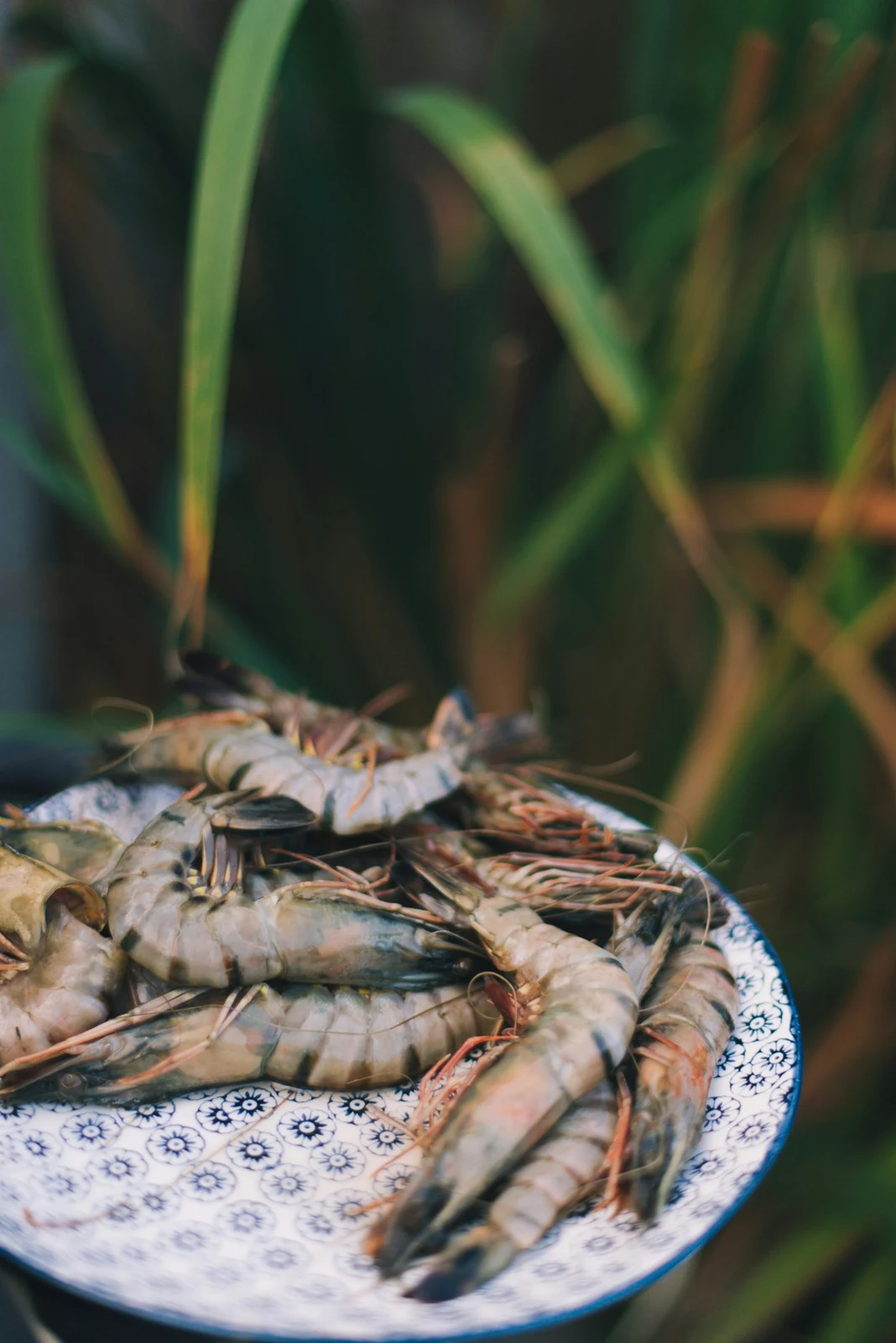 Prawns
 Shrimp - Prawns