
Octopus
Research status: AI draft — awaiting expert review


Overview
Octopus is a marine mollusk with eight arms, sold whole, cleaned, as separate arms, or precooked. Most retail octopus is wild-caught; frozen products are common and can be excellent for home cooking.
Origin & cultivation
Octopus lives in coastal waters worldwide, particularly tropical and temperate seas. Major fishing and supplying regions include northwest Africa, especially Morocco and Mauritania, the Mediterranean, Mexico, and East Asia.
Season
Fresh availability depends on the species, local fishing seasons, and seasonal closures rather than one universal peak. Frozen octopus is available year-round; ask your fishmonger about local landings and sourcing.
Texture & flavor
Octopus has a mild, slightly sweet, briny flavor and firm, meaty arms. Proper cooking makes it tender with a pleasant chew, while insufficient tenderizing can leave larger specimens rubbery.
Nutrition
Typical values estimated with AI, not yet checked against lab data. For guidance only.
| Energy | 82 kcal | raw, per 100 g edible portion | FoodPulse AI estimate |
| Protein | 14.91 g | raw, per 100 g edible portion | FoodPulse AI estimate |
| Total fat | 1.04 g | raw, per 100 g edible portion | FoodPulse AI estimate |
| Saturated fat | 0.227 g | raw, per 100 g edible portion | FoodPulse AI estimate |
| Carbohydrate | 2.2 g | raw, per 100 g edible portion | FoodPulse AI estimate |
| Dietary fiber | 0 g | raw, per 100 g edible portion | FoodPulse AI estimate |
| Total sugars | 0 g | raw, per 100 g edible portion | FoodPulse AI estimate |
| Water | 80.25 g | raw, per 100 g edible portion | FoodPulse AI estimate |
| Calcium | 53 mg | raw, per 100 g edible portion | FoodPulse AI estimate |
| Iron | 5.3 mg | raw, per 100 g edible portion | FoodPulse AI estimate |
| Magnesium | 30 mg | raw, per 100 g edible portion | FoodPulse AI estimate |
| Potassium | 350 mg | raw, per 100 g edible portion | FoodPulse AI estimate |
| Sodium | 230 mg | raw, per 100 g edible portion | FoodPulse AI estimate |
| Zinc | 1.68 mg | raw, per 100 g edible portion | FoodPulse AI estimate |
| Vitamin C | 5 mg | raw, per 100 g edible portion | FoodPulse AI estimate |
| Vitamin A (RAE) | 45 µg | raw, per 100 g edible portion | FoodPulse AI estimate |
| Folate | 16 µg | raw, per 100 g edible portion | FoodPulse AI estimate |
| Vitamin B12 | 20 µg | raw, per 100 g edible portion | FoodPulse AI estimate |
| Cholesterol | 48 mg | raw, per 100 g edible portion | FoodPulse AI estimate |
Glycemic index: Not applicable / not meaningful (very little carbohydrate).
Octopus supplies protein, vitamin B12, selenium, and iron; sodium can be higher in brined or prepared products. It is a molluscan shellfish allergen, and reactions can be serious; anyone with a shellfish allergy should seek individualized advice before eating it. Educational, not medical advice.
Educational information, not medical advice.
Storage
- Room temperature — serving or preparation only · Above 40°F (4°C); especially above 90°F (32°C) · No more than 2 hours total, or 1 hour above 90°F (32°C). Keep raw and cooked octopus chilled rather than storing on the counter. Discard after these limits even if it smells normal; odor cannot reliably establish safety. FoodPulse AI estimate
- Refrigerator · 32–40°F (0–4°C) · Raw or refrigerator-thawed: 1–2 days; cooked: 3–4 days. Keep raw octopus in a covered, leakproof container below ready-to-eat foods. Refrigerate cooked octopus promptly in shallow containers; discard for sour or ammonia-like odors, unusual sticky slime, mold, or exceeded storage limits. FoodPulse AI estimate
- Freezer · 0°F (−18°C) or below · Use within 2–3 months for best quality; continuously frozen food remains safe longer. Package airtight, label, and freeze while fresh. Freezer burn affects quality rather than safety; discard thawed seafood held above 40°F (4°C) for more than 2 hours, or showing spoilage after thawing. FoodPulse AI estimate
Preparation
Thaw frozen octopus in the refrigerator, or in a leakproof bag submerged in cold water, changing the water every 30 minutes and cooking immediately afterward. Buying cleaned octopus is easiest; otherwise remove the internal organs and ink sac from the mantle, cut out the eyes, and remove the hard beak where the arms meet. Rinse briefly under gentle cold running water only if needed to remove grit, avoid splashing, and leave the edible skin and suckers attached. Separate arms and slice the mantle as needed, keeping raw seafood away from ready-to-eat foods and washing hands, tools, and surfaces afterward.
Cooking
Gently simmer or braise until a skewer enters the thickest arm easily: small octopuses may take 20–40 minutes, medium ones 45–90 minutes, and large ones 90–120 minutes or longer. USDA's general safe minimum for fish and seafood is 145°F (63°C), measured in the thickest part; octopus usually needs substantially longer cooking for tenderness. After tenderizing, dry and grill or sear over high heat for about 2–4 minutes per side to brown, and reheat leftovers to 165°F (74°C).
Recipes
No verified recipes yet.
Waste less
Use the cleaned mantle, arms, skin, and suckers rather than discarding edible portions. Refrigerate strained cooking liquid promptly for use in rice or soups, and turn cooked leftovers into salads or stews within their safe storage window. Freeze surplus portions promptly; keep seafood scraps out of ordinary backyard compost unless your municipal collection program explicitly accepts them.
Food waste tips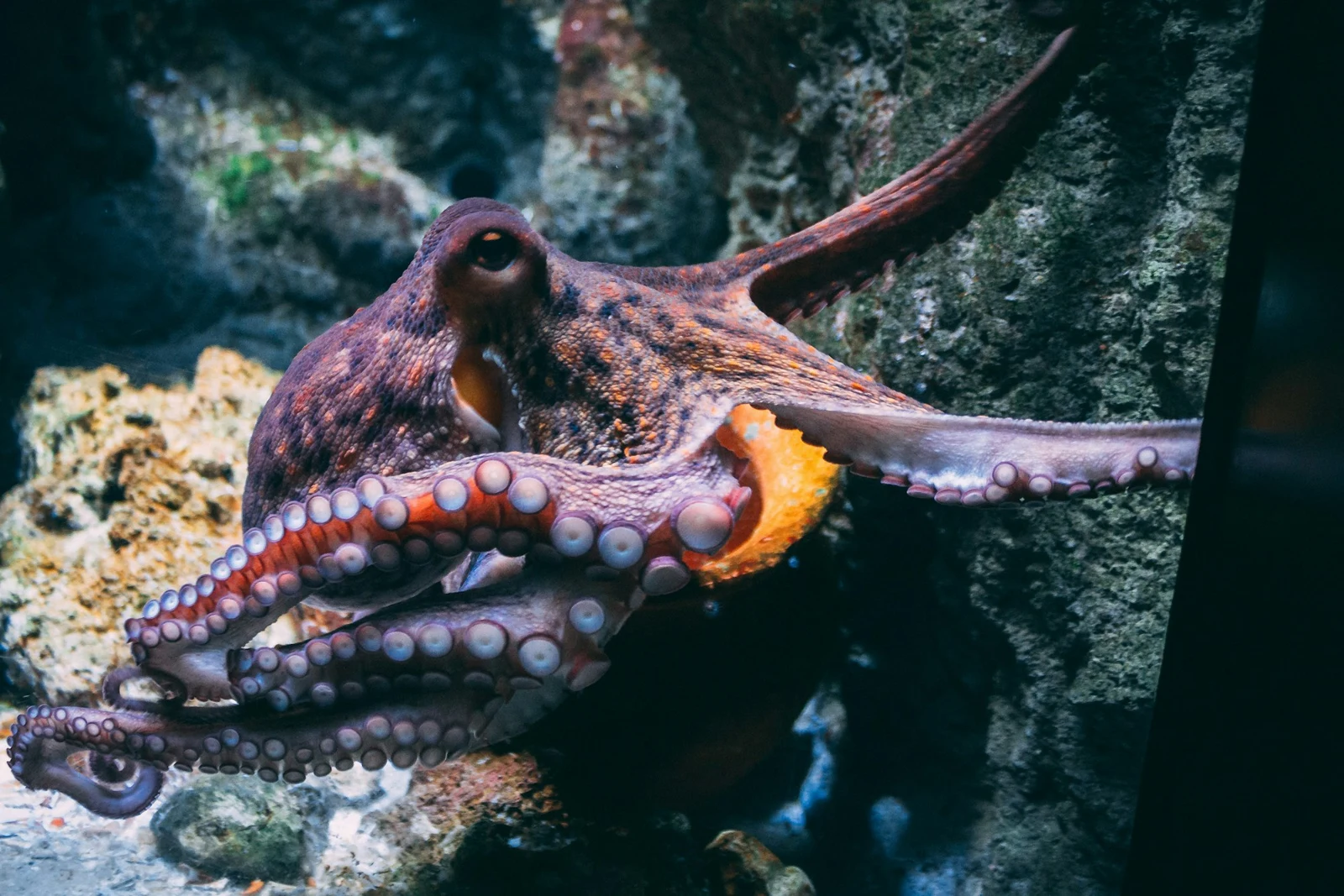 Octopus